Multi-Level Analog Resistive Switching Characteristics in Tri-Layer HfO2/Al2O3/HfO2 Based Memristor on ITO Electrode
Chandreswar Mahata, Myounggon Kang, Sungjun Kim

TL;DR
A tri-layer memristor structure with ITO electrode shows stable multilevel resistive switching, making it suitable for neuromorphic computing applications.
Contribution
The study introduces a tri-layer HfO2/Al2O3/HfO2 RRAM structure with improved multilevel switching characteristics for synaptic devices.
Findings
Multilevel conductance is controllable via set current compliance and reset stop voltage.
Improved gradual resistive switching occurs due to interdiffusion forming HfAlO at the HfO2/Al2O3 interface.
Uniform bipolar switching with high Ion/Ioff ratio and endurance up to 10³ cycles is achieved.
Abstract
Atomic layer deposited (ALD) HfO2/Al2O3/HfO2 tri-layer resistive random access memory (RRAM) structure has been studied with a transparent indium tin oxide (ITO) transparent electrode. Highly stable and reliable multilevel conductance can be controlled by the set current compliance and reset stop voltage in bipolar resistive switching. Improved gradual resistive switching was achieved because of the interdiffusion in the HfO2/Al2O3 interface where tri-valent Al incorporates with HfO2 and produces HfAlO. The uniformity in bipolar resistive switching with Ion/Ioff ratio (>10) and excellent endurance up to >103 cycles was achieved. Multilevel conductance levels in potentiation/depression were realized with constant amplitude pulse train and increasing pulse amplitude. Thus, tri-layer structure-based RRAM can be a potential candidate for the synaptic device in neuromorphic computing.
Genes, proteins, chemicals, diseases, species, mutations and cell lines named across the full text — each resolved to its canonical identifier and authoritative record.
Click any figure to enlarge with its caption.
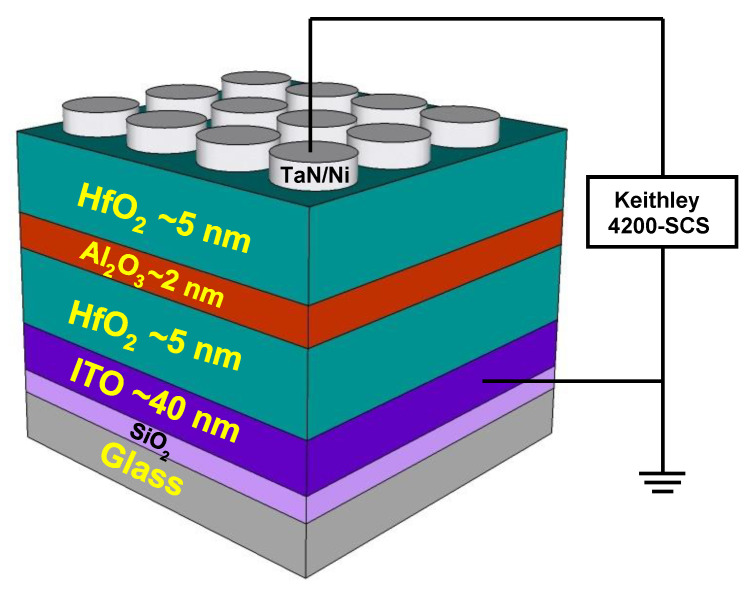 Figure 1
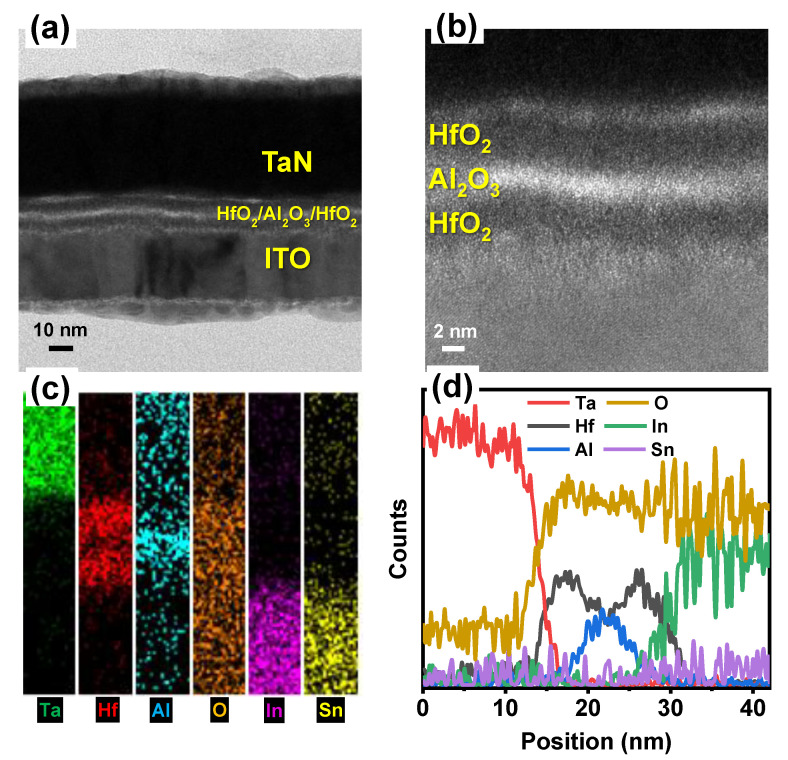 Figure 2
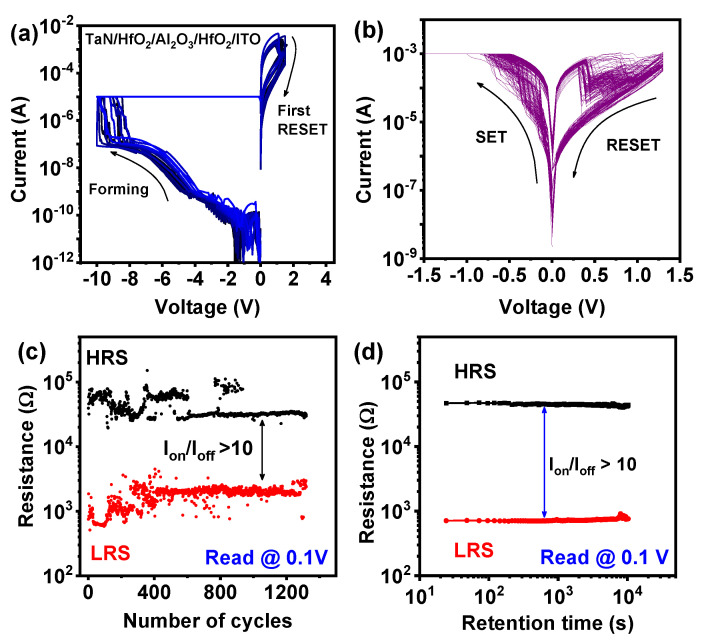 Figure 3
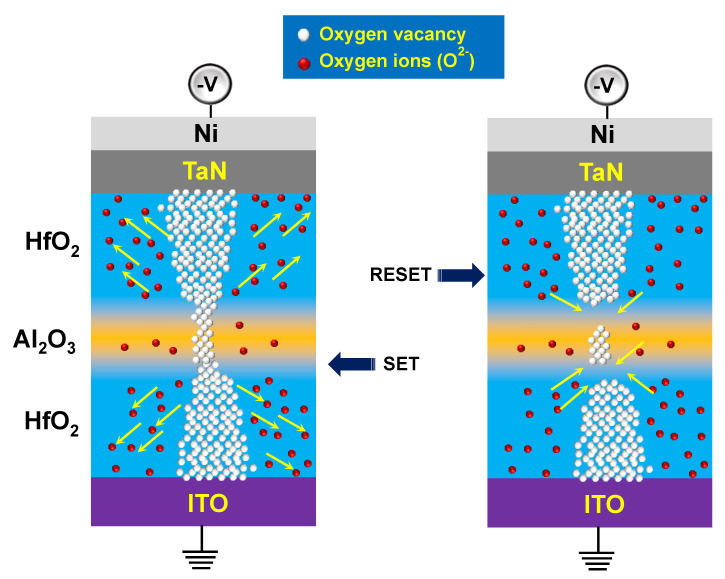 Figure 4
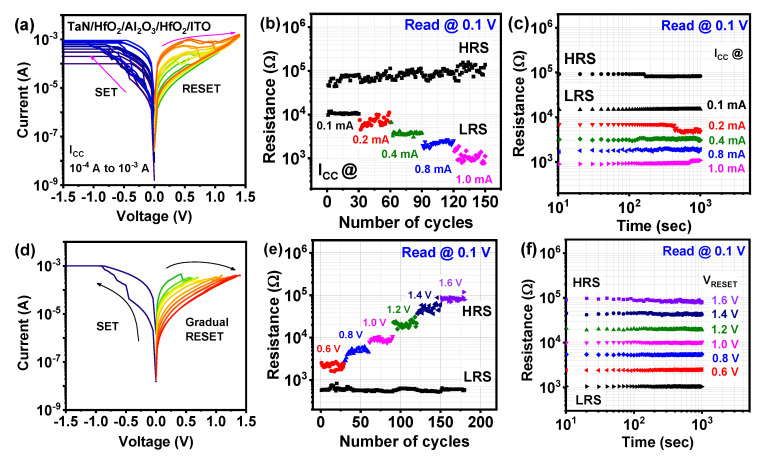 Figure 5
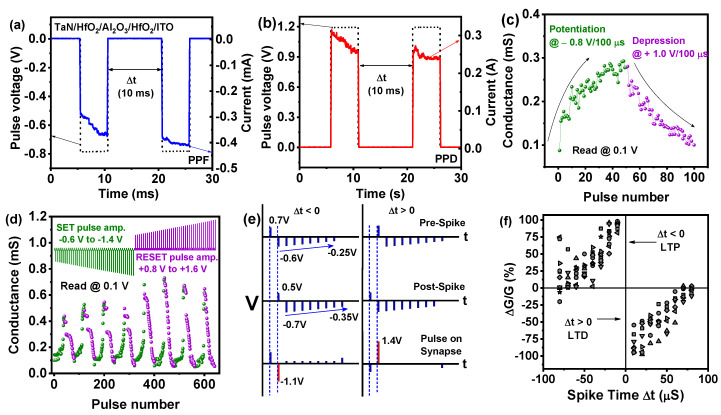 Figure 6
Peer Reviews
No public reviews on file for this paper yet. If you reviewed it on a platform where reviews are public (OpenReview, ICLR, NeurIPS, ICML), you can paste yours below so the community can read it here.
Videos
No videos yet. Explain this paper in a talk, walkthrough, or lecture? Add one.
Taxonomy
TopicsAdvanced Memory and Neural Computing · Ferroelectric and Negative Capacitance Devices · Neuroscience and Neural Engineering