Dissolved black carbon is not likely a significant refractory organic carbon pool in rivers and oceans
Yuanzhi Qi, Wenjing Fu, Jiwei Tian, Chunle Luo, Sen Shan, Shuwen Sun, Peng Ren, Hongmei Zhang, Jiwen Liu, Xiaohua Zhang, Xuchen Wang

TL;DR
The study shows that dissolved black carbon in rivers and oceans is not a long-lasting carbon pool but is instead cycled and aged similarly to other organic carbon.
Contribution
The study provides new carbon isotope data and experimental evidence showing that dissolved black carbon is labile and not refractory in aquatic systems.
Findings
DBC carbon isotope signatures are homogeneous and show young ages in rivers.
DBC is released from charcoal and degraded by bacteria, indicating it is labile.
DBC in the ocean is cycled and aged at the same rate as bulk dissolved organic carbon.
Abstract
Rivers are the major carriers of dissolved black carbon (DBC) from land to ocean; the sources of DBC during its continuous transformation and cycling in the ocean, however, are not well characterized. Here, we present new carbon isotope data for DBC in four large and two small mountainous rivers, the Yangtze and Yellow river estuaries, the East China Sea and the North Pacific Ocean. We found that the carbon isotope signatures of DBC are relatively homogeneous, and the DBC 14C ages in rivers are predominantly young and increase during continuous transport and cycling in the ocean. The results of charcoal leaching experiments indicate that DBC is released from charcoal and degraded by bacteria. Our study suggests that riverine DBC is labile and respired during transport and mixing into the ocean and that residual DBC is cycled and aged on the same time scales as bulk DOC in the ocean.…
Genes, proteins, chemicals, diseases, species, mutations and cell lines named across the full text — each resolved to its canonical identifier and authoritative record.
Click any figure to enlarge with its caption.
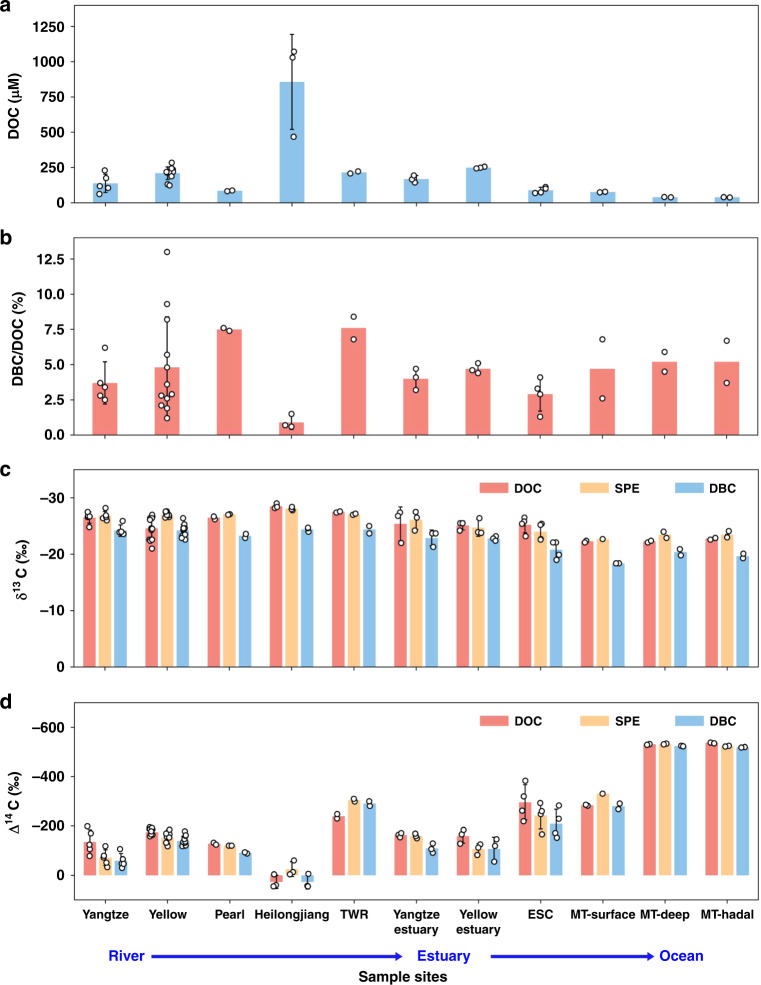 Figure 1
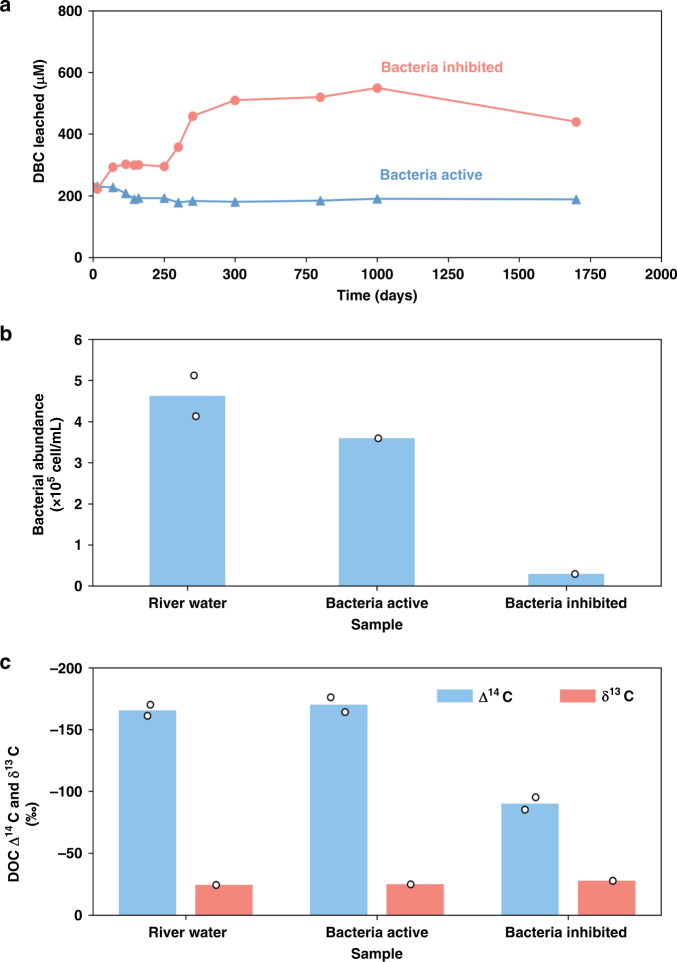 Figure 2
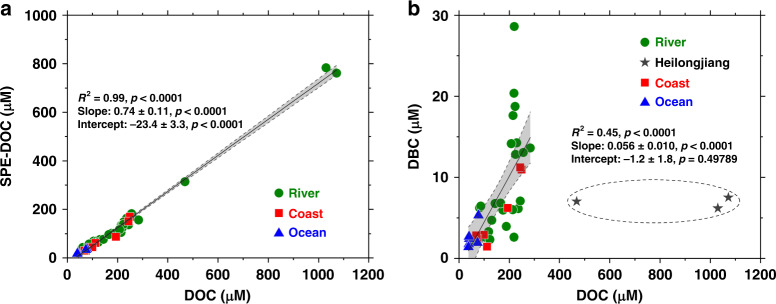 Figure 3
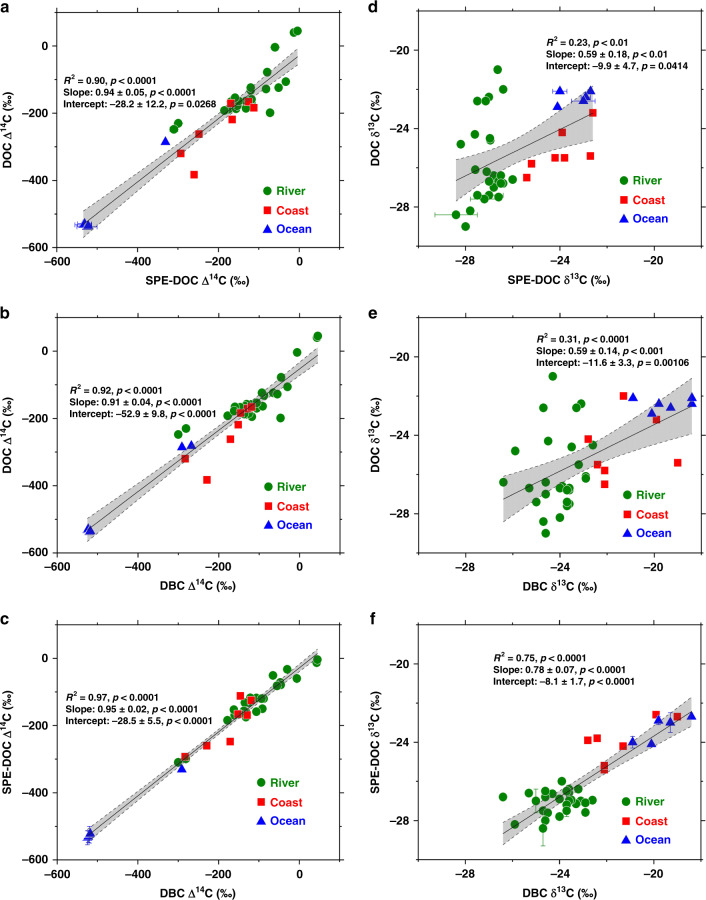 Figure 4
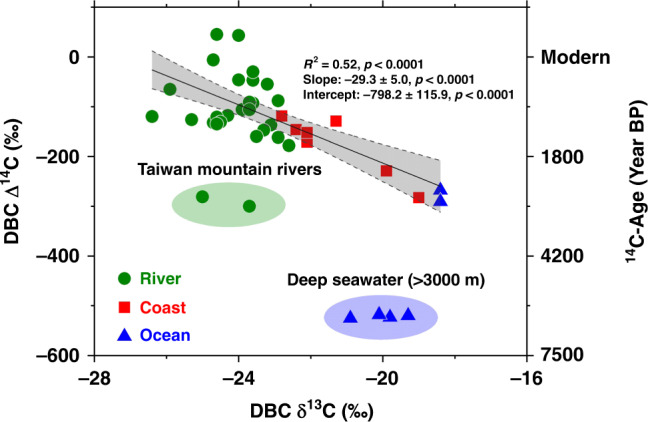 Figure 5
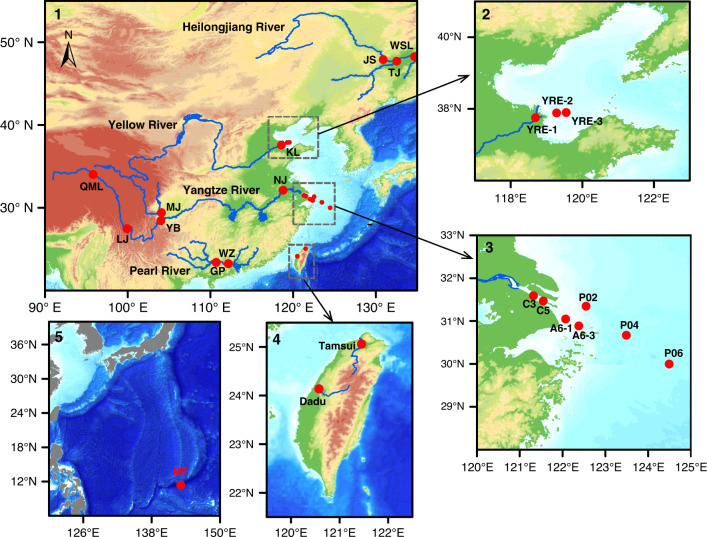 Figure 6
Peer Reviews
No public reviews on file for this paper yet. If you reviewed it on a platform where reviews are public (OpenReview, ICLR, NeurIPS, ICML), you can paste yours below so the community can read it here.
Videos
No videos yet. Explain this paper in a talk, walkthrough, or lecture? Add one.
Taxonomy
TopicsToxic Organic Pollutants Impact · Marine and coastal ecosystems · Mercury impact and mitigation studies