Comparison of inspiratory and expiratory lung and lobe volumes among supine, standing, and sitting positions using conventional and upright CT
Yoshitake Yamada, Minoru Yamada, Shotaro Chubachi, Yoichi Yokoyama, Shiho Matsuoka, Akiko Tanabe, Yuki Niijima, Mitsuru Murata, Koichi Fukunaga, Masahiro Jinzaki

TL;DR
This study compares lung and lobe volumes in different body positions using CT scans and finds that upright positions yield higher lung volumes than the supine position.
Contribution
The study is the first to compare unilateral lung and lobe volumes across supine, standing, and sitting positions using CT.
Findings
Inspiratory and expiratory lung and lobe volumes were significantly higher in standing/sitting positions than in the supine position.
The expiratory right middle lobe volume was significantly lower in standing/sitting positions compared to the supine position.
Upright CT showed stronger correlations with pulmonary function tests than conventional supine CT for lung capacity measurements.
Abstract
Currently, no clinical studies have compared the inspiratory and expiratory volumes of unilateral lung or of each lobe among supine, standing, and sitting positions. In this prospective study, 100 asymptomatic volunteers underwent both low-radiation-dose conventional (supine position, with arms raised) and upright computed tomography (CT) (standing and sitting positions, with arms down) during inspiration and expiration breath-holds and pulmonary function test (PFT) on the same day. We compared the inspiratory/expiratory lung/lobe volumes on CT in the three positions. The inspiratory and expiratory bilateral upper and lower lobe and lung volumes were significantly higher in the standing/sitting positions than in the supine position (5.3–14.7% increases, all P < 0.001). However, the inspiratory right middle lobe volume remained similar in the three positions (all P > 0.15); the…
Genes, proteins, chemicals, diseases, species, mutations and cell lines named across the full text — each resolved to its canonical identifier and authoritative record.
Click any figure to enlarge with its caption.
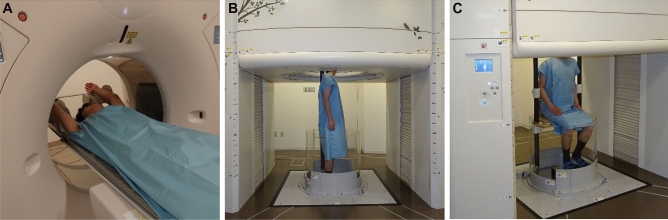 Figure 1
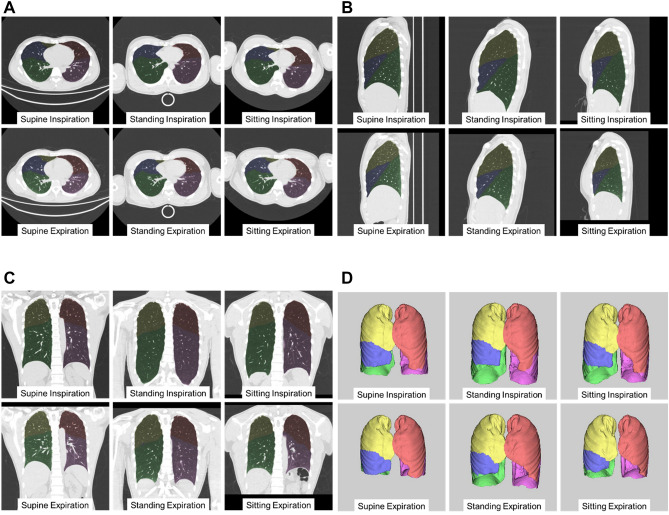 Figure 2
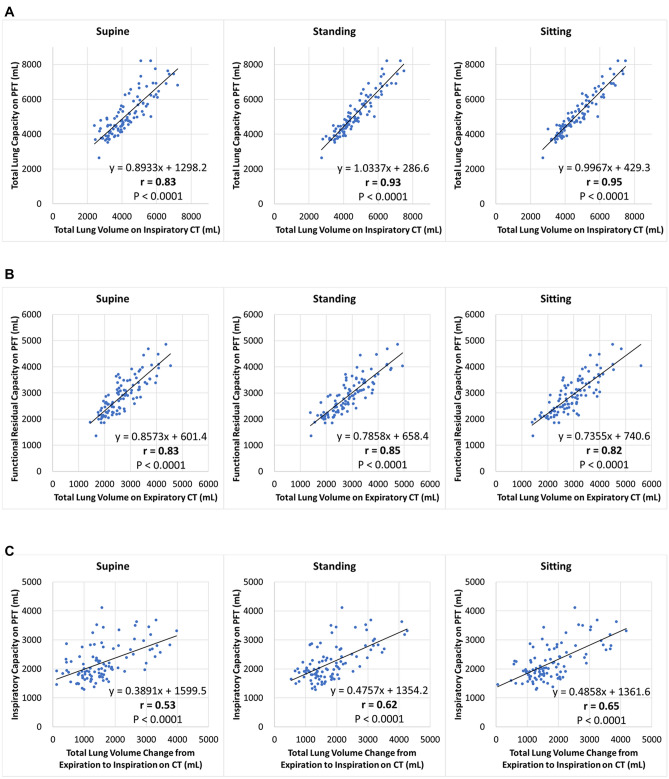 Figure 3
Peer Reviews
No public reviews on file for this paper yet. If you reviewed it on a platform where reviews are public (OpenReview, ICLR, NeurIPS, ICML), you can paste yours below so the community can read it here.
Videos
No videos yet. Explain this paper in a talk, walkthrough, or lecture? Add one.
Taxonomy
TopicsPleural and Pulmonary Diseases · Respiratory Support and Mechanisms · Chronic Obstructive Pulmonary Disease (COPD) Research