Ribosome-mediated polymerization of long chain carbon and cyclic amino acids into peptides in vitro
Joongoo Lee, Kevin J. Schwarz, Do Soon Kim, Jeffrey S. Moore, Michael C. Jewett

TL;DR
Scientists designed special amino acids to work with ribosomes, enabling the creation of new peptides that could lead to novel medicines and materials.
Contribution
The study introduces non-canonical amino acid analogs with extended carbon chains or cyclic structures for improved ribosome compatibility and tRNA charging.
Findings
Non-canonical amino acid analogs with extended carbon chains or cyclic structures were successfully incorporated into peptides.
Engineered ribosomes enabled site-specific incorporation of backbone-extended monomers at the N- and C-terminus of peptides.
This approach expands the potential of ribosome-mediated polymerization for new applications in medicine and materials.
Abstract
Ribosome-mediated polymerization of backbone-extended monomers into polypeptides is challenging due to their poor compatibility with the translation apparatus, which evolved to use α-L-amino acids. Moreover, mechanisms to acylate (or charge) these monomers to transfer RNAs (tRNAs) to make aminoacyl-tRNA substrates is a bottleneck. Here, we rationally design non-canonical amino acid analogs with extended carbon chains (γ-, δ-, ε-, and ζ-) or cyclic structures (cyclobutane, cyclopentane, and cyclohexane) to improve tRNA charging. We then demonstrate site-specific incorporation of these non-canonical, backbone-extended monomers at the N- and C- terminus of peptides using wild-type and engineered ribosomes. This work expands the scope of ribosome-mediated polymerization, setting the stage for new medicines and materials. Backbone extended monomers are poorly compatible with the natural…
Genes, proteins, chemicals, diseases, species, mutations and cell lines named across the full text — each resolved to its canonical identifier and authoritative record.
Click any figure to enlarge with its caption.
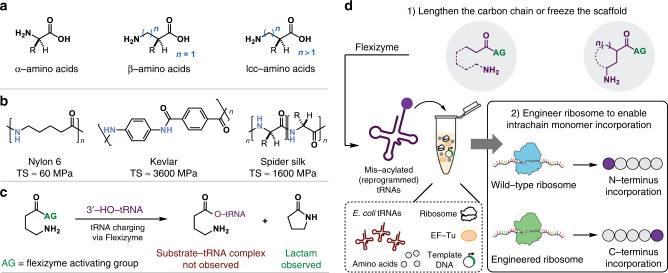 Figure 1
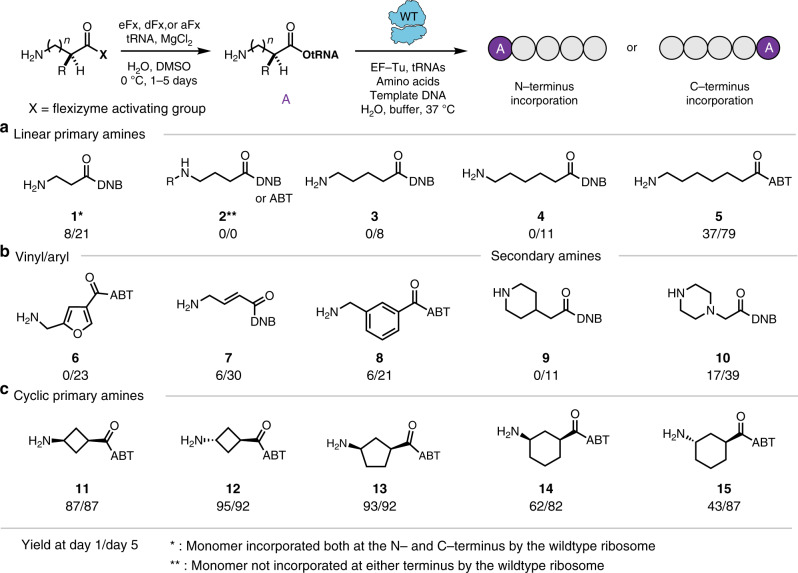 Figure 2
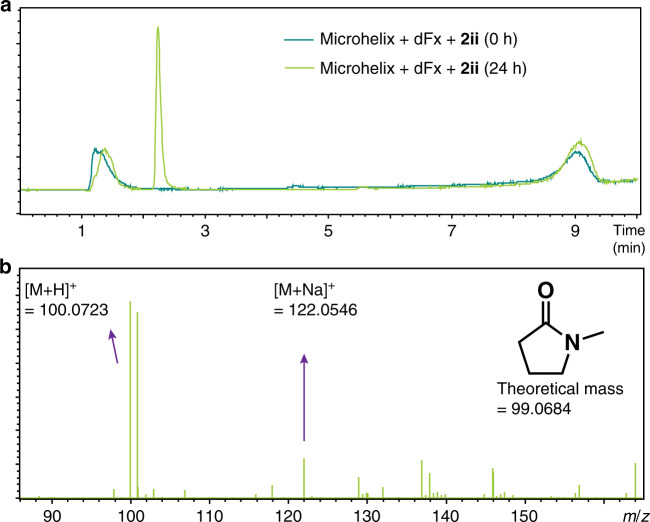 Figure 3
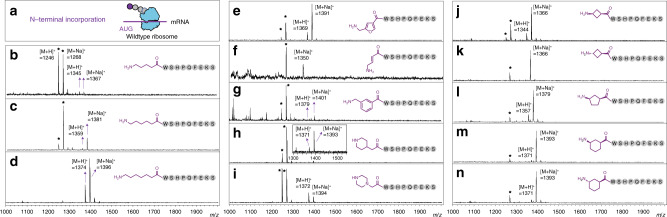 Figure 4
 Figure 5
Peer Reviews
No public reviews on file for this paper yet. If you reviewed it on a platform where reviews are public (OpenReview, ICLR, NeurIPS, ICML), you can paste yours below so the community can read it here.
Videos
No videos yet. Explain this paper in a talk, walkthrough, or lecture? Add one.
Taxonomy
TopicsRNA and protein synthesis mechanisms · RNA modifications and cancer · Chemical Synthesis and Analysis