Cavovarus deformity in Charcot-Marie-Tooth disease: is there a hindfoot equinus deformity that needs treatment?
Nicholas A. Beckmann, Sebastian I. Wolf, Daniel Heitzmann, Annika Wallroth, Sebastian Müller, Thomas Dreher

TL;DR
This study investigates whether patients with Charcot-Marie-Tooth disease and cavovarus foot deformities have a hindfoot equinus deformity that requires treatment.
Contribution
The study introduces the Heidelberg Foot Measurement Method to better assess hindfoot equinus in CMT patients compared to conventional gait analysis.
Findings
22.5% of patients had decreased tibio-talar dorsiflexion (TTDF), while 38.75% had normal or increased TTDF.
HFMM showed a strong correlation between decreased TTDF and decreased dorsi-plantar flexion, unlike conventional Plug-in-Gait analysis.
Conventional gait analysis cannot distinguish between cavus and hindfoot equinus deformities, limiting its clinical utility.
Abstract
Charcot-Marie-Tooth disease (CMT), one of the most common hereditary neurologic disorders, often results in debilitating cavovarus foot deformities. The deformities are still not fully understood, and the treatment recommendations are consequently heterogeneous, often including calf muscle or Achilles tendon lengthening. We examined 40 patients (80 feet) with CMT and bilateral cavovarus deformities (19 men and 21 women, mean age 33.6 ± 14.6 years) and the feet of a healthy control population of 13 individuals (7 men and 6 women, mean age 43.9 ± 10.8 years). In all cases 3D instrumented gait analysis results with both conventional Plug-in-Gait analysis and the Heidelberg Foot Measurement Method (HFMM) were used to determine the sagittal plane kinematics, dorsi-plantar flexion (DPF), tibio-talar dorsiflexion (TTDF), and medial arch angle (MAA), and the results of patients and the control…
Genes, proteins, chemicals, diseases, species, mutations and cell lines named across the full text — each resolved to its canonical identifier and authoritative record.
Click any figure to enlarge with its caption.
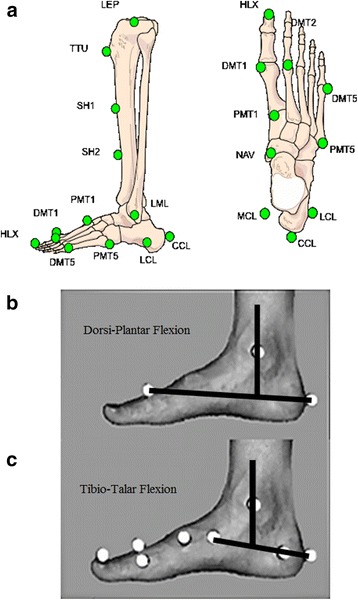 Figure 1
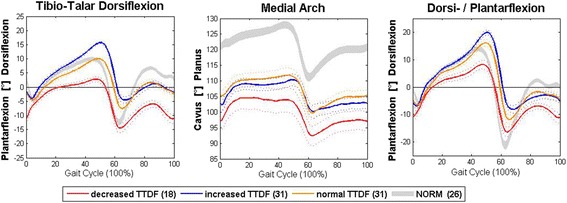 Figure 2
Peer Reviews
No public reviews on file for this paper yet. If you reviewed it on a platform where reviews are public (OpenReview, ICLR, NeurIPS, ICML), you can paste yours below so the community can read it here.
Videos
No videos yet. Explain this paper in a talk, walkthrough, or lecture? Add one.
Taxonomy
TopicsRadiation Effects and Dosimetry · Advanced Radiotherapy Techniques · Radiation Detection and Scintillator Technologies