Dilp8 requires the neuronal relaxin receptor Lgr3 to couple growth to developmental timing
Andres Garelli, Fabiana Heredia, Andreia P. Casimiro, Andre Macedo, Catarina Nunes, Marcia Garcez, Angela R. Mantas Dias, Yanel A. Volonte, Thomas Uhlmann, Esther Caparros, Takashi Koyama, Alisson M. Gontijo

TL;DR
This study identifies a new role for the Lgr3 receptor in Drosophila, linking organ growth to developmental timing through a neuroendocrine pathway involving Dilp8.
Contribution
The paper reveals that Lgr3 is a functional relaxin receptor required for Dilp8 signaling in coordinating growth and developmental timing.
Findings
Mutating Lgr3 causes body asymmetries similar to dilp8 mutants, indicating a shared pathway.
Lgr3 activity is localized to specific CNS neurons that respond to Dilp8 by increasing cAMP signaling.
Lgr3 is essential for the developmental delay caused by growth perturbations or Dilp8 overexpression.
Abstract
How different organs in the body sense growth perturbations in distant tissues to coordinate their size during development is poorly understood. Here we mutate an invertebrate orphan relaxin receptor gene, the Drosophila Leucine-rich repeat-containing G protein-coupled receptor 3 (Lgr3), and find body asymmetries similar to those found in insulin-like peptide 8 (dilp8) mutants, which fail to coordinate growth with developmental timing. Indeed, mutation or RNA intereference (RNAi) against Lgr3 suppresses the delay in pupariation induced by imaginal disc growth perturbation or ectopic Dilp8 expression. By tagging endogenous Lgr3 and performing cell type-specific RNAi, we map this Lgr3 activity to a new subset of CNS neurons, four of which are a pair of bilateral pars intercerebralis Lgr3-positive (PIL) neurons that respond specifically to ectopic Dilp8 by increasing cAMP-dependent…
Genes, proteins, chemicals, diseases, species, mutations and cell lines named across the full text — each resolved to its canonical identifier and authoritative record.
Click any figure to enlarge with its caption.
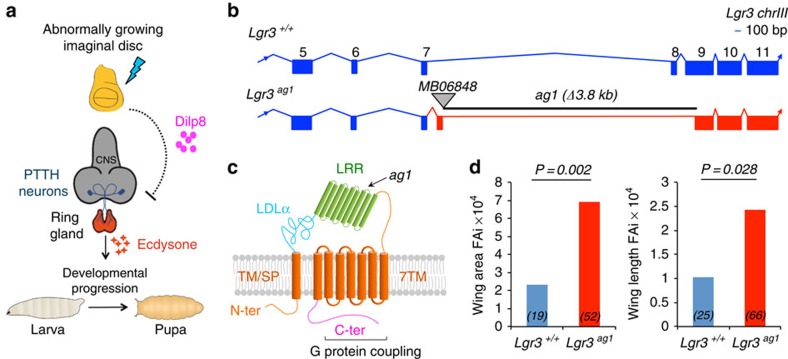 Figure 1
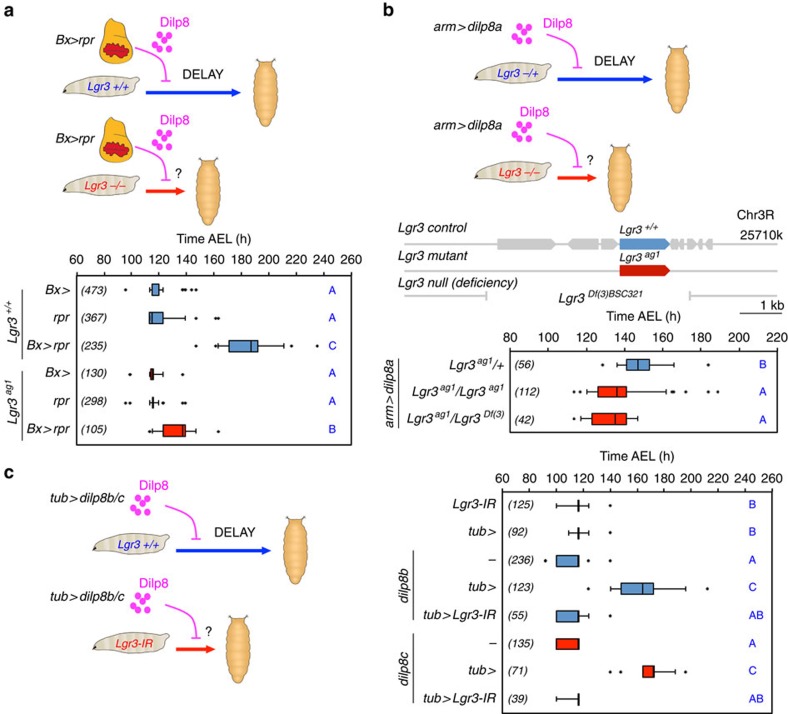 Figure 2
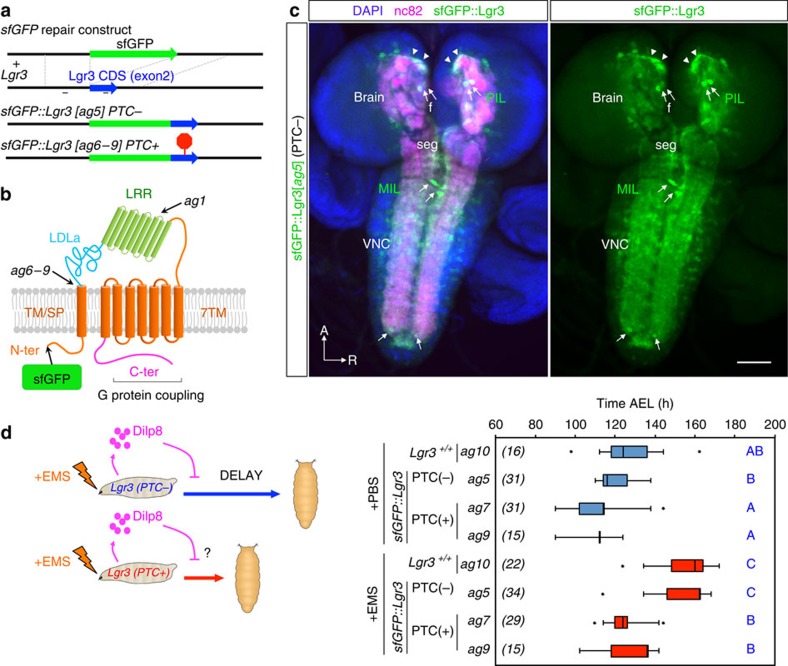 Figure 3
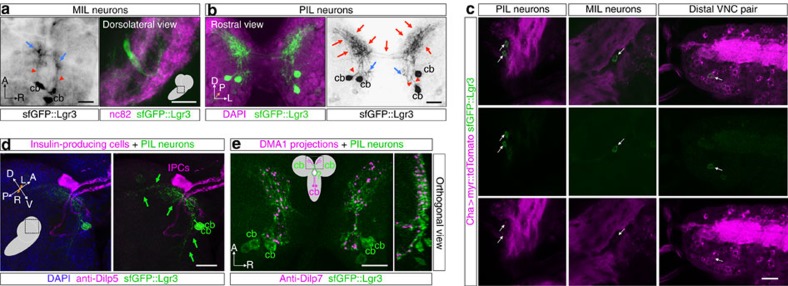 Figure 4
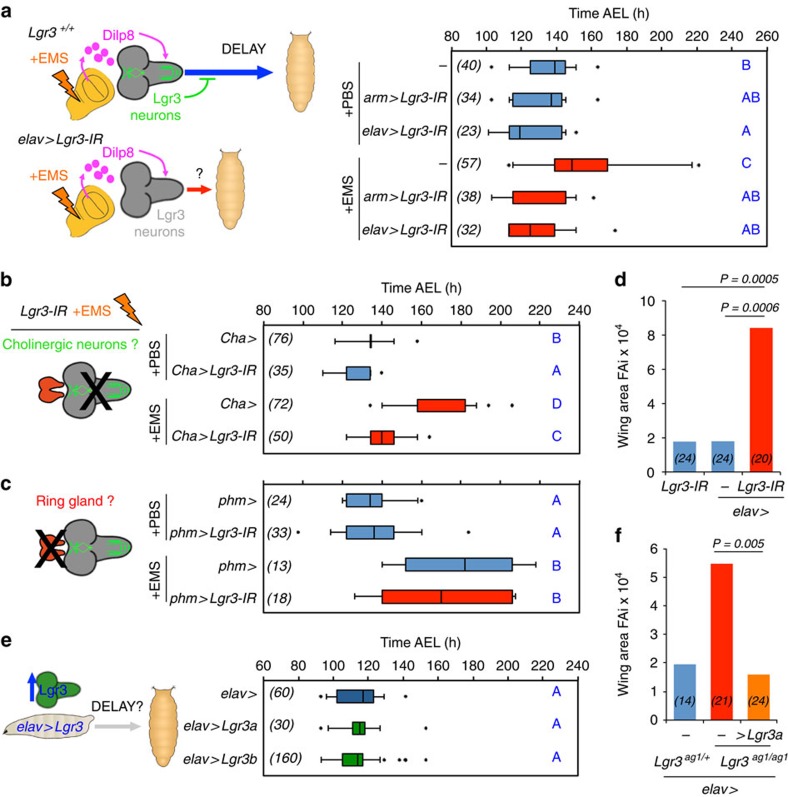 Figure 5
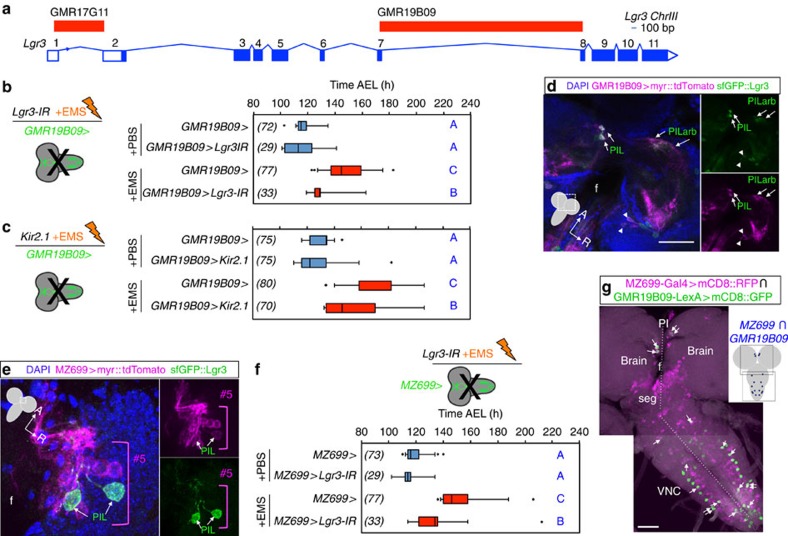 Figure 6
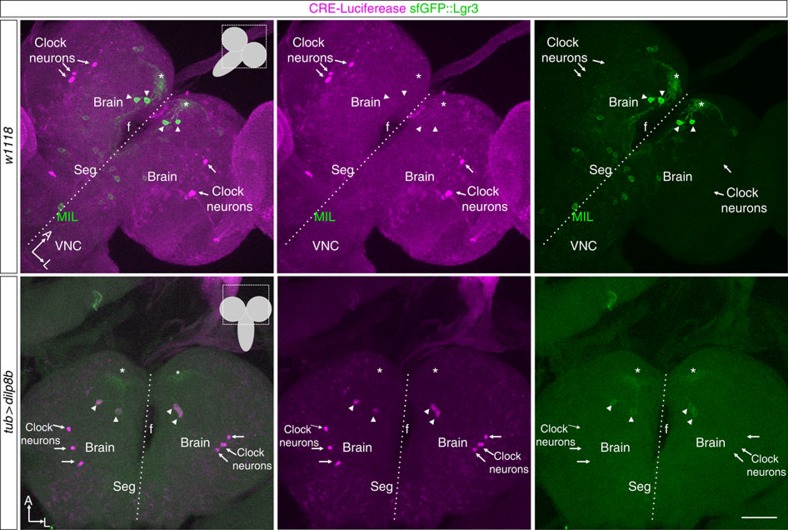 Figure 7
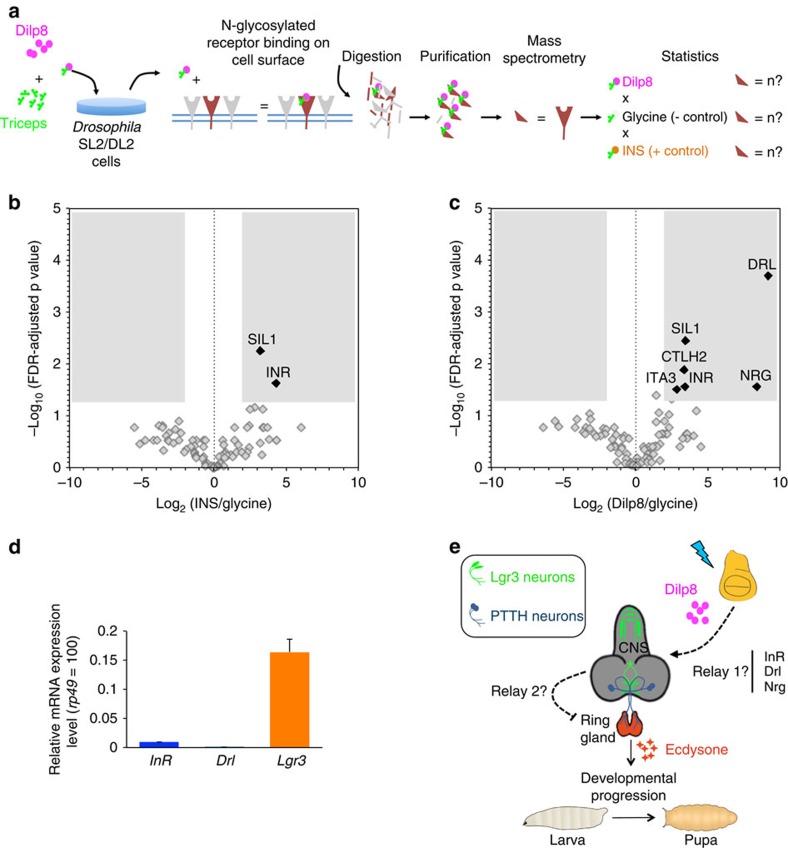 Figure 8
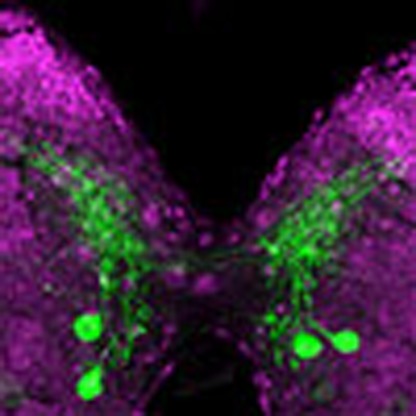 Figure 9
Peer Reviews
No public reviews on file for this paper yet. If you reviewed it on a platform where reviews are public (OpenReview, ICLR, NeurIPS, ICML), you can paste yours below so the community can read it here.
Videos
No videos yet. Explain this paper in a talk, walkthrough, or lecture? Add one.
Taxonomy
TopicsBasque language and culture studies · Comparative Literary Analysis and Criticism · Medieval European Literature and History