Depression-like Behavior Induced by Nesfatin-1 in Rats: Involvement of Increased Immune Activation and Imbalance of Synaptic Vesicle Proteins
Jin-Fang Ge, Ya-Yun Xu, Gan Qin, Yao-Nan Peng, Chao-Feng Zhang, Xing-Rui Liu, Li-Chuan Liang, Zhong-Zheng Wang, Fei-Hu Chen

TL;DR
Nesfatin-1, when injected into rats, causes depression-like behaviors linked to immune activation and changes in brain proteins related to synapses.
Contribution
This study reveals a novel link between nesfatin-1, immune activation, and synaptic protein imbalance in depression-like behavior in rats.
Findings
Chronic nesfatin-1 administration increases immobility in the forced swimming test and HPA axis activity.
Nesfatin-1 elevates plasma IL-6 and CRP levels, correlating with depression-like behaviors and synaptic protein mRNA expression.
Chronic nesfatin-1 reduces exploratory behavior and increases synapsin I and synaptotagmin I mRNA in the hypothalamus.
Abstract
Depression is a multicausal disorder and has been associated with metabolism regulation and immuno-inflammatory reaction. The anorectic molecule nesfatin-1 has recently been characterized as a potential mood regulator, but its precise effect on depression and the possible mechanisms remain unknown, especially when given peripherally. In the present study, nesfatin-1 was intraperitoneally injected to the rats and the depression-like behavior and activity of the hypothalamic-pituitary-adrenal (HPA) axis were evaluated. The plasma concentrations of nesfatin-1, interleukin 6 (IL-6), and C-reactive protein (CRP); and the hypothalamic expression levels of nesfatin-1, synapsin I, and synaptotagmin I mRNA were evaluated in nesfatin-1 chronically treated rats. The results showed that both acute and chronic administration of nesfatin-1 increased immobility in the forced swimming test (FST), and…
Genes, proteins, chemicals, diseases, species, mutations and cell lines named across the full text — each resolved to its canonical identifier and authoritative record.
Click any figure to enlarge with its caption.
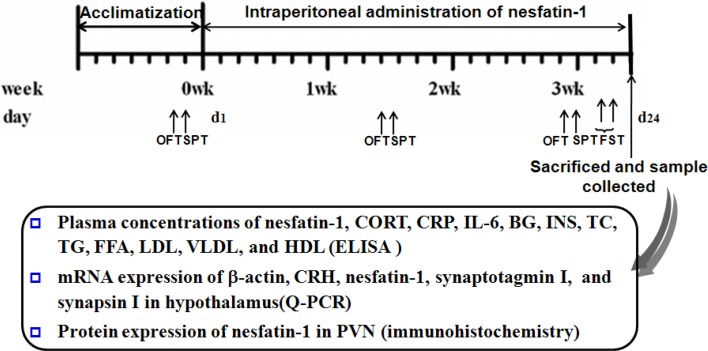 Figure 1
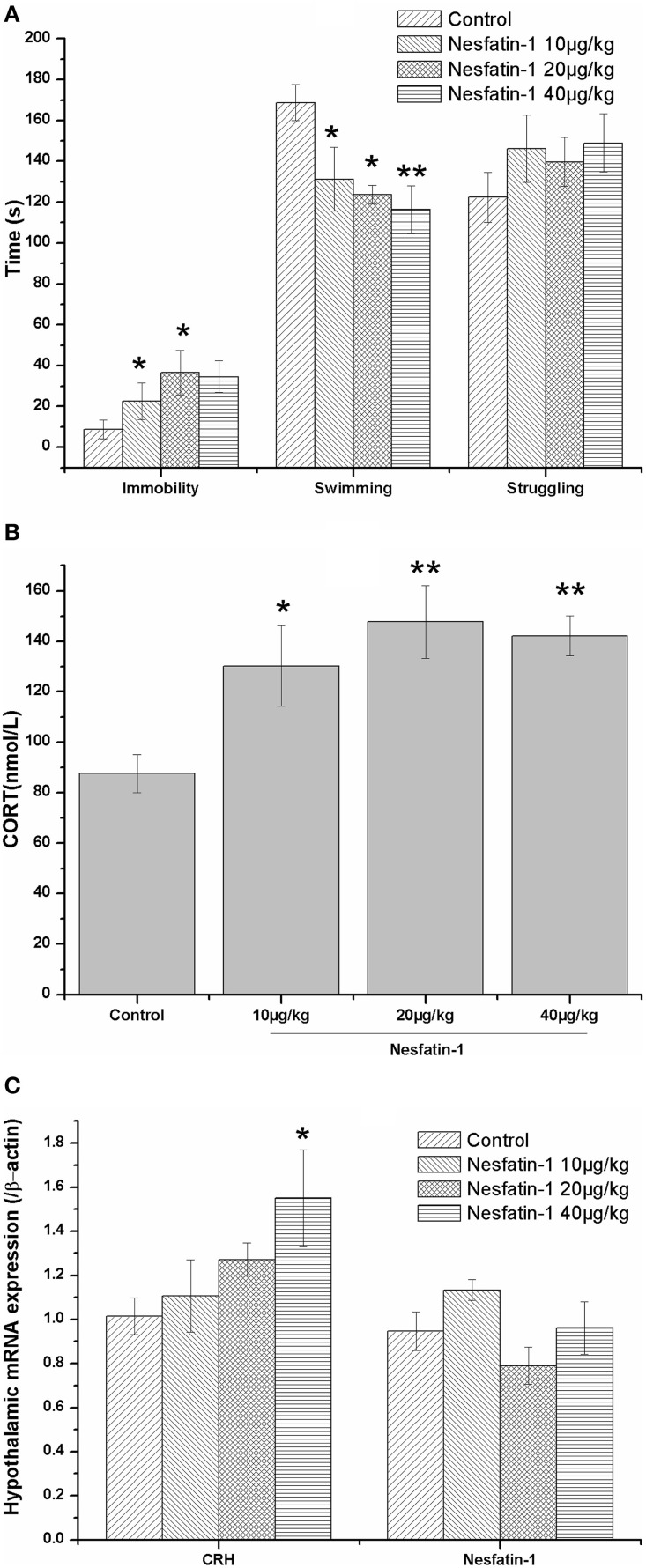 Figure 2
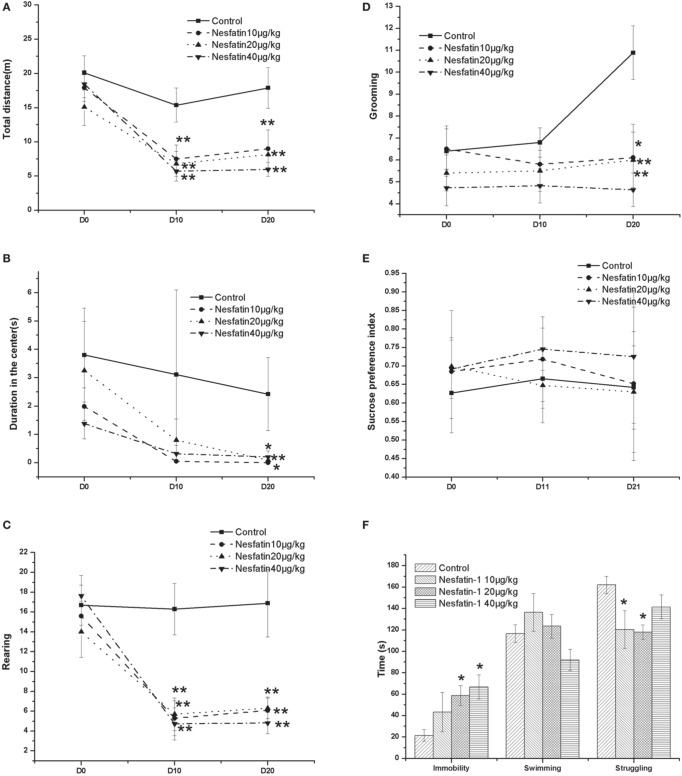 Figure 3
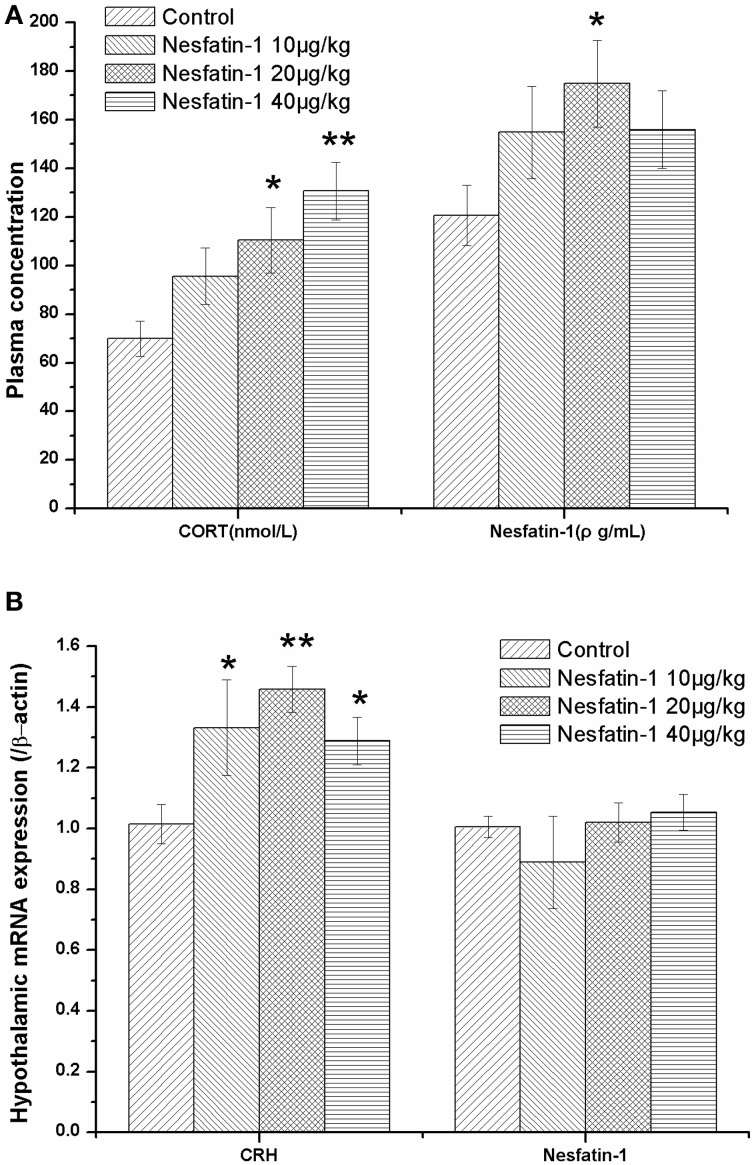 Figure 4
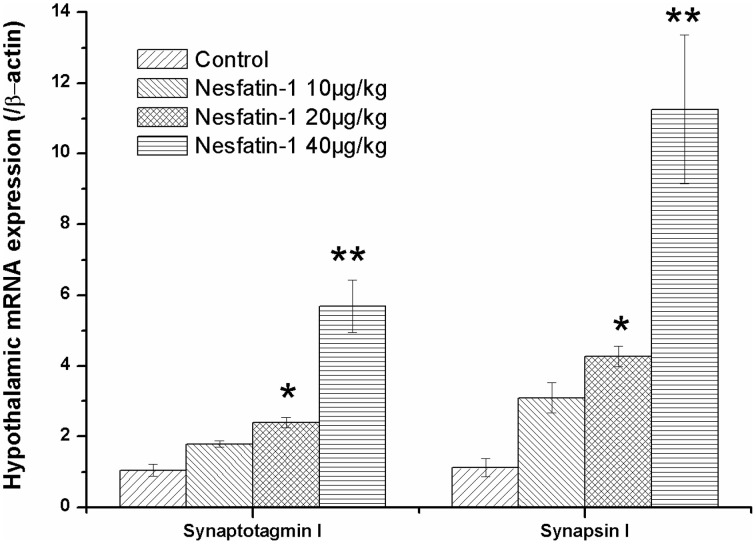 Figure 5
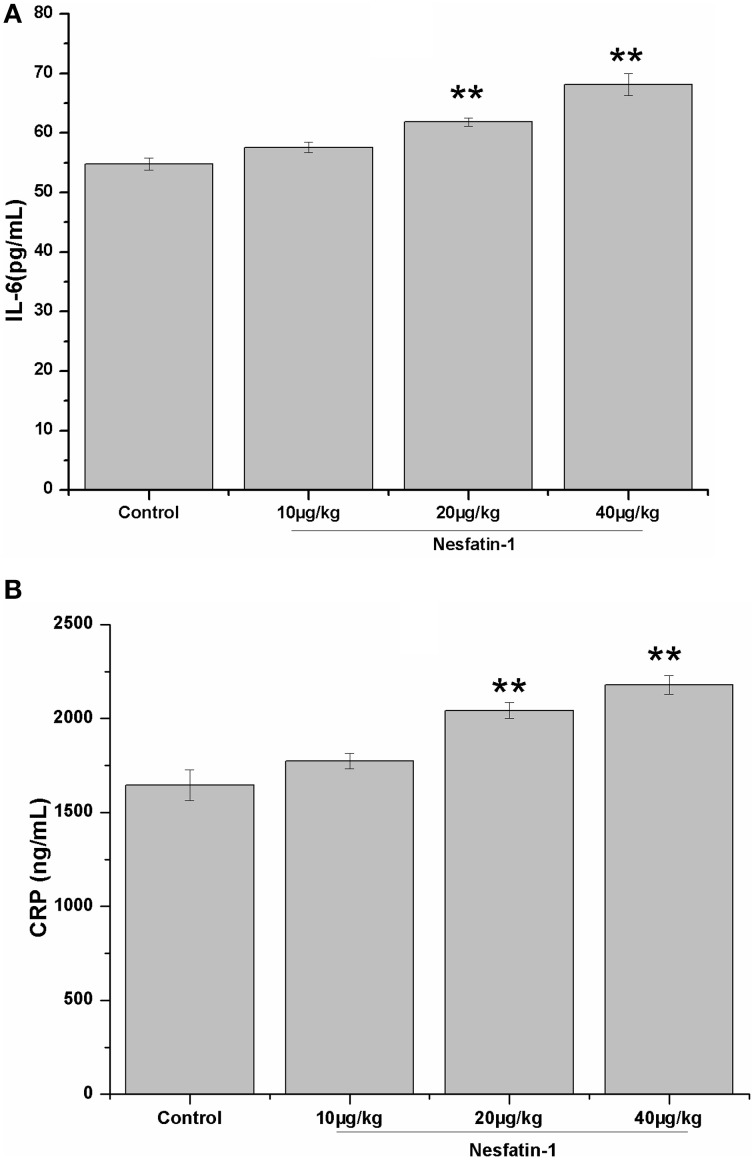 Figure 6
Peer Reviews
No public reviews on file for this paper yet. If you reviewed it on a platform where reviews are public (OpenReview, ICLR, NeurIPS, ICML), you can paste yours below so the community can read it here.
Videos
No videos yet. Explain this paper in a talk, walkthrough, or lecture? Add one.
Taxonomy
TopicsCinema History and Criticism · Italian Literature and Culture · Kierkegaardian Philosophy and Influence