A BIL Population Derived from G. hirsutum and G. barbadense Provides a Resource for Cotton Genetics and Breeding
Xinhui Nie, Jianli Tu, Bin Wang, Xiaofeng Zhou, Zhongxu Lin

TL;DR
Researchers created a cotton population by crossing two species to study genetic traits and improve breeding.
Contribution
A new interspecific BIL population was developed for studying gene function and enhancing cotton breeding.
Findings
The BIL population showed diverse morphological and phenotypic variations in plant traits and fiber quality.
58 QTLs were identified for fiber quality and yield traits, with 47 beneficial alleles from the donor parent.
The population has high molecular diversity with 922 alleles detected using SSR markers.
Abstract
To provide a resource for cotton genetics and breeding, an interspecific hybridization between Gossypium hirsutum cv. Emian22 and G. barbadense acc. 3–79 was made. A population of 54 BILs (backcross inbred lines, BC1F8) was developed with the aim of transferring G. barbadense genes into G. hirsutum in order to genetically analyze these genes’ function in a G. hirsutum background and create new germplasms for breeding. Preliminary investigation of the morphological traits showed that the BILs had diverse variations in plant architecture, seed size, and fuzz color; the related traits of yield and fiber quality evaluated in 4 environments also showed abundant phenotypic variation. In order to explore the molecular diversity of the BIL population, 446 SSR markers selected at an average genetic distance of 10 cM from our interspecific linkage map were used to genotype the BIL population. A…
Genes, proteins, chemicals, diseases, species, mutations and cell lines named across the full text — each resolved to its canonical identifier and authoritative record.
Click any figure to enlarge with its caption.
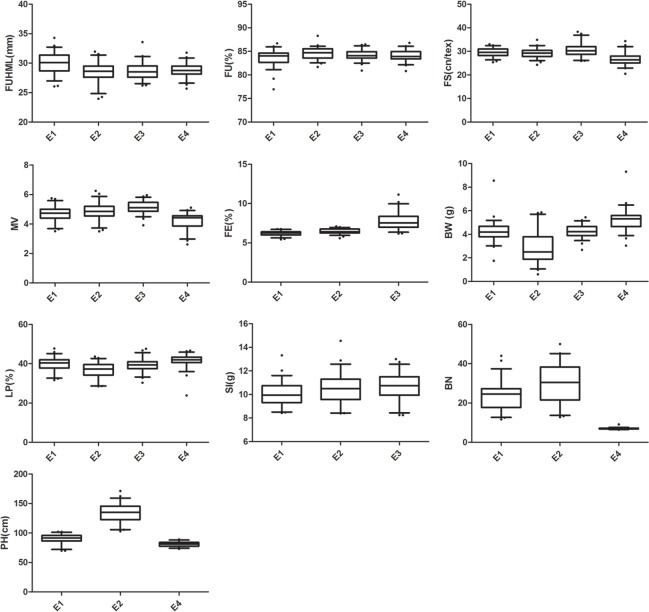 Figure 1
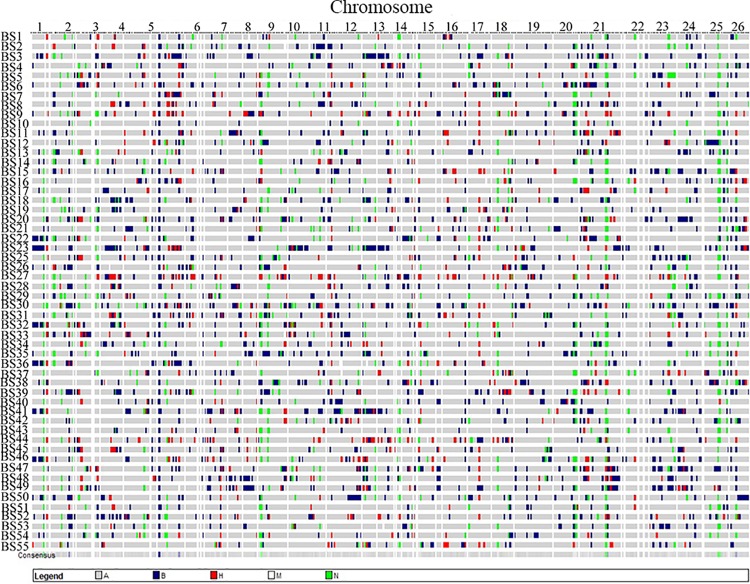 Figure 2
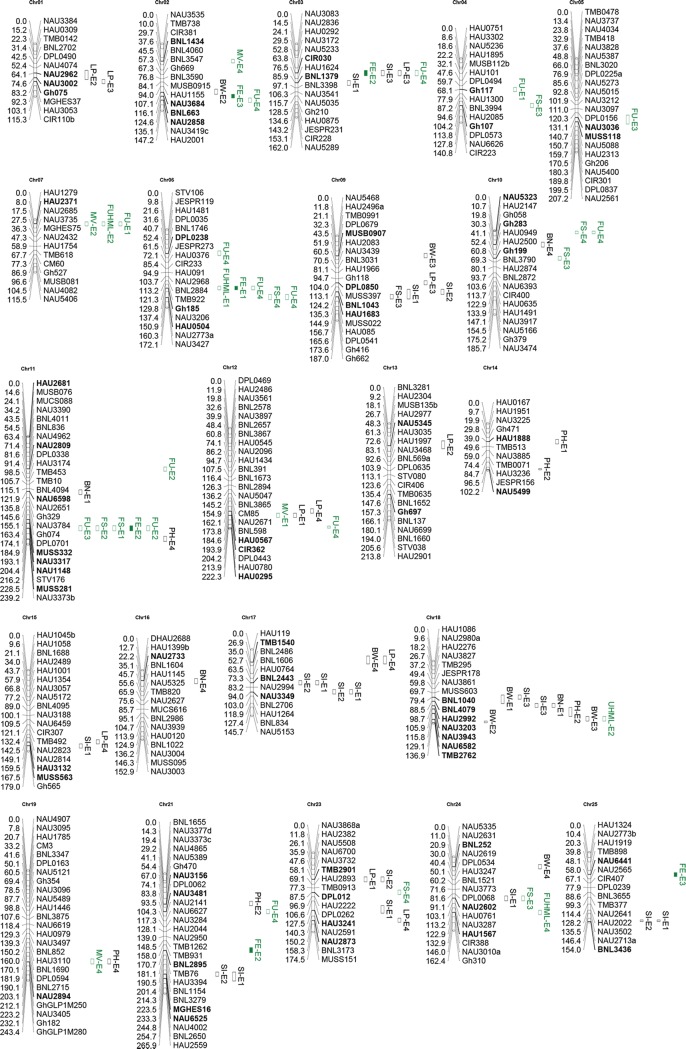 Figure 3
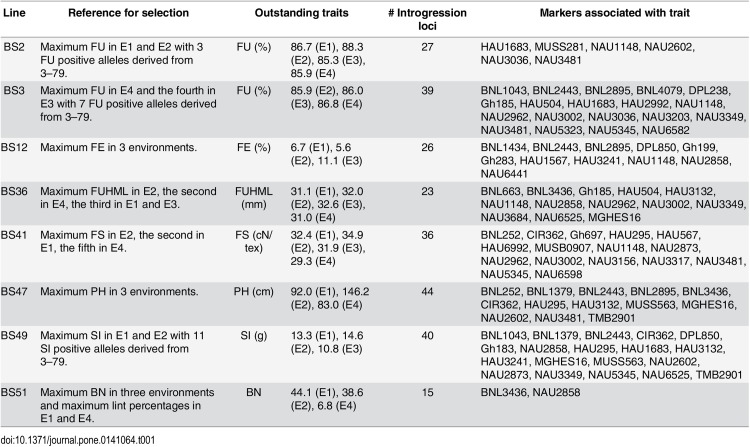 Figure 4
Peer Reviews
No public reviews on file for this paper yet. If you reviewed it on a platform where reviews are public (OpenReview, ICLR, NeurIPS, ICML), you can paste yours below so the community can read it here.
Videos
No videos yet. Explain this paper in a talk, walkthrough, or lecture? Add one.
Taxonomy
TopicsMedical Practices and Rehabilitation