Enhancing understanding and improving prediction of severe weather through spatiotemporal relational learning
Amy McGovern, David J. Gagne, John K. Williams, Rodger A. Brown, Jeffrey B. Basara

TL;DR
This paper introduces a new machine learning approach to better understand and predict severe weather events like tornadoes and thunderstorms.
Contribution
The novel contribution is the enhancement of spatiotemporal relational probability trees to autonomously discover spatiotemporal relationships and handle arbitrary shapes.
Findings
The enhanced method was successfully applied to predict tornadoes in Oklahoma and aircraft turbulence in the U.S.
The paper provides evaluation criteria for machine learning success in severe weather prediction to aid in transitioning research to operational use.
Abstract
Severe weather, including tornadoes, thunderstorms, wind, and hail annually cause significant loss of life and property. We are developing spatiotemporal machine learning techniques that will enable meteorologists to improve the prediction of these events by improving their understanding of the fundamental causes of the phenomena and by building skillful empirical predictive models. In this paper, we present significant enhancements of our Spatiotemporal Relational Probability Trees that enable autonomous discovery of spatiotemporal relationships as well as learning with arbitrary shapes. We focus our evaluation on two real-world case studies using our technique: predicting tornadoes in Oklahoma and predicting aircraft turbulence in the United States. We also discuss how to evaluate success for a machine learning algorithm in the severe weather domain, which will enable new methods such…
Genes, proteins, chemicals, diseases, species, mutations and cell lines named across the full text — each resolved to its canonical identifier and authoritative record.
Click any figure to enlarge with its caption.
 Figure 1
 Figure 2
 Figure 3
 Figure 4
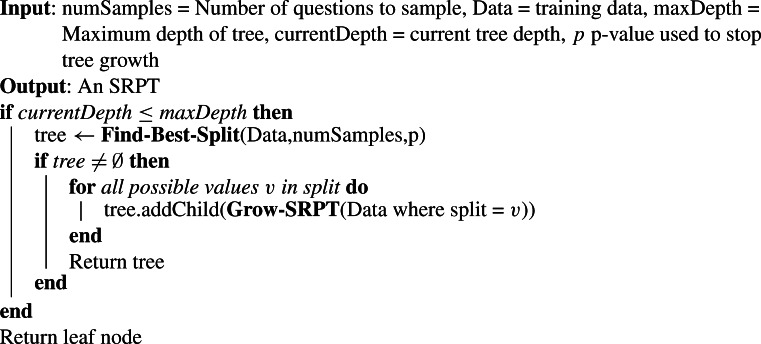 Figure 5
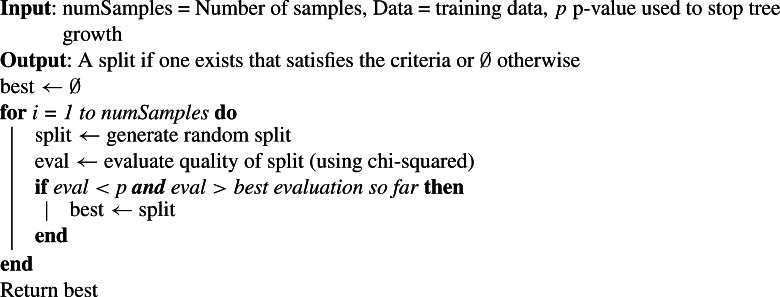 Figure 6
Peer Reviews
No public reviews on file for this paper yet. If you reviewed it on a platform where reviews are public (OpenReview, ICLR, NeurIPS, ICML), you can paste yours below so the community can read it here.
Videos
No videos yet. Explain this paper in a talk, walkthrough, or lecture? Add one.
Taxonomy
TopicsLogic, Reasoning, and Knowledge · Explainable Artificial Intelligence (XAI) · Topic Modeling