Construction of a plasmid coding for green fluorescent protein tagged cathepsin L and data on expression in colorectal carcinoma cells
Tripti Tamhane, Brit K. Wolters, Rukshala Illukkumbura, Gunhild M. Maelandsmo, Mads H. Haugen, Klaudia Brix

TL;DR
This paper describes the creation of a plasmid that produces a green fluorescent protein-tagged version of cathepsin L and its effects in colorectal cancer cells.
Contribution
The novel contribution is the construction of a plasmid encoding a fluorescently tagged human cathepsin L for studying its expression and function in cancer cells.
Findings
A plasmid coding for human cathepsin L fused with green fluorescent protein was successfully constructed and transfected into HCT116 cells.
Expression of the tagged cathepsin L affected the proliferation and metabolic state of HCT116 cells within 24 hours post-transfection.
Endogenous cathepsin L levels were higher than the engineered fluorescent protein chimera in transfected cells.
Abstract
The endo-lysosomal cysteine cathepsin L has recently been shown to have moonlighting activities in that its unexpected nuclear localization in colorectal carcinoma cells is involved in cell cycle progression (Tamhane et al., 2015) [1]. Here, we show data on the construction and sequence of a plasmid coding for human cathepsin L tagged with an enhanced green fluorescent protein (phCL-EGFP) in which the fluorescent protein is covalently attached to the C-terminus of the protease. The plasmid was used for transfection of HCT116 colorectal carcinoma cells, while data from non-transfected and pEGFP-N1-transfected cells is also shown. Immunoblotting data of lysates from non-transfected controls and HCT116 cells transfected with pEGFP-N1 and phCL-EGFP, showed stable expression of cathepsin L-enhanced green fluorescent protein chimeras, while endogenous cathepsin L protein amounts exceed those…
Genes, proteins, chemicals, diseases, species, mutations and cell lines named across the full text — each resolved to its canonical identifier and authoritative record.
Click any figure to enlarge with its caption.
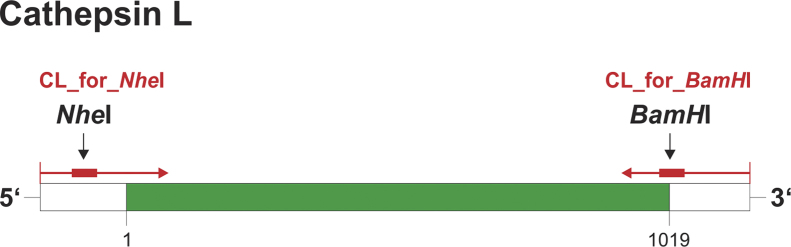 Figure 1
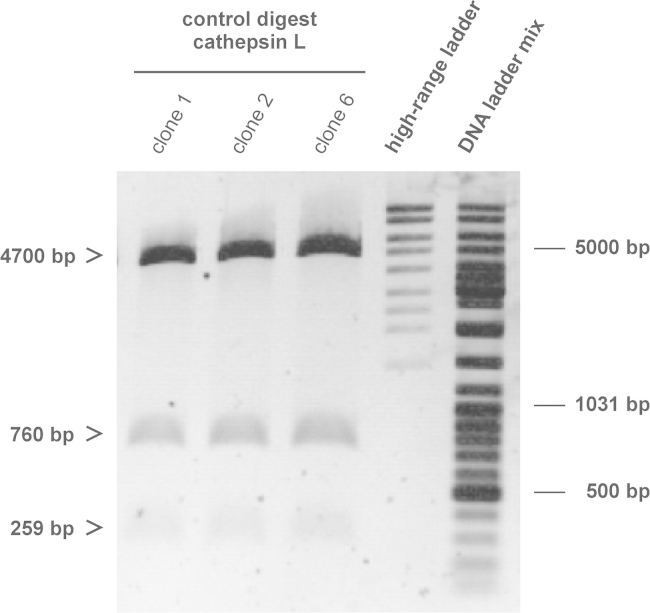 Figure 2
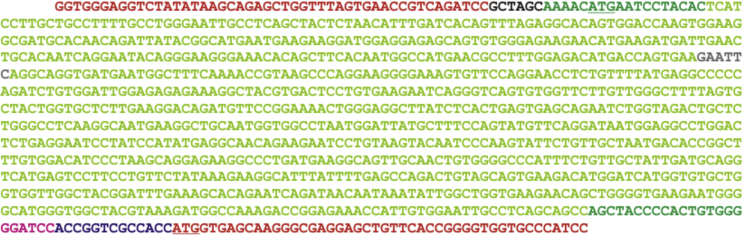 Figure 3
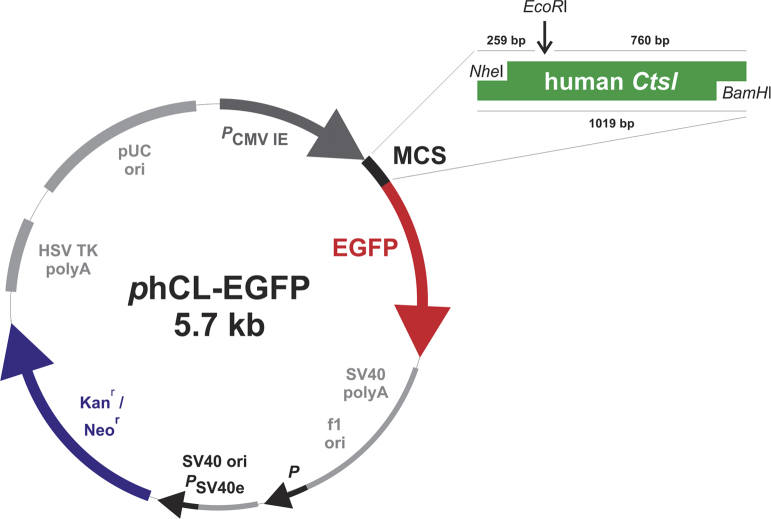 Figure 4
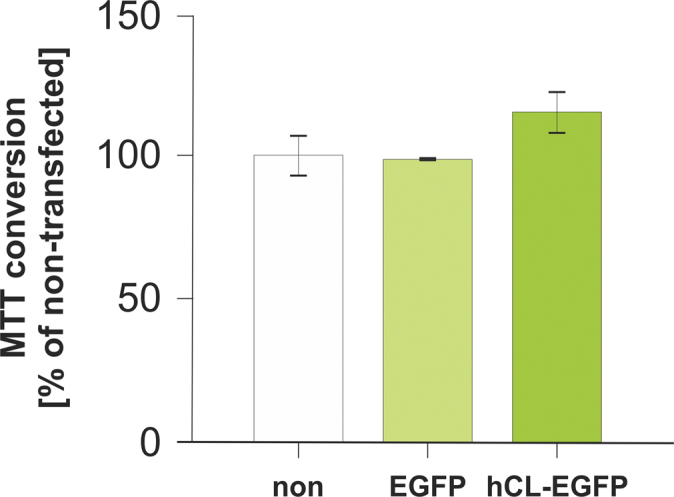 Figure 5
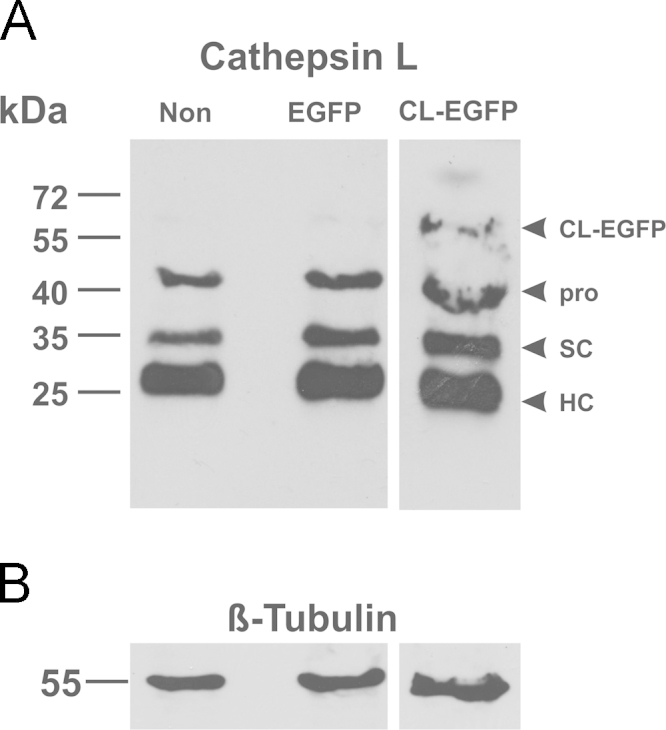 Figure 6
Peer Reviews
No public reviews on file for this paper yet. If you reviewed it on a platform where reviews are public (OpenReview, ICLR, NeurIPS, ICML), you can paste yours below so the community can read it here.
Videos
No videos yet. Explain this paper in a talk, walkthrough, or lecture? Add one.
Taxonomy
TopicsLegal principles and applications