Efficient, Decentralized Detection of Qualitative Spatial Events in a Dynamic Scalar Field
Myeong-Hun Jeong, Matt Duckham

TL;DR
This paper introduces a decentralized algorithm for detecting spatial events in dynamic fields using sensor networks without needing position data.
Contribution
A novel decentralized algorithm for detecting spatial events in dynamic scalar fields using only local qualitative information.
Findings
The algorithm achieves O(n) communication complexity with balanced load and low latency.
Event detection accuracy matches centralized algorithms for critical point identification.
The method is suitable for environmental monitoring applications using sensor networks.
Abstract
This paper describes an efficient, decentralized algorithm to monitor qualitative spatial events in a dynamic scalar field. The events of interest involve changes to the critical points (i.e., peak, pits and passes) and edges of the surface network derived from the field. Four fundamental types of event (appearance, disappearance, movement and switch) are defined. Our algorithm is designed to rely purely on qualitative information about the neighborhoods of nodes in the sensor network and does not require information about nodes’ coordinate positions. Experimental investigations confirm that our algorithm is efficient, with O(n) overall communication complexity (where n is the number of nodes in the sensor network), an even load balance and low operational latency. The accuracy of event detection is comparable to established centralized algorithms for the identification of critical…
Genes, proteins, chemicals, diseases, species, mutations and cell lines named across the full text — each resolved to its canonical identifier and authoritative record.
Click any figure to enlarge with its caption.
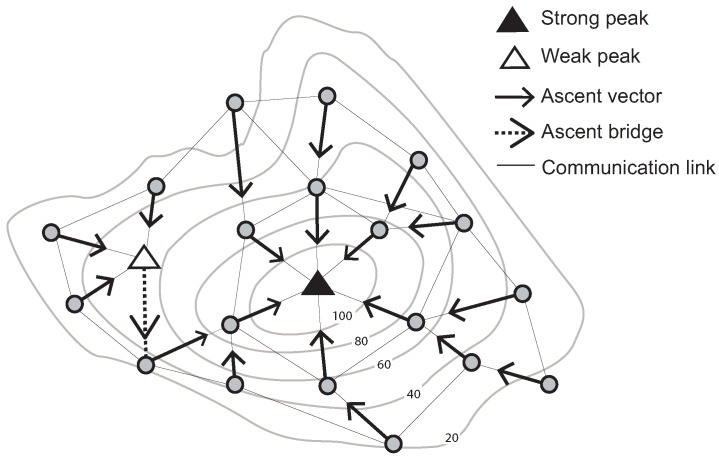 Figure 1
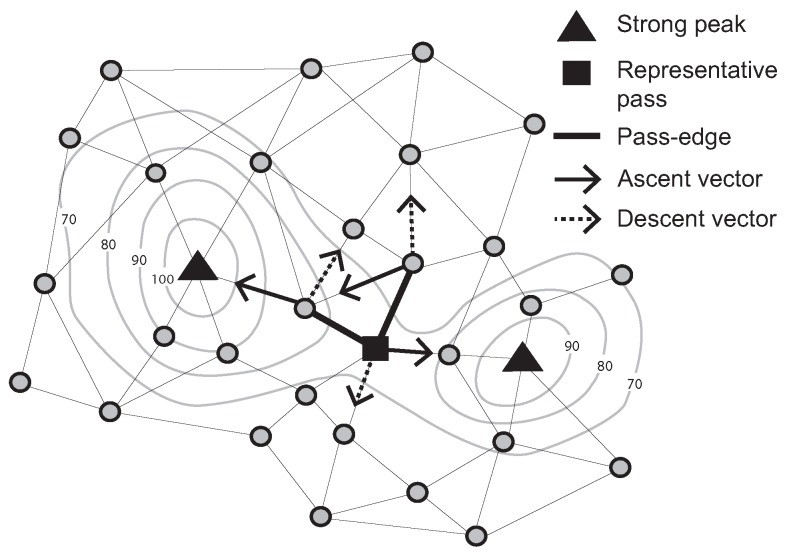 Figure 2
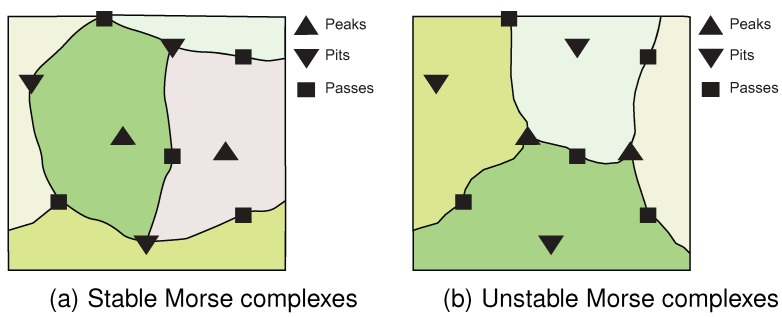 Figure 3
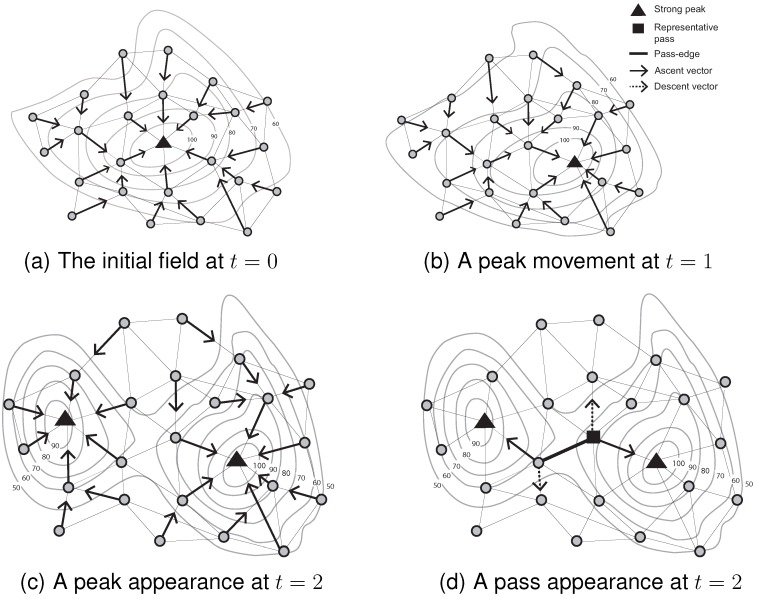 Figure 4
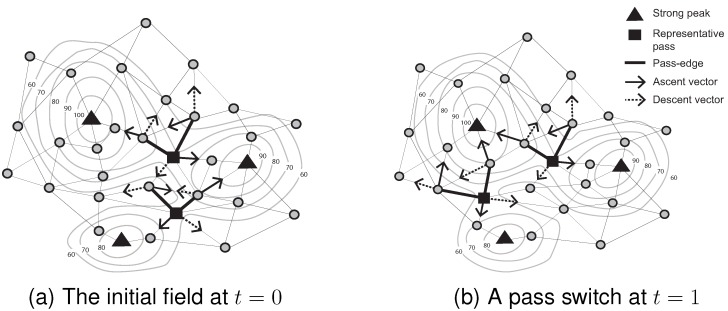 Figure 5
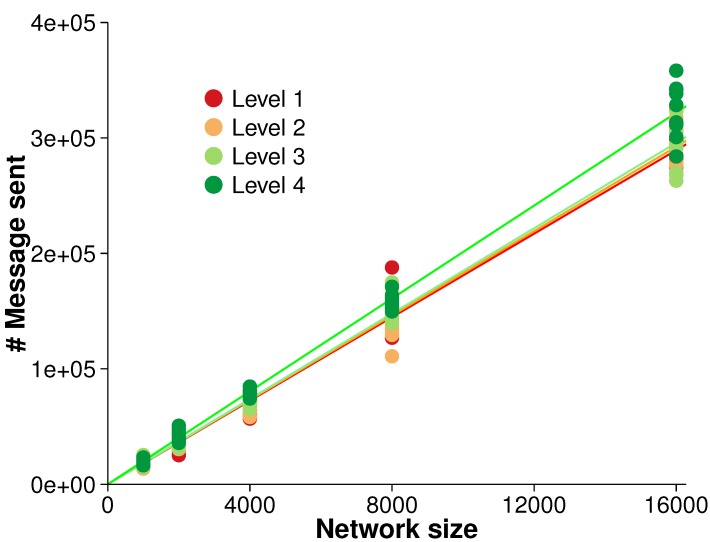 Figure 6
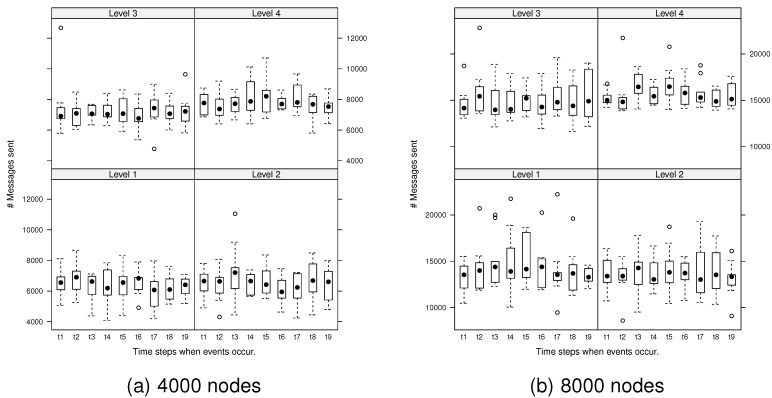 Figure 7
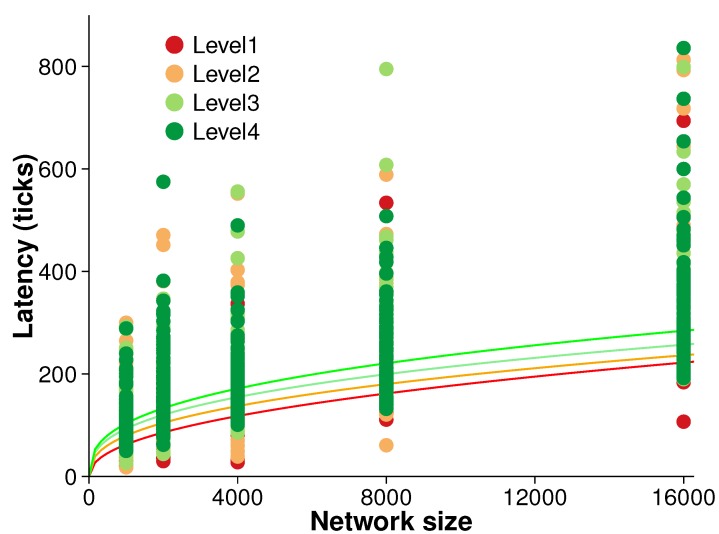 Figure 8
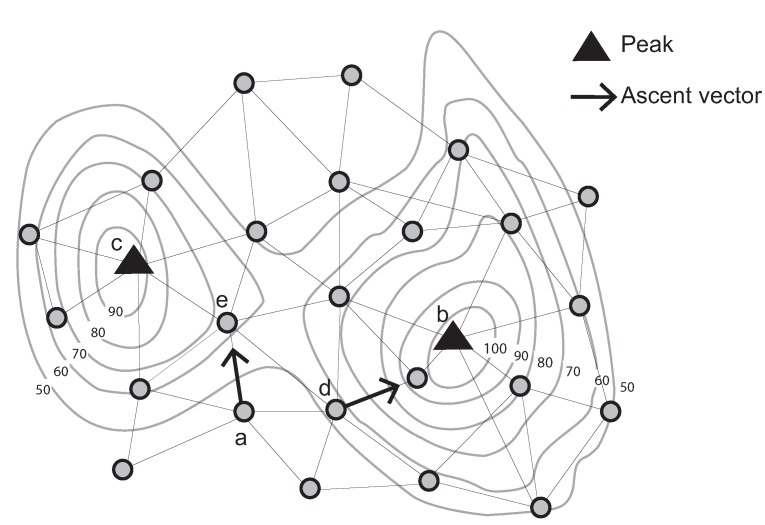 Figure 9
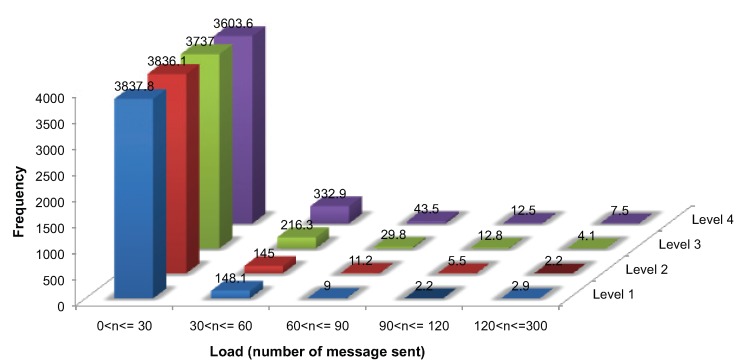 Figure 10
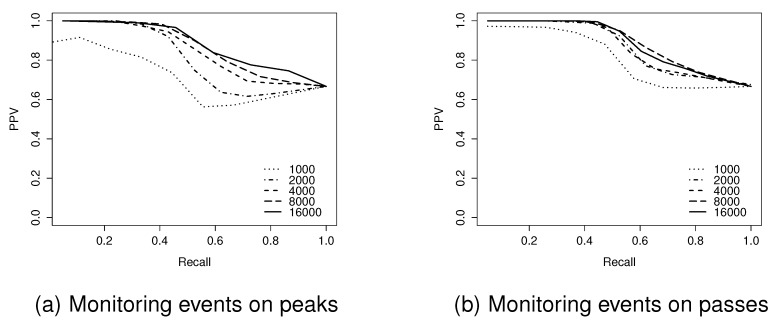 Figure 11
Peer Reviews
No public reviews on file for this paper yet. If you reviewed it on a platform where reviews are public (OpenReview, ICLR, NeurIPS, ICML), you can paste yours below so the community can read it here.
Videos
No videos yet. Explain this paper in a talk, walkthrough, or lecture? Add one.
Taxonomy
TopicsEnergy Efficient Wireless Sensor Networks · Modular Robots and Swarm Intelligence · Data Management and Algorithms