Beneficial biological effects and the underlying mechanisms of molecular hydrogen - comprehensive review of 321 original articles -
Masatoshi Ichihara, Sayaka Sobue, Mikako Ito, Masafumi Ito, Masaaki Hirayama, Kinji Ohno

TL;DR
Molecular hydrogen shows therapeutic effects in many diseases by reducing oxidative stress and inflammation, though its exact mechanisms are still being studied.
Contribution
A comprehensive review of 321 studies reveals hydrogen's broad biological effects and potential molecular mechanisms.
Findings
Molecular hydrogen reduces oxidative stress and inflammation in various disease models.
Hydrogen's effects are observed in 31 disease categories across multiple organs.
Hydrogen modulates activities of molecules like Lyn, ERK, and NF-κB p65.
Abstract
Therapeutic effects of molecular hydrogen for a wide range of disease models and human diseases have been investigated since 2007. A total of 321 original articles have been published from 2007 to June 2015. Most studies have been conducted in Japan, China, and the USA. About three-quarters of the articles show the effects in mice and rats. The number of clinical trials is increasing every year. In most diseases, the effect of hydrogen has been reported with hydrogen water or hydrogen gas, which was followed by confirmation of the effect with hydrogen-rich saline. Hydrogen water is mostly given ad libitum. Hydrogen gas of less than 4 % is given by inhalation. The effects have been reported in essentially all organs covering 31 disease categories that can be subdivided into 166 disease models, human diseases, treatment-associated pathologies, and pathophysiological conditions of plants…
Genes, proteins, chemicals, diseases, species, mutations and cell lines named across the full text — each resolved to its canonical identifier and authoritative record.
Click any figure to enlarge with its caption.
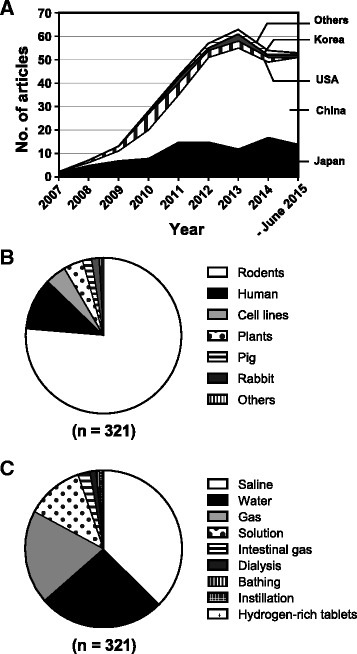 Figure 1
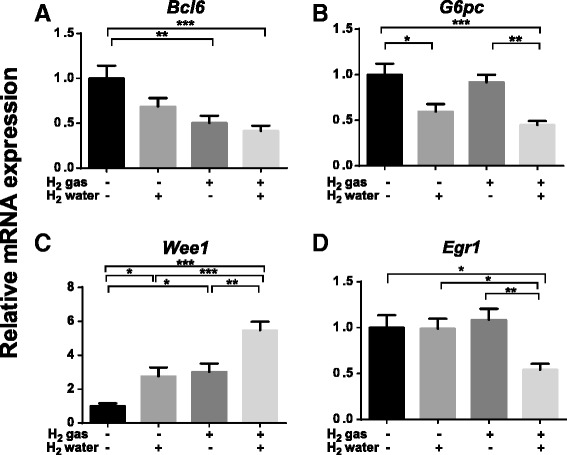 Figure 2
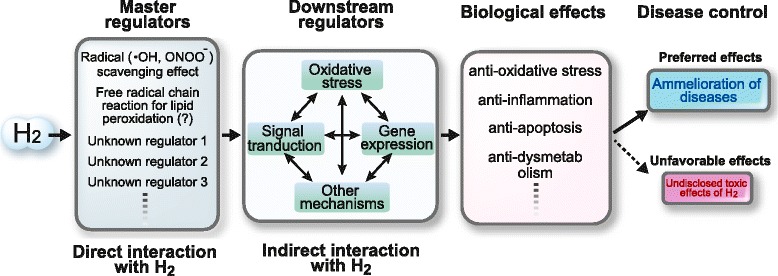 Figure 3
Peer Reviews
No public reviews on file for this paper yet. If you reviewed it on a platform where reviews are public (OpenReview, ICLR, NeurIPS, ICML), you can paste yours below so the community can read it here.
Videos
No videos yet. Explain this paper in a talk, walkthrough, or lecture? Add one.
Taxonomy
TopicsComputational Physics and Python Applications · Distributed and Parallel Computing Systems