Artificial Gauge Field and Topological Phase in a Conventional Two-dimensional Electron Gas with Antidot Lattices
Likun Shi, Wenkai Lou, F. Cheng, Y. L. Zou, Wen Yang, Kai Chang

TL;DR
This paper proposes a method to create artificial gauge fields and topological phases in a 2D electron gas using antidot lattices and spin-orbit coupling.
Contribution
A new theoretical framework for generating artificial gauge fields and topological phases in conventional 2D electron systems with antidot lattices.
Findings
Fast interband transitions induce a gauge field on slow orbital motion, leading to a topological phase.
Antidot lattices create minibands and band inversions, enabling large nontrivial minigaps.
Intersubband spin-orbit interaction produces multiple pairs of helical edge states.
Abstract
Based on the Born-Oppemheimer approximation, we divide the total electron Hamiltonian in a spin-orbit coupled system into the slow orbital motion and the fast interband transition processes. We find that the fast motion induces a gauge field on the slow orbital motion, perpendicular to the electron momentum, inducing a topological phase. From this general designing principle, we present a theory for generating artificial gauge field and topological phase in a conventional two-dimensional electron gas embedded in parabolically graded GaAs/InxGa1−xAs/GaAs quantum wells with antidot lattices. By tuning the etching depth and period of the antidot lattices, the band folding caused by the antidot potential leads to the formation of minibands and band inversions between neighboring subbands. The intersubband spin-orbit interaction opens considerably large nontrivial minigaps and leads to many…
Genes, proteins, chemicals, diseases, species, mutations and cell lines named across the full text — each resolved to its canonical identifier and authoritative record.
Click any figure to enlarge with its caption.
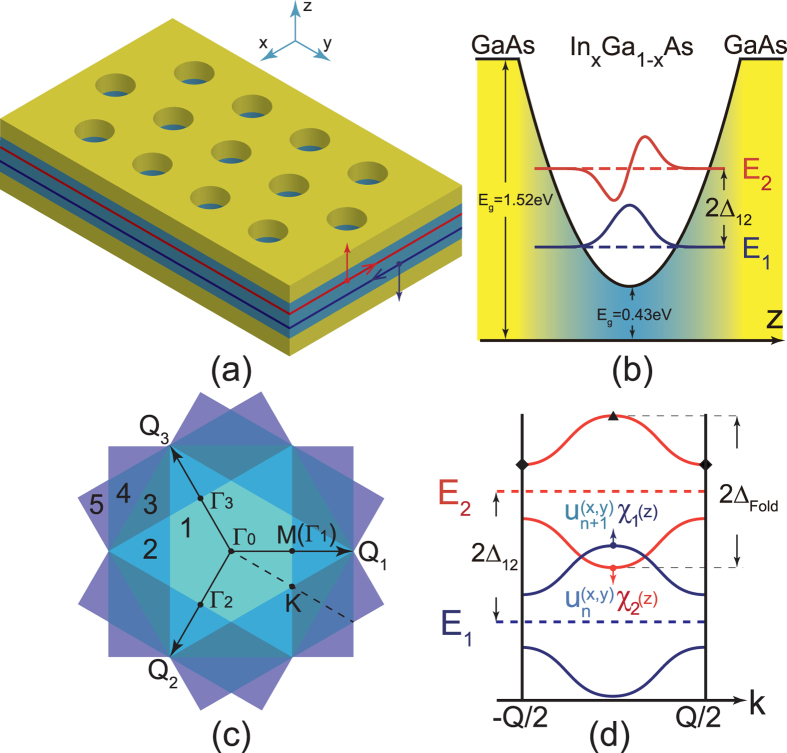 Figure 1
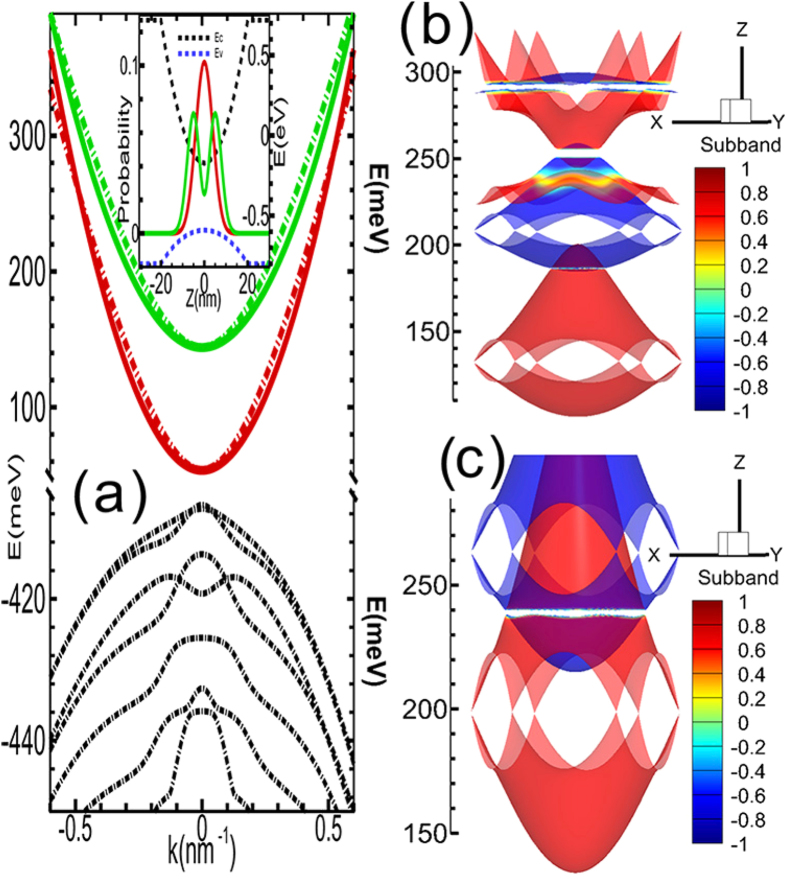 Figure 2
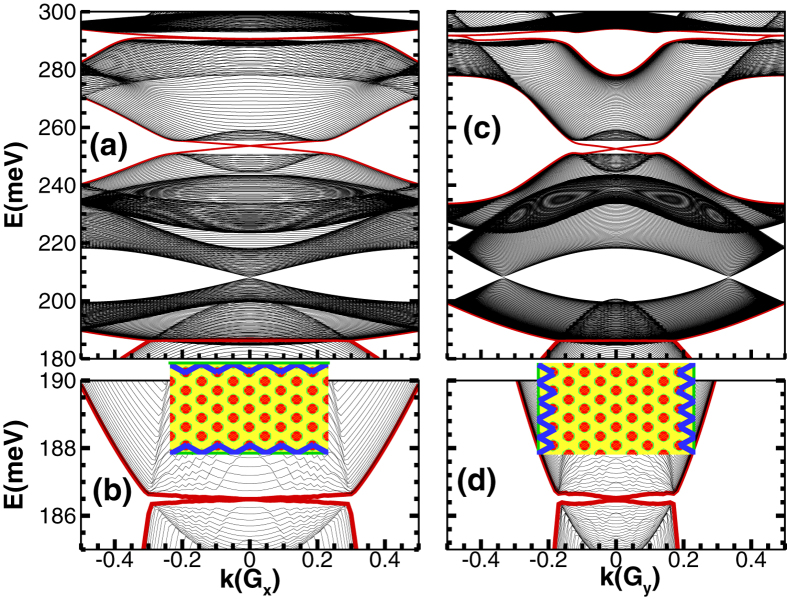 Figure 3
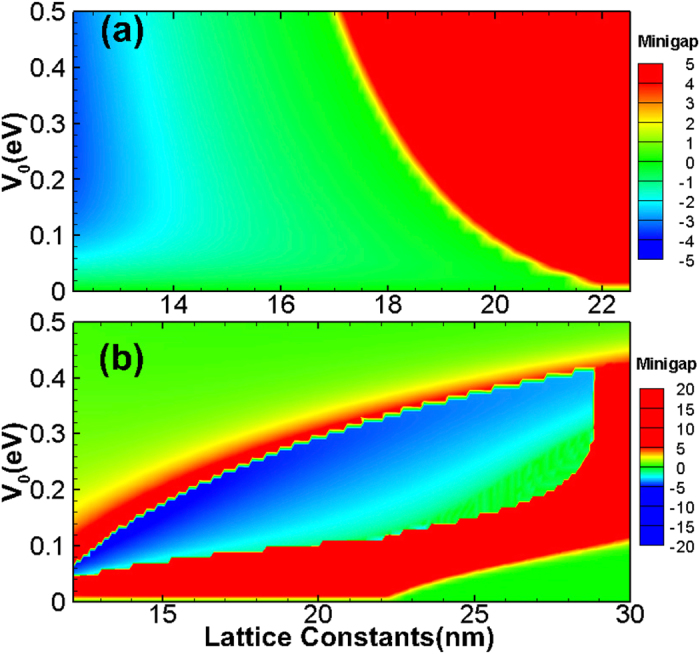 Figure 4
 Figure 5
 Figure 6
 Figure 7
 Figure 8
 Figure 9
 Figure 10
 Figure 11
 Figure 12
 Figure 13
 Figure 14
 Figure 15
 Figure 16
 Figure 17
 Figure 18
 Figure 19
 Figure 20
 Figure 21
 Figure 22
 Figure 23
 Figure 24
 Figure 25
 Figure 26
 Figure 27
 Figure 28
 Figure 29
 Figure 30
 Figure 31
 Figure 32
 Figure 33
 Figure 34
 Figure 35
 Figure 36
 Figure 37
 Figure 38
 Figure 39
 Figure 40
 Figure 41
 Figure 42
 Figure 43
 Figure 44
 Figure 45
 Figure 46
 Figure 47
 Figure 48
 Figure 49
 Figure 50
Peer Reviews
No public reviews on file for this paper yet. If you reviewed it on a platform where reviews are public (OpenReview, ICLR, NeurIPS, ICML), you can paste yours below so the community can read it here.
Videos
No videos yet. Explain this paper in a talk, walkthrough, or lecture? Add one.
Taxonomy
TopicsPhysics of Superconductivity and Magnetism · Quantum and electron transport phenomena · Cold Atom Physics and Bose-Einstein Condensates