An Intriguing Endoscopic Case of Asymptomatic Crohn’s Disease
Mena Boules, Ilyssa O. Gordon, Brian Kirsh, Maged K. Rizk

TL;DR
A 64-year-old man with Crohn's disease has remained mostly symptom-free for decades, but endoscopic exams reveal unusual signs of ongoing disease.
Contribution
Highlights the clinical variability of Crohn's disease through a rare asymptomatic case with notable endoscopic features.
Findings
The patient showed pseudopolyps and tissue bridges in the colon during a routine colonoscopy.
Despite being asymptomatic, the endoscopic findings suggest ongoing disease activity.
The case demonstrates the heterogeneity and unpredictable nature of Crohn's disease progression.
Abstract
We present the case of a 64-year old male with Crohn’s disease, who has intriguing endoscopic findings. Upon initial diagnosis at age 20, he received steroid therapy, but has not required any further medical intervention. He has remained relatively asymptomatic and keeps a healthy lifestyle. At routine colonoscopy, we identified pseudopolyps as well as tissue bridges within the colon, giving an unusual “swiss cheese” appearance. This case exemplifies the heterogeneity of Crohn’s disease, emphasizing the possibility of finding evidence of ongoing disease despite lack of symptoms.
Genes, proteins, chemicals, diseases, species, mutations and cell lines named across the full text — each resolved to its canonical identifier and authoritative record.
Click any figure to enlarge with its caption.
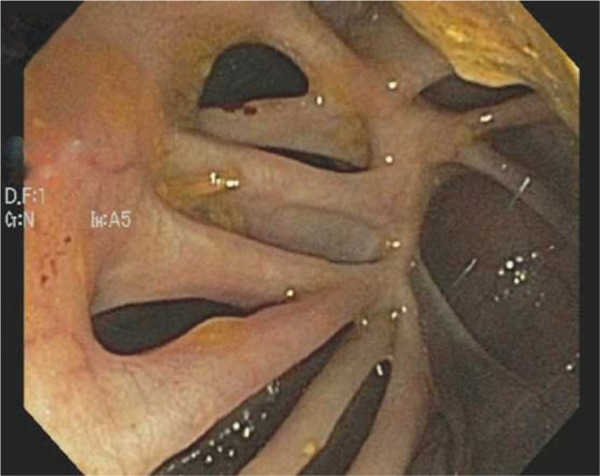 Figure 1
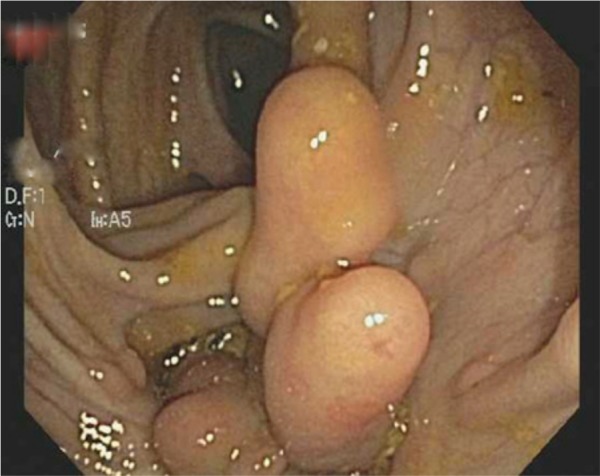 Figure 2
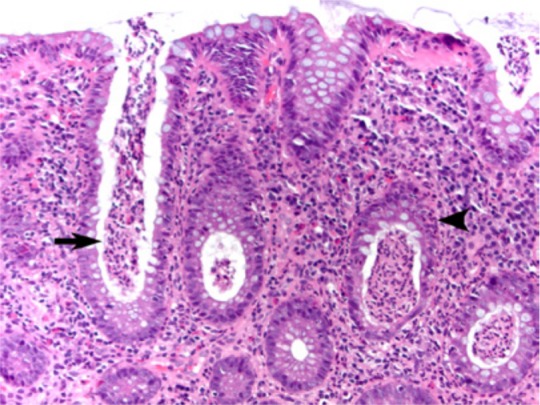 Figure 3
Peer Reviews
No public reviews on file for this paper yet. If you reviewed it on a platform where reviews are public (OpenReview, ICLR, NeurIPS, ICML), you can paste yours below so the community can read it here.
Videos
No videos yet. Explain this paper in a talk, walkthrough, or lecture? Add one.
Taxonomy
TopicsInflammatory Bowel Disease · Autoimmune and Inflammatory Disorders · Gastrointestinal disorders and treatments
A 64-year-old man with a 44-year history of Crohn’s disease presented for a routine colonoscopy. The patient’s past medical treatment was a short course of steroid therapy at the initial time of diagnosis but he has not been on maintenance medication since then. The patient has a normal appetite but avoids red meat and alcohol, which can cause bloating. Currently, the patient denies other common symptoms, such as abdominal pain, diarrhea, or weight loss. Routine colonoscopy demonstrated marked mucosal abnormality within the descending, sigmoid, and ascending colon, characterized by tissue bridges, giving a “Swiss cheese” appearance (Figure 1). At one point during the procedure, visualization of the proximal aspect of the colonoscope was possible through the adjacent communicating colonic walls. Pseudopolyps were found within the sigmoid and ascending colon/splenic flexure and these were biopsied (Figure 2). Microscopic examination of the pseudopolyps revealed features of inflammatory polyps (Figure 3). The patient continues to lead a healthy lifestyle and requires no further medical management.
Crohn’s disease is extremely heterogeneous, and patients may present with endoscopic and histologic findings consistent with persistent disease, despite being asymptomatic for decades. A recent study reported evidence of inflammation either by endoscopy or histology in 31% of patients with asymptomatic Crohn’s disease.^1^ Although attempts have been made to predict severity of the disease, including a number of severity indices, variations persist, and optimal disease monitoring strategies incorporating several disease scoring systems have only recently been determined in a consensus setting.^2^ Transmural inflammation can manifest as strictures, fistulas, and ulceration and can lead to abscess formation. The diffuse “Swiss cheese” appearance identified here is consistent with chronic mucosal injury, and the finding of inflammatory polyps on histologic evaluation is indicative of an ongoing active disease process. In this case, however, the lack of symptoms despite the intriguing endoscopic findings has led to a relatively benign disease course, and the patient will continue to be followed without additional medical therapy.
The reference list from the paper itself. Each links out to its DOI / PubMed record.
- 1Baars JE Nuij VJ Oldenburg B Kuipers E Jvan der Woude CJ Majority of patients with inflammatory bowel disease in clinical remission have mucosal inflammation. Inflam Bowel Dis. 2012;18:1634-1640.10.1002/ibd.2192522069022 · doi ↗ · pubmed ↗
- 2Papay P Ignjatovic A Karmiris K Optimising monitoring in the management of Crohn’s disease: A physician’s perspective. J Crohns Colitis. 2013;7:653-669.2356267210.1016/j.crohns.2013.02.005 · doi ↗ · pubmed ↗