Detection of QTL controlling feed efficiency and excretion in chickens fed a wheat-based diet
Sandrine Mignon-Grasteau, Nicole Rideau, Irène Gabriel, Céline Chantry-Darmon, Marie-Yvonne Boscher, Nadine Sellier, Marie Chabault, Elisabeth Le Bihan-Duval, Agnès Narcy

TL;DR
This study identifies genetic regions in chickens linked to feed efficiency and excretion traits, which could help improve poultry production and reduce environmental impact.
Contribution
The study detects multiple QTL regions in chickens related to feed efficiency and excretion traits using a large SNP dataset.
Findings
Sixteen QTL for feed intake and thirteen for feed efficiency were identified across chicken chromosomes.
Ninety QTL for anatomy-related traits were detected, with some showing genome-wide significance.
QTL for excretion traits were found on chromosomes GGA16, 19, and 26, where multiple traits co-localized.
Abstract
Improving feed efficiency is a major goal in poultry production in order to reduce production costs, increase the possibility of using alternative feedstuffs and decrease the volume of manure. However, in spite of their economic and environmental impact, very few quantitative trait loci (QTL) have been reported on these traits. Thus, we undertook the detection of QTL on 820 meat-type chickens from a F2 cross between D− and D+ lines that were divergently selected on low or high digestive efficiency at 3 weeks of age. Birds were measured for growth between 0 and 23 days, feed intake and feed conversion ratio between 9 and 23 days, breast and abdominal fat yields at 23 days, and the anatomy of their digestive tract (density, relative weight and length of the duodenum, jejunum, ileum, and ratio of proventriculus to gizzard weight) was examined. To evaluate excretion traits, fresh and dry…
Genes, proteins, chemicals, diseases, species, mutations and cell lines named across the full text — each resolved to its canonical identifier and authoritative record.
Click any figure to enlarge with its caption.
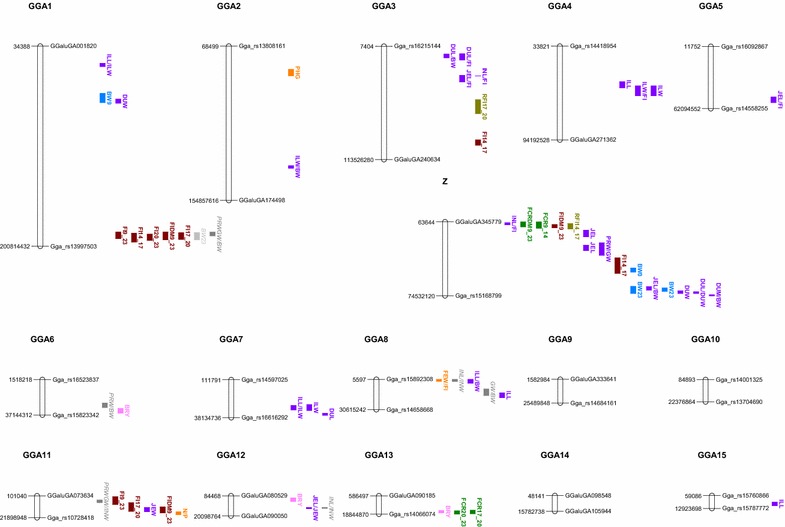 Figure 1
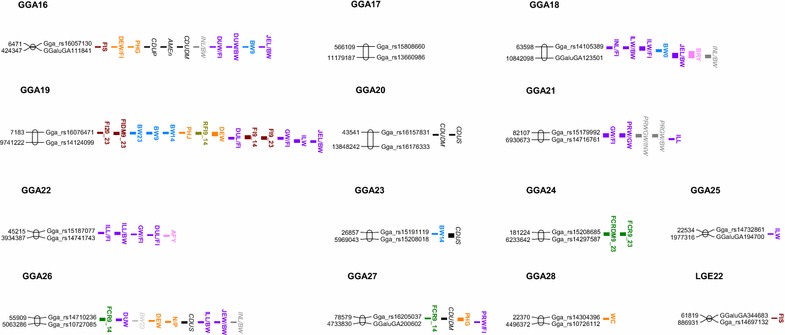 Figure 2
Peer Reviews
No public reviews on file for this paper yet. If you reviewed it on a platform where reviews are public (OpenReview, ICLR, NeurIPS, ICML), you can paste yours below so the community can read it here.
Videos
No videos yet. Explain this paper in a talk, walkthrough, or lecture? Add one.
Taxonomy
TopicsBrazilian Legal Issues · Comparative constitutional jurisprudence studies · Public Health in Brazil