A Missed Case of Occult Bilateral Temporomandibular Dislocation Mistaken for Dystonia
Evelyn Lee, Jan Shoenberger, Jonathan Wagner

TL;DR
A young man with psychiatric history was misdiagnosed with dystonia when he actually had a rare TMJ dislocation missed on X-ray.
Contribution
This is the first reported case of bilateral anterior TMJ dislocation with a false negative X-ray.
Findings
Plain film X-rays failed to detect bilateral TMJ dislocation in a patient.
Maxillofacial CT confirmed the dislocation, highlighting limitations of X-rays in such cases.
The case emphasizes the importance of clinical judgment alongside imaging.
Abstract
A 24-year-old male with a history of psychiatric disorder and no prior significant temporomandibular joint (TMJ) pathology presented to the emergency department for “lockjaw.” Plain film X-rays of the mandible were read as unremarkable by an attending radiologist, leading to the initial diagnosis of medication-induced dystonic reaction. Following unsuccessful medical treatment a maxillofacial computed tomography (CT) was ordered. CT confirmed bilateral dislocation, illustrating the importance of clinical judgment, and limitations of certain radiographic images. The authors believe this case to be the first reported case in the medical literature of bilateral anterior TMJ dislocation with a false negative X-ray.
Genes, proteins, chemicals, diseases, species, mutations and cell lines named across the full text — each resolved to its canonical identifier and authoritative record.
Click any figure to enlarge with its caption.
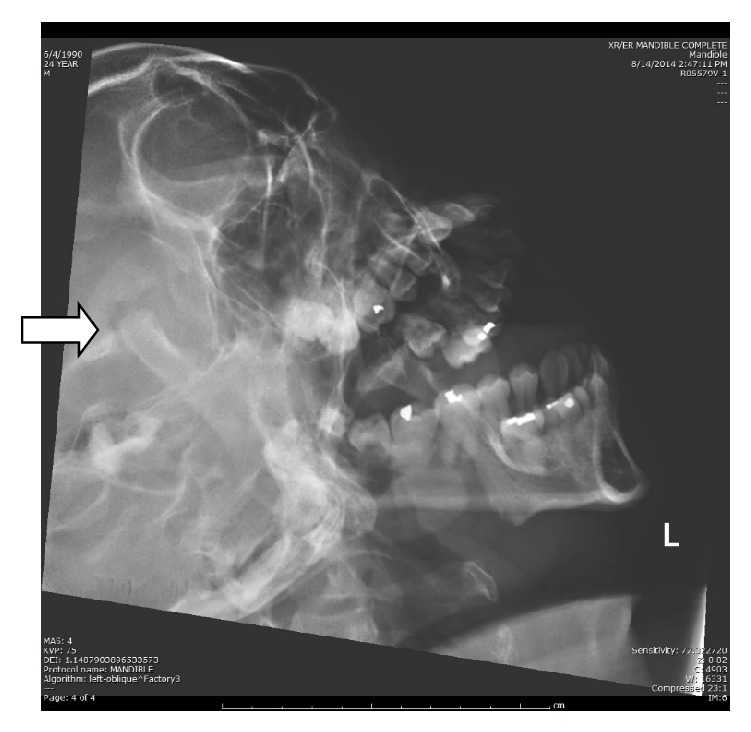 Figure 1
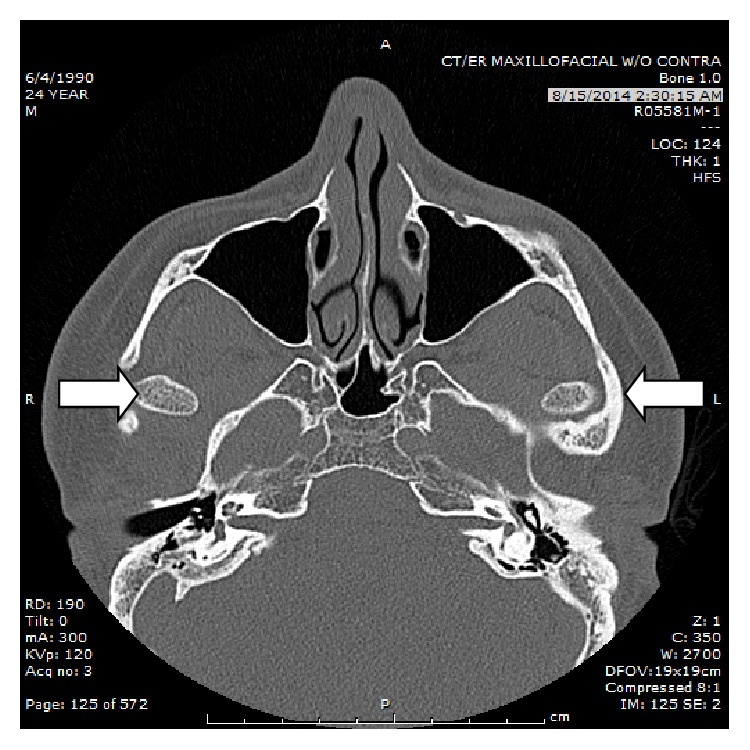 Figure 2
Peer Reviews
No public reviews on file for this paper yet. If you reviewed it on a platform where reviews are public (OpenReview, ICLR, NeurIPS, ICML), you can paste yours below so the community can read it here.
Videos
No videos yet. Explain this paper in a talk, walkthrough, or lecture? Add one.
Taxonomy
TopicsTemporomandibular Joint Disorders · Trigeminal Neuralgia and Treatments · Facial Trauma and Fracture Management