RECIST Applied to Realistic Tumor Models
Zachary H. Levine, Benjamin R. Galloway, Adele P. Peskin

TL;DR
This paper evaluates how well RECIST, a tumor size measurement method, works for realistic tumor shapes compared to simple ellipsoids.
Contribution
The novelty is analyzing RECIST accuracy using geometric models of realistic tumors made of ellipsoids.
Findings
RECIST is less accurate for realistic tumor models than for ellipsoids.
Tumor shape complexity affects the reliability of RECIST volume predictions.
Abstract
RECIST (Response Evaluation Criteria in Solid Tumors) is a linear measure intended to predict tumor size in medical computed tomography (CT). In this work, using purely geometrical considerations, we estimate how well RECIST can predict the volume of randomly-oriented tumor models, each composed of the union of ellipsoids. The principal conclusion is that RECIST is likely to work less well for realistic tumors than for ellipsoids.
Genes, proteins, chemicals, diseases, species, mutations and cell lines named across the full text — each resolved to its canonical identifier and authoritative record.
Click any figure to enlarge with its caption.
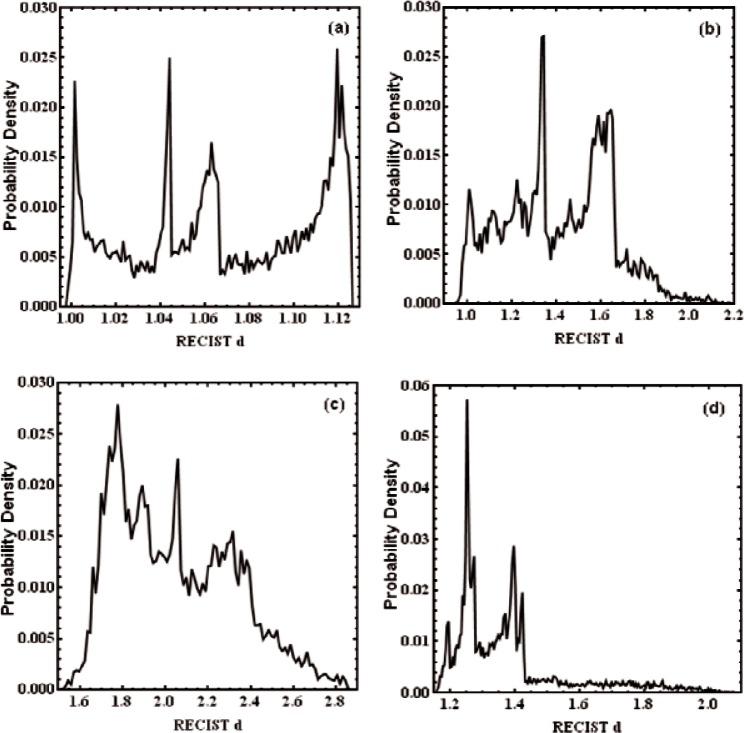 Figure 1
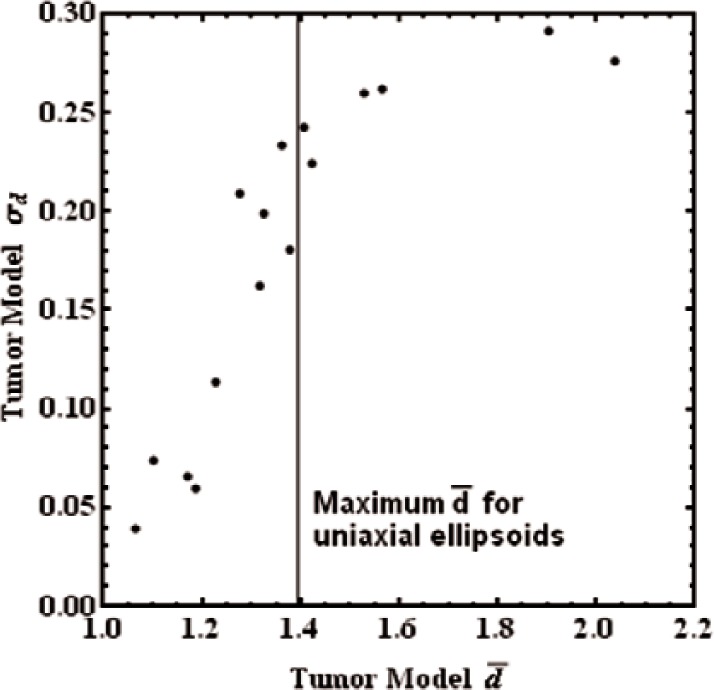 Figure 2
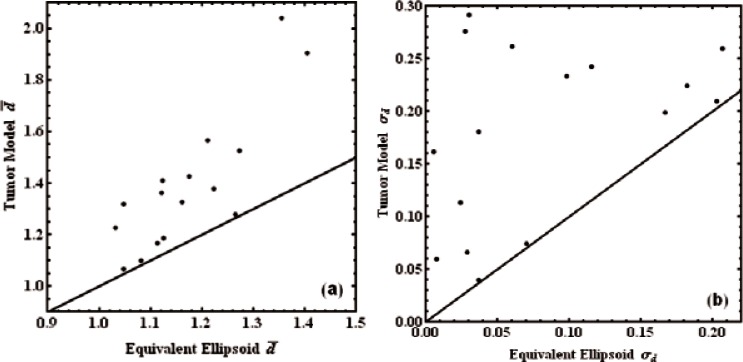 Figure 3
Peer Reviews
No public reviews on file for this paper yet. If you reviewed it on a platform where reviews are public (OpenReview, ICLR, NeurIPS, ICML), you can paste yours below so the community can read it here.
Videos
No videos yet. Explain this paper in a talk, walkthrough, or lecture? Add one.
Taxonomy
TopicsNuclear and radioactivity studies