Disinfection by hydrogen peroxide nebulization increases susceptibility to avian pathogenic Escherichia coli
Leon H. Oosterik, Huruma N. Tuntufye, Steven Janssens, Patrick Butaye, Bruno M. Goddeeris

TL;DR
Nebulizing hydrogen peroxide in chicken environments may increase their vulnerability to a dangerous type of E. coli infection.
Contribution
This study reveals that hydrogen peroxide nebulization can increase susceptibility to avian pathogenic Escherichia coli.
Findings
Chickens exposed to 2% hydrogen peroxide had higher lesion scores and more E. coli in their spleens.
Even 1% hydrogen peroxide exposure increased E. coli concentrations compared to controls.
Hydrogen peroxide nebulization is contraindicated for use in chicken environments due to increased infection risk.
Abstract
Avian pathogenic Escherichia coli (APEC) are the major cause of economic losses in the poultry industry worldwide. Traditionally, antibiotics are used to treat and prevent colibacillosis in broilers. Due to resistance development other ways of preventing/treating the disease have to be found. Therefore during this study the nebulization of low concentrations of hydrogen peroxide (H2O2) was tested in the presence of chickens to lower pathogenicity of APEC. Significantly higher total lesion scores and higher E. coli concentrations were found in the spleen of chickens exposed to 2 % H2O2 compared to those exposed to 1 % H2O2 and control chickens which had been exposed to nebulization with distilled water. Higher total lesions scores and E. coli concentrations in the spleen were found in chickens exposed to 1 % H2O2 in comparison to control chickens (not significant). H2O2 is rendering…
Genes, proteins, chemicals, diseases, species, mutations and cell lines named across the full text — each resolved to its canonical identifier and authoritative record.
Click any figure to enlarge with its caption.
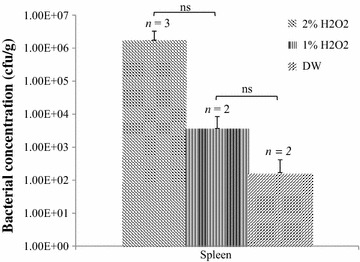 Figure 1
Peer Reviews
No public reviews on file for this paper yet. If you reviewed it on a platform where reviews are public (OpenReview, ICLR, NeurIPS, ICML), you can paste yours below so the community can read it here.
Videos
No videos yet. Explain this paper in a talk, walkthrough, or lecture? Add one.
Taxonomy
TopicsHistorical Art and Culture Studies · Death, Funerary Practices, and Mourning · Diverse Cultural and Historical Studies