Connectivity-based parcellation of the human frontal polar cortex
Massieh Moayedi, Tim V. Salomons, Katharine A. M. Dunlop, Jonathan Downar, Karen D. Davis

TL;DR
This study identifies two anatomical subregions in the human frontal pole, each linked to different brain networks related to self-related thought and attention.
Contribution
The paper introduces a connectivity-based parcellation of the frontal pole using diffusion tensor imaging and functional connectivity.
Findings
Three subregions were identified, but only two showed consistent spatial patterns across subjects.
The medial subregion connects to the default-mode network, while the lateral connects to the executive control network.
These findings support the idea of two major anatomical subregions in the frontal pole with distinct functional roles.
Abstract
The frontal pole corresponds to Brodmann area (BA) 10, the largest single architectonic area in the human frontal lobe. Generally, BA10 is thought to contain two or three subregions that subserve broad functions such as multitasking, social cognition, attention, and episodic memory. However, there is a substantial debate about the functional and structural heterogeneity of this large frontal region. Previous connectivity-based parcellation studies have identified two or three subregions in the human frontal pole. Here, we used diffusion tensor imaging to assess structural connectivity of BA10 in 35 healthy subjects and delineated subregions based on this connectivity. This allowed us to determine the correspondence of structurally based subregions with the scheme previously defined functionally. Three subregions could be defined in each subject. However, these three subregions were not…
Genes, proteins, chemicals, diseases, species, mutations and cell lines named across the full text — each resolved to its canonical identifier and authoritative record.
Click any figure to enlarge with its caption.
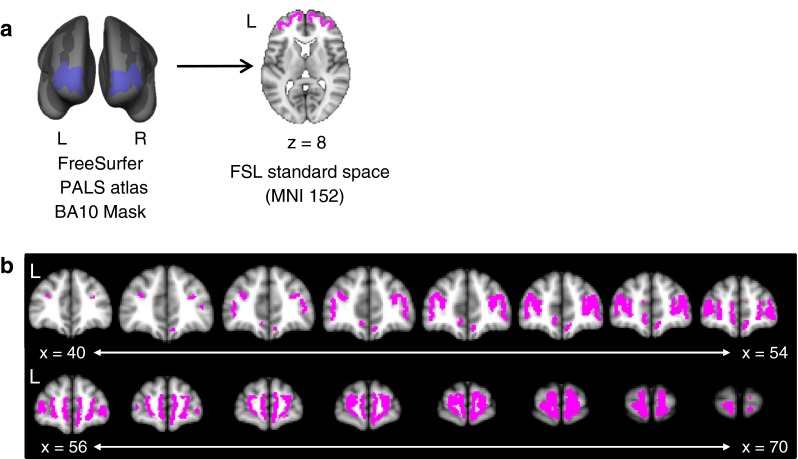 Figure 1
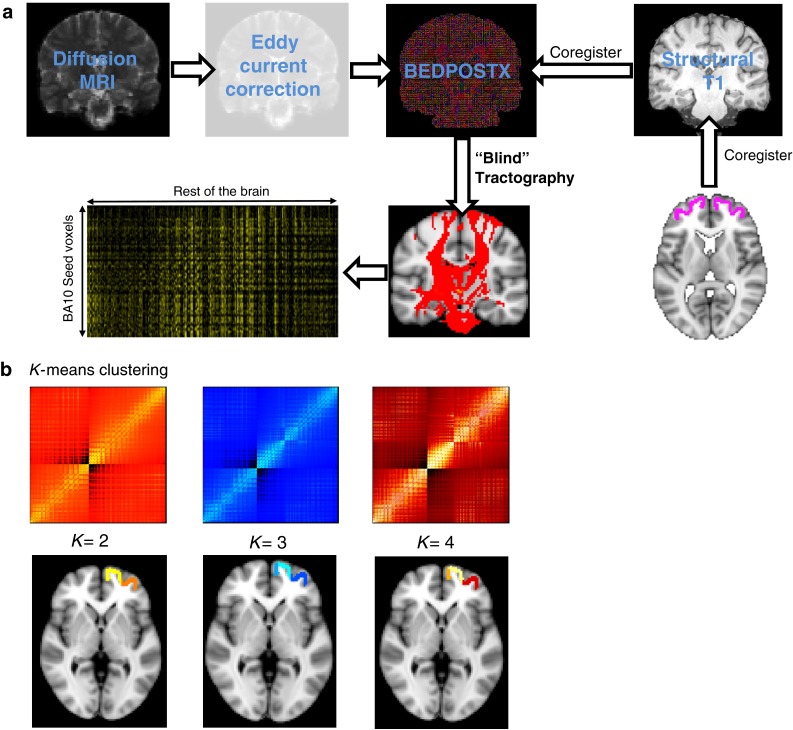 Figure 2
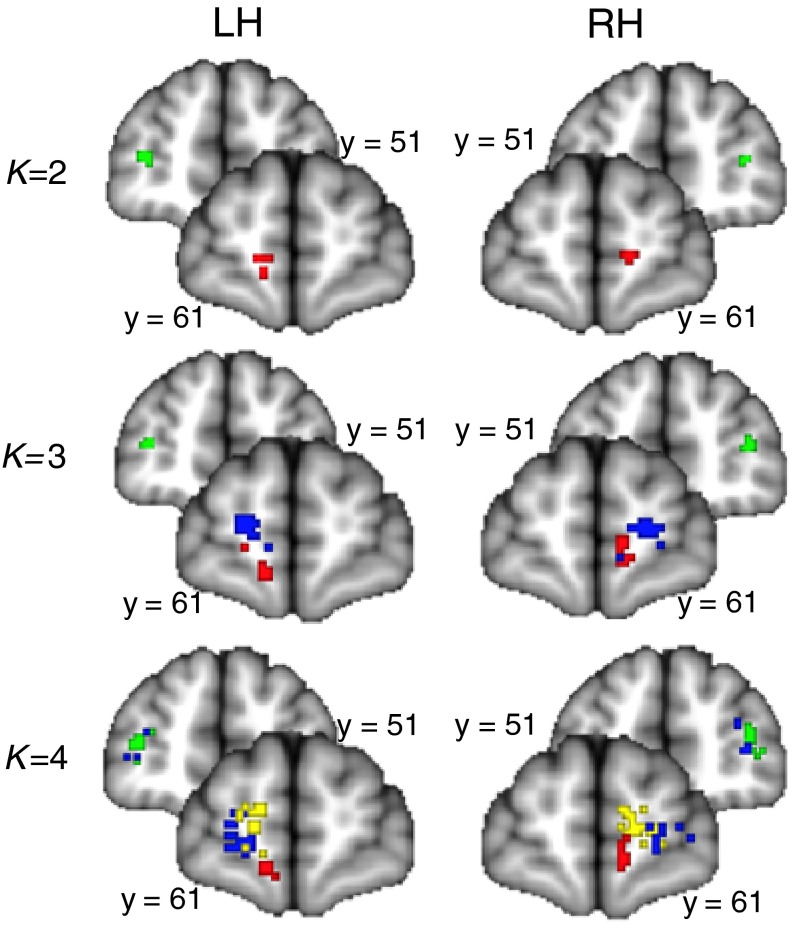 Figure 3
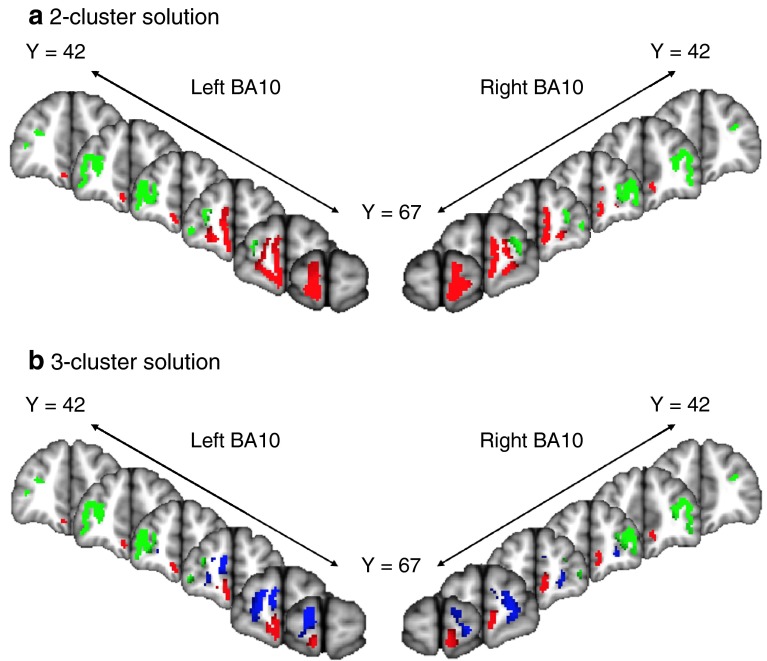 Figure 4
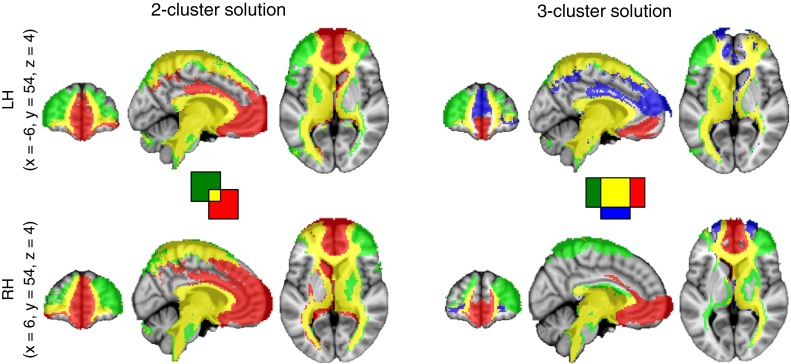 Figure 5
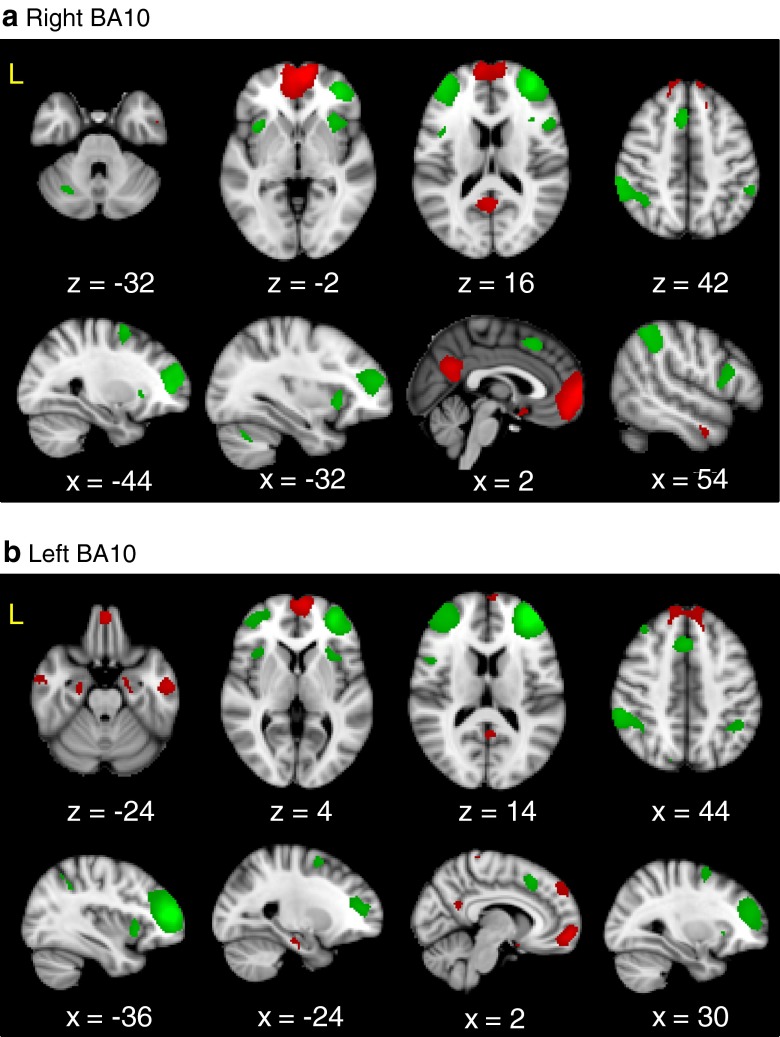 Figure 6
Peer Reviews
No public reviews on file for this paper yet. If you reviewed it on a platform where reviews are public (OpenReview, ICLR, NeurIPS, ICML), you can paste yours below so the community can read it here.
Videos
No videos yet. Explain this paper in a talk, walkthrough, or lecture? Add one.
Taxonomy
TopicsFunctional Brain Connectivity Studies · Functional Brain Connectivity Studies · Advanced Neuroimaging Techniques and Applications