Fatty acid analysis as a tool to infer the diet in Illinois river otters (Lontra canadensis)
Damian Satterthwaite-Phillips, Jan Novakofski, Nohra Mateus-Pinilla

TL;DR
This study uses fatty acid analysis to determine the diet of river otters in Illinois, finding that fish and molluscs are the main components.
Contribution
The study demonstrates the effectiveness of fatty acid analysis in inferring diet in an opportunistic predator with diverse prey.
Findings
Fish species make up the largest portion (37.7%) of the otter diet by mass.
Molluscs rank second at 32.0%, indicating a larger dietary role than previously reported.
Fatty acid profiles differ among prey species, allowing diet inference despite diversity.
Abstract
Fatty acids (FA) have recently been used in several studies to infer the diet in a number of species. While these studies have been largely successful, most have dealt with predators that have a fairly specialized diet. In this paper, we used FA analysis as a tool to infer the diet of the nearctic river otter (Lontra canadensis). The river otter is an opportunistic predator known to subsist on a wide variety of prey including, fishes, crayfish, molluscs, reptiles and amphibians, among others. We analyzed the principle components of 60 FA from otters and 25 potential prey species in Illinois, USA. Prey species came from 4 major taxonomic divisions: fishes, crayfish, molluscs and amphibians. Within each division, most, but not all, species had significantly different profiles. Using quantitative FA signature analysis, our results suggest that, by mass, fish species are the most…
Genes, proteins, chemicals, diseases, species, mutations and cell lines named across the full text — each resolved to its canonical identifier and authoritative record.
Click any figure to enlarge with its caption.
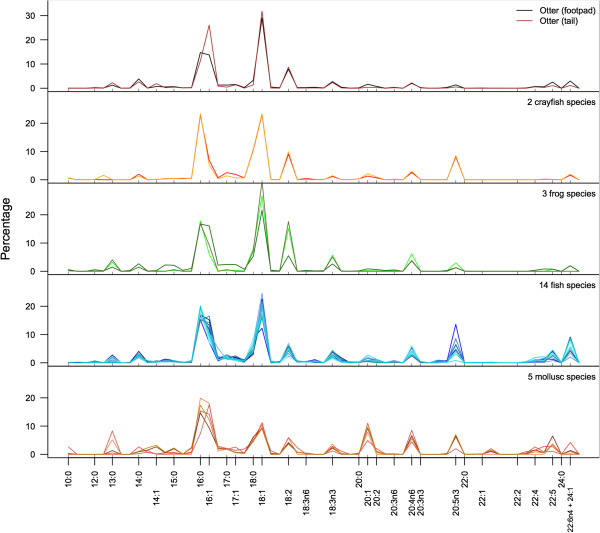 Figure 1
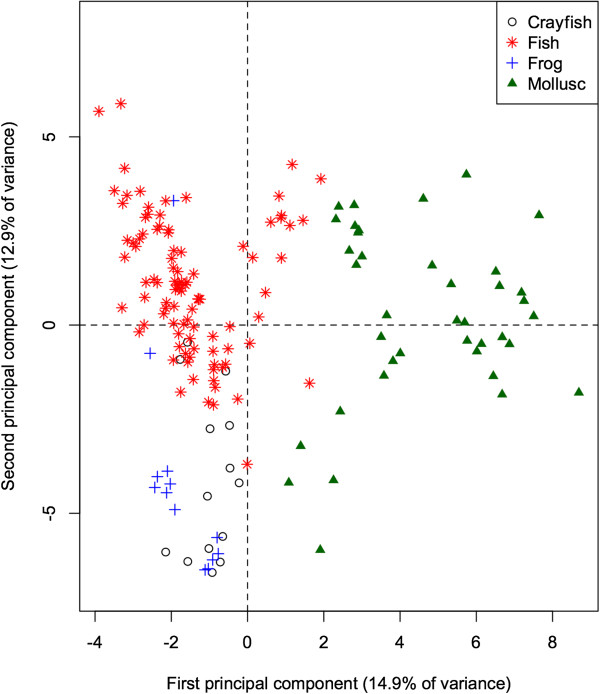 Figure 2
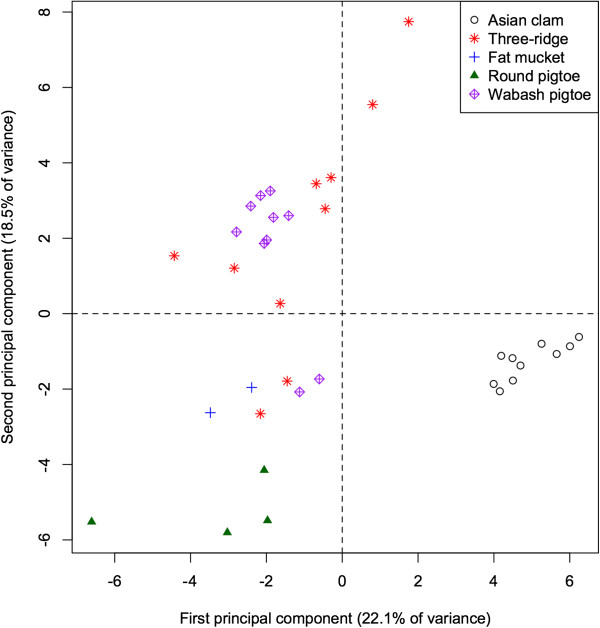 Figure 3
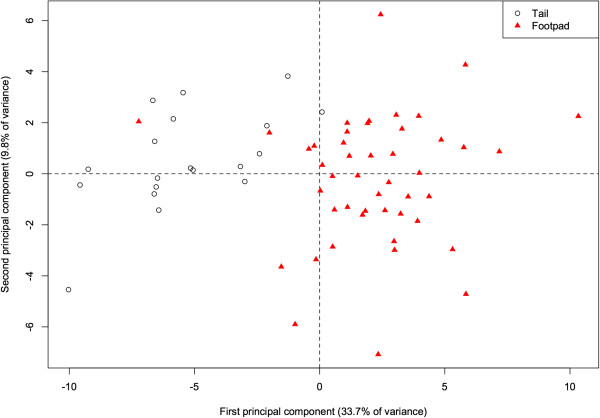 Figure 4
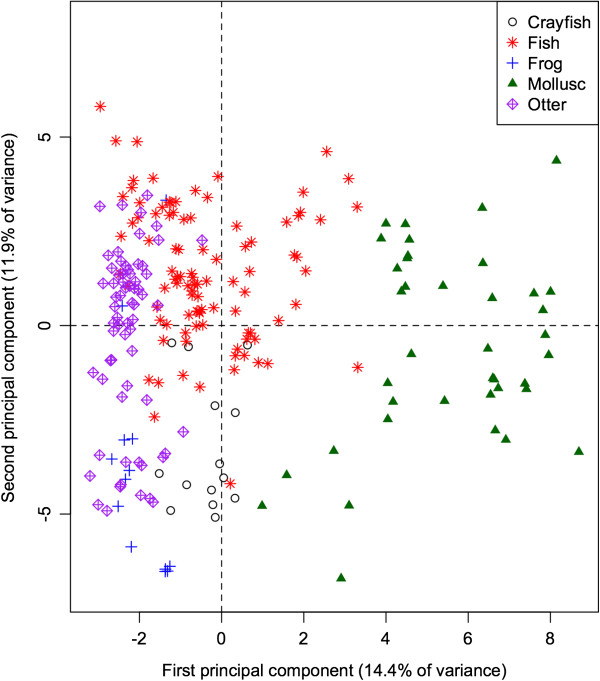 Figure 5
Peer Reviews
No public reviews on file for this paper yet. If you reviewed it on a platform where reviews are public (OpenReview, ICLR, NeurIPS, ICML), you can paste yours below so the community can read it here.
Videos
No videos yet. Explain this paper in a talk, walkthrough, or lecture? Add one.
Taxonomy
TopicsHorticultural and Viticultural Research · Wine Industry and Tourism