Inhibition of Haemonchus contortus larval development by fungal lectins
Christian Heim, Hubertus Hertzberg, Alex Butschi, Silvia Bleuler-Martinez, Markus Aebi, Peter Deplazes, Markus Künzler, Saša Štefanić

TL;DR
This study explores how fungal lectins can inhibit the development of Haemonchus contortus larvae, suggesting potential applications in drug or vaccine development.
Contribution
The study identifies specific fungal lectins that inhibit larval development of Haemonchus contortus and correlates this with glycan binding in the nematode gut.
Findings
Four fungal lectins (AAL, CCL2, MOA, CGL2) showed dose-dependent toxicity against Haemonchus contortus larvae.
Lectins like AAL, CGL2, and MOA inhibited larval development by over 95% at 5 μg/ml.
Toxic lectins bound to conserved glycans in the nematode gut, suggesting these could be targets for vaccines or drugs.
Abstract
Lectins are carbohydrate-binding proteins that are involved in fundamental intra- and extracellular biological processes. They occur ubiquitously in nature and are especially abundant in plants and fungi. It has been well established that certain higher fungi produce lectins in their fruiting bodies and/or sclerotia as a part of their natural resistance against free-living fungivorous nematodes and other pests. Despite relatively high diversity of the glycan structures in nature, many of the glycans targeted by fungal lectins are conserved among organisms of the same taxon and sometimes even among different taxa. Such conservation of glycans between free-living and parasitic nematodes is providing us with a useful tool for discovery of novel chemotherapeutic and vaccine targets. In our study, a subset of fungal lectins emanating from toxicity screens on Caenorhabditis elegans was tested…
Genes, proteins, chemicals, diseases, species, mutations and cell lines named across the full text — each resolved to its canonical identifier and authoritative record.
Click any figure to enlarge with its caption.
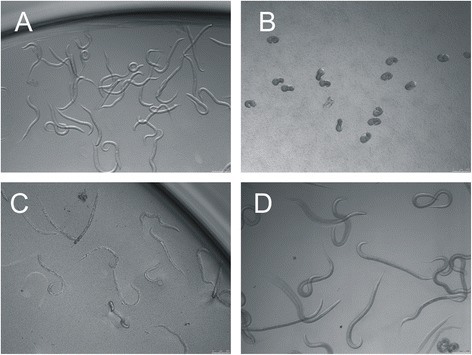 Figure 1
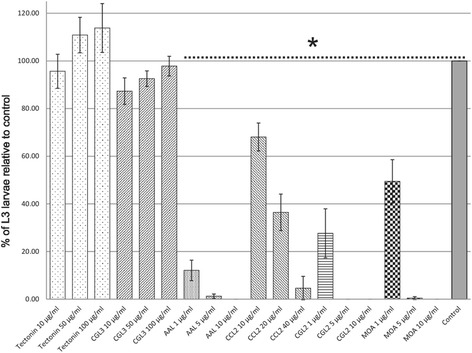 Figure 2
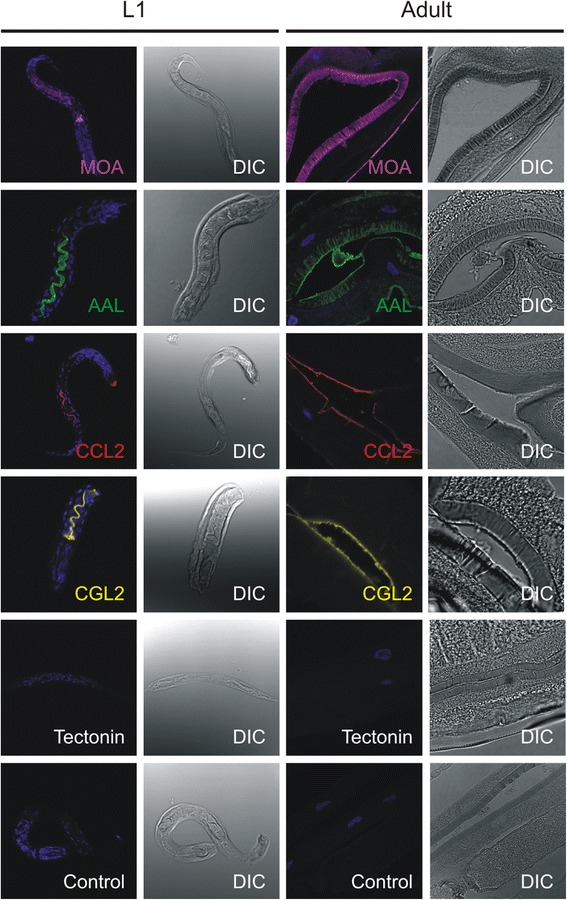 Figure 3
Peer Reviews
No public reviews on file for this paper yet. If you reviewed it on a platform where reviews are public (OpenReview, ICLR, NeurIPS, ICML), you can paste yours below so the community can read it here.
Videos
No videos yet. Explain this paper in a talk, walkthrough, or lecture? Add one.
Taxonomy
TopicsSecond Language Learning and Teaching · EFL/ESL Teaching and Learning