Protection against live rotavirus challenge in mice induced by parenteral and mucosal delivery of VP6 subunit rotavirus vaccine
Suvi Lappalainen, Ana Ruth Pastor, Maria Malm, Vanessa López-Guerrero, Fernando Esquivel-Guadarrama, Laura A. Palomares, Timo Vesikari, Vesna Blazevic

TL;DR
A new non-live rotavirus vaccine provides strong protection in mice, whether given through injection or nasal delivery.
Contribution
A combined rotavirus-norovirus vaccine candidate is developed and shown to induce protection via multiple delivery routes.
Findings
At least 65% protection against rotavirus shedding was observed in mice regardless of delivery route.
Post-challenge serum VP6-specific IgA titers correlated with protection levels.
Abstract
Live oral rotavirus (RV) vaccines are part of routine childhood immunization but are associated with adverse effects, particularly intussusception. We have developed a non-live combined RV – norovirus (NoV) vaccine candidate consisting of human RV inner-capsid rVP6 protein and NoV virus-like particles. To determine the effect of delivery route on induction of VP6-specific protective immunity, BALB/c mice were administered a vaccine containing RV rVP6 intramuscularly, intranasally or a combination of both, and challenged with murine RV. At least 65 % protection against RV shedding was observed regardless of delivery route. The levels of post-challenge serum VP6-specific IgA titers correlated with protection.
Genes, proteins, chemicals, diseases, species, mutations and cell lines named across the full text — each resolved to its canonical identifier and authoritative record.
Click any figure to enlarge with its caption.
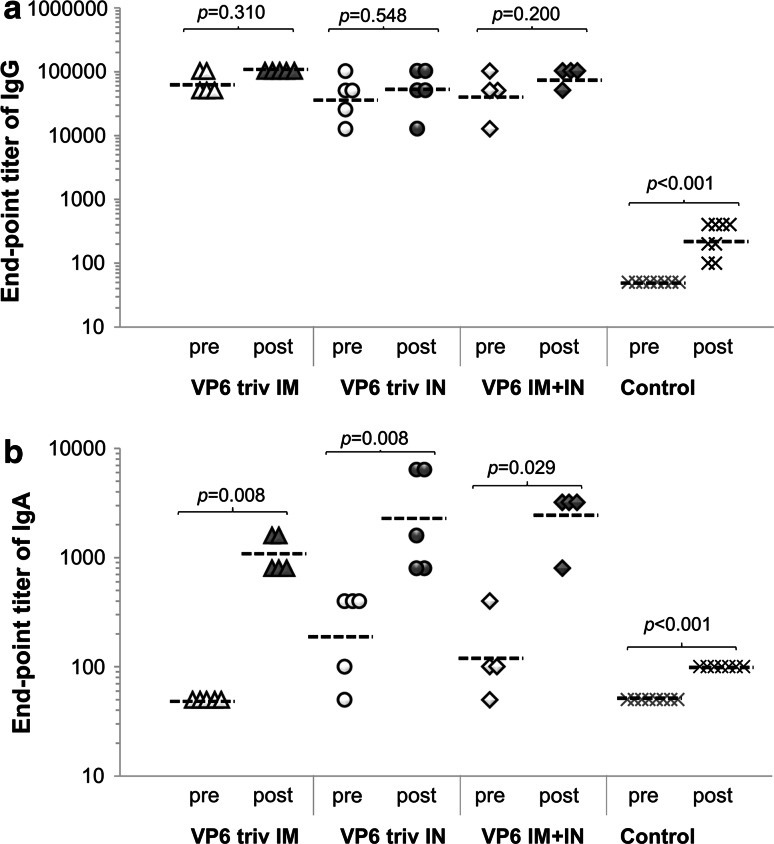 Figure 1
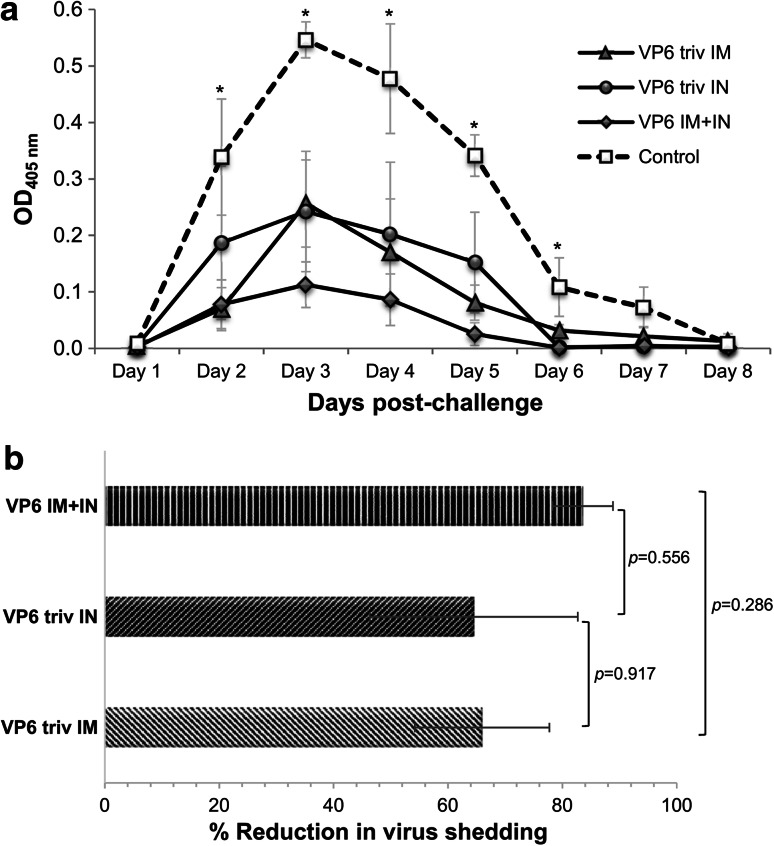 Figure 2
Peer Reviews
No public reviews on file for this paper yet. If you reviewed it on a platform where reviews are public (OpenReview, ICLR, NeurIPS, ICML), you can paste yours below so the community can read it here.
Videos
No videos yet. Explain this paper in a talk, walkthrough, or lecture? Add one.
Taxonomy
TopicsViral gastroenteritis research and epidemiology · Respiratory viral infections research · Pediatric health and respiratory diseases