Two Cases of Transcutaneous Electrical Nerve Stimulation of the Common Peroneal Nerve Successfully Treating Refractory, Multifactorial Leg Edema
Matthew V. Ingves, Adam H. Power

TL;DR
This paper describes two cases where a nerve stimulation device helped reduce severe leg swelling that did not respond to other treatments.
Contribution
The paper presents two successful clinical cases using the geko device for refractory leg edema.
Findings
The geko device reduced leg edema over 4 to 16 weeks in two patients.
The device also improved pain and chronic wound healing.
The geko device was well tolerated despite its high cost.
Abstract
The treatment of leg edema often involves promoting venous blood flow but can be difficult in patients with comorbidities that prevent traditional management strategies such as limb elevation or mechanical compression devices. The geko device is a self-contained neuromuscular stimulation device that adheres to skin over the common peroneal nerve and delivers a low-voltage stimulus that activates the lower-leg musculature resulting in enhanced superficial femoral vein blood flow and velocity. Here we report 2 cases of multifactorial and refractory leg edema successfully treated with the geko device over a period of 4 to 16 weeks. The device also improved pain and chronic wound healing. Although the geko device is costly, it was well tolerated and may provide another treatment strategy for resistant leg swelling.
Genes, proteins, chemicals, diseases, species, mutations and cell lines named across the full text — each resolved to its canonical identifier and authoritative record.
Click any figure to enlarge with its caption.
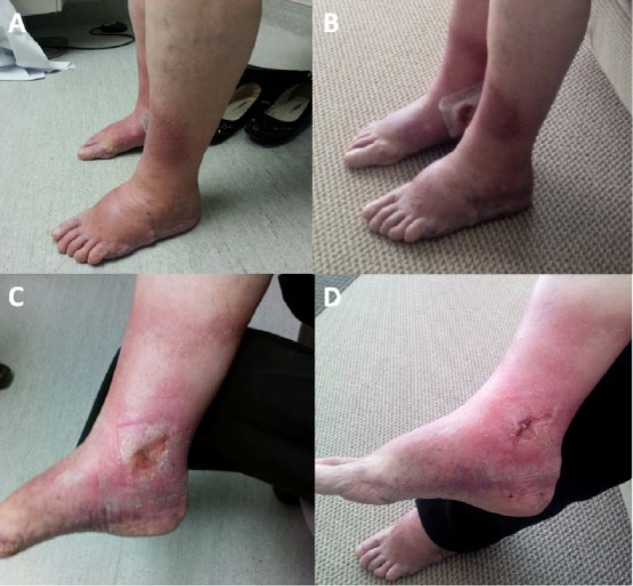 Figure 1
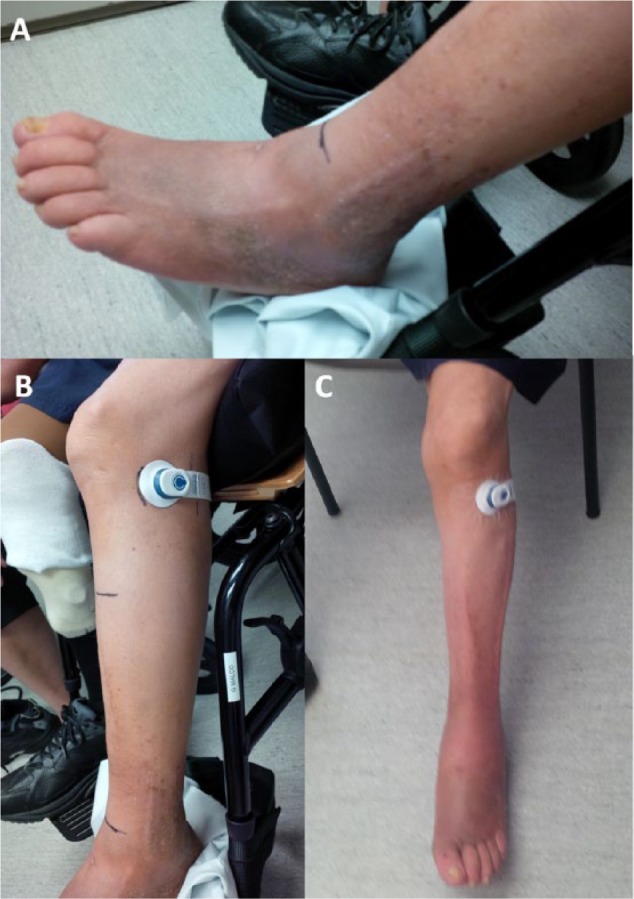 Figure 2
Peer Reviews
No public reviews on file for this paper yet. If you reviewed it on a platform where reviews are public (OpenReview, ICLR, NeurIPS, ICML), you can paste yours below so the community can read it here.
Videos
No videos yet. Explain this paper in a talk, walkthrough, or lecture? Add one.
Taxonomy
TopicsTransgenic Plants and Applications · Plant Virus Research Studies · Plant tissue culture and regeneration