In commemoration of Prof. M.R. Warburg and of his contribution to terrestrial Isopod biology (31 May 1931, Berlin–9 February 2014, Haifa)
Elisabeth Hornung

Abstract
Click any figure to enlarge with its caption.
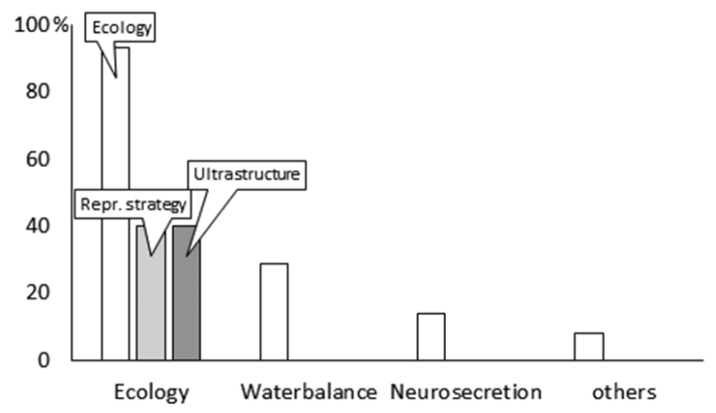 Figure 1
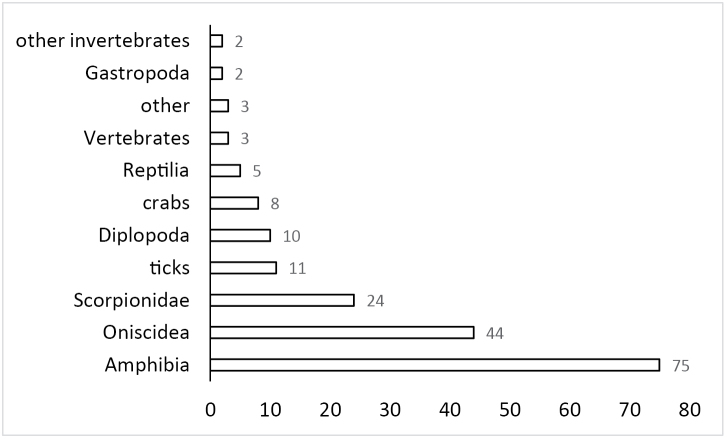 Figure 2
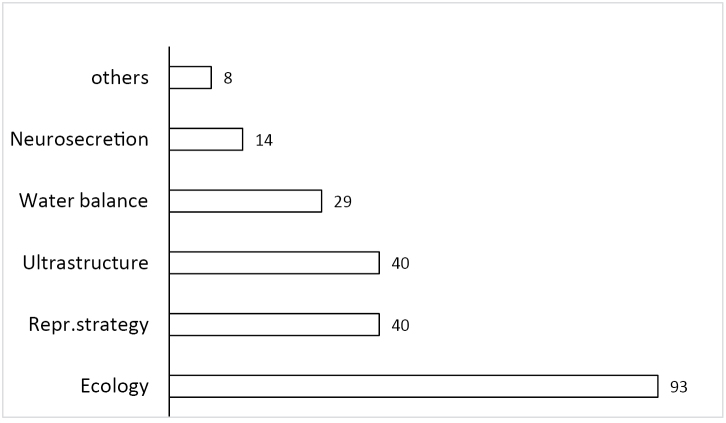 Figure 3
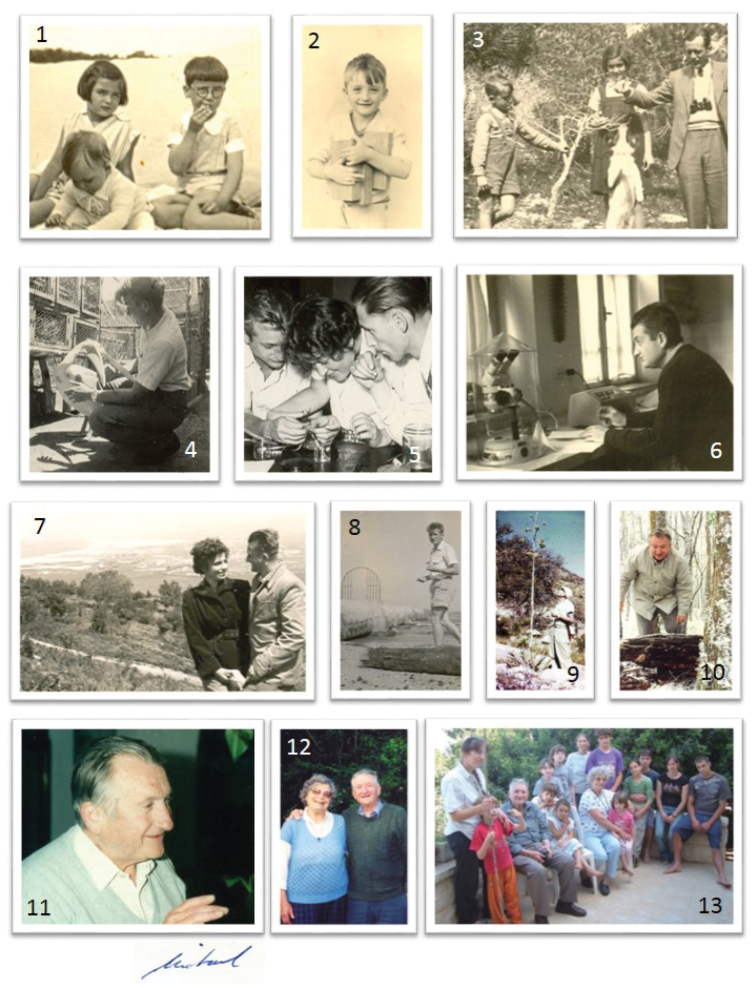 Figure 4
Peer Reviews
No public reviews on file for this paper yet. If you reviewed it on a platform where reviews are public (OpenReview, ICLR, NeurIPS, ICML), you can paste yours below so the community can read it here.
Videos
No videos yet. Explain this paper in a talk, walkthrough, or lecture? Add one.
Taxonomy
TopicsMarine Biology and Ecology Research · Protist diversity and phylogeny · Mollusks and Parasites Studies
Our scientific community has lost one of its prominent members: Prof. Michael R. Warburg (MRW) who passed away on the 9th of February, 2014 in Haifa. The organisers of the 9th Symposium on the Biology of Terrestrial Isopods, held in Poitiers, France, decided to dedicate the meeting and this special issue to his memory. Prof. Warburg was a highly regarded member of our community, a ‘spiritual sponsor’ of isopod research, a passionate isopodologist himself, and a mentor to many students and young researchers.
M.R. Warburg and the symposia series
The foreword of the 1st Symposium on the Biology of Terrestrial Isopods volume (London, 7–8^th^ July 1983) (Sutton and Holdich 1984) states that MRW was ’the father’ of this series of symposia as he originally suggested bringing together “people with an interest in terrestrial isopods and try to present as wide a range of papers as possible”. The idea proved to be a great success. The first meeting was followed by several others at intervals of 3–5 years. MRW also initiated a meeting in Vancouver, Canada, in 1992. This symposium, under the umbrella of the American Society for Zoologists’ regular congress, was organized by Prof. M.A. Alikhan (Sudbury, Ontario, Canada). MRW also lent his support to a smaller workshop in Hungary (Gödöllő) in 1991 connected to the 4th European Congress of Entomology. E. Hornung and K. Szlavecz organized the workshop, including a round table discussion that resulted in a summary on the trends and methods in terrestrial isopod ecology (Hornung et al. 1992). The last meeting MRW participated in was in 1997, in Haifa Israel. This symposium was jointly organized by MRW himself and E. Hornung. The latest meeting attracted the isopodologists’ crowd to Poitiers last summer (26–30. June, 2014). This meeting was a worthy tribute to Professor Michael Warburg’s memory.
Scientific career and personal life of M.R. Warburg
Michael R. Warburg was born in Berlin, Germany in 1931. His family left the country in 1934 due to the Nazi threat. They moved first to London and, shortly after, to Haifa, then under British mandate, in Palestine. His reminiscences start in that period, from when he was five years old. MRW himself divided his memoir into periods which I have followed in this tribute (see also Hornung and Warburg 2014).
Childhood (1936–1946)
The family recalls that “he was always collecting animals, and had all sorts of self-made cages for reptiles and other animals, which he kept on the roof of the house. Though Haifa was a city, in those days you didn’t need to go far in order to reach the natural environment, it was right there, and he used to spend most of his time outside”. He himself mentions in his memoir that “Already as a young boy, I used to walk with my late father, an ardent naturalist at heart, though to his regret not by profession, in the fields and woods on Mt. Carmel where we lived”. He often mentioned his great walks while bird watching with his father on the marshy plains (now housing estates) around Mt. Carmel. He dedicated his book on isopods (Warburg 1993) to his father and uncle: “In memory of my late father, Sigmund, and uncle, Edgar, who both influenced in different ways my approach to nature”.
Graduate studies at the Hebrew University (1950–1954)
His university studies started with some difficulties, as he failed the preliminary biology exams and had to start his first semester in the Faculty of Mathematics. Still, from time to time he was able to attend biology lectures. During the second semester he was allowed to choose a few laboratory practicals and finally, at the end of the second year he transferred to major in biology. In his third year he received an assistantship on the entomology course. He started to work on his MSc thesis under Dr A. Zuckerman on the life cycle of Trypanosoma lewisii, a blood parasite of rodents. His attempts to locate the parasites were not successful, so he moved to a different research project: producing a serum against Plasmodium berghei, a blood sporozoan lethal to hamsters. With time-consuming, diligent work (“half a year’s work which I did working days and nights”) he successfully finished the project in 1954, receiving the grade ‘very good’. In 1955, he reached two milestones in his life: he published his first paper, and married Hava, his wife for the next 59 years.
Teachers Seminary Oranim (1955–1956)
He was appointed to a position in Oranim, in the Teachers’ Seminary. “Throughout the entire period I have conducted field trips in the country and have collected isopods. My main difficulty was how to identify them.” He made every effort to familiarize himself with isopod identification using Vandel’s (1960, 1962) papers on isopod taxonomy. He also sought help from two scientists at the Vienna Naturhistorisches Museum, Dr. F. Strouhal, and Dr. K. Schmölzer, experts on the western Mediterranean isopod fauna. MRW himself never became a taxonomist, instead, he was more interested in the physiology, morphology and ecology of isopods.
While teaching in Oranim, he came across Edney’s (1954) review paper on woodlice and their land habitat. He decided to find an university where he could conduct research in this topic for his Ph.D. thesis. In 1956 he was accepted into the graduate program at Yale University, in the USA.
Graduate studies at Yale University, New Haven, Connecticut, US (1956–1960)
In his application he outlined three research plans and “Yale University offered both a fellowship and the choice of one of the three subjects for research towards a Ph.D. suggested by me…”. He decided on the ‘The ecological, behavioral and physiological adaptations of terrestrial isopods’ with Prof. G.E. Hutchinson as his supervisor. First, he started with physiological and behavioral studies in the lab on local species, then switched to work on a desert species, Venezillo arizonicus. The research focused on adaptations to different microhabitats and microclimatic conditions such as relative humidity and temperature, using thermo-hygrograms. He quantified the behavioral responses of isopods to such conditions using a choice chamber / thermo-preference apparatus. He concluded that the interaction of three environmental factors, temperature, humidity and light, explain the majority of microhabitat choices of terrestrial isopods. He published his results on physiological ecology, specifically on water balance (evaporative water loss) and thermal balance of isopods in four papers (nos: 1-4).
After the completion of his Ph.D. in 1960, he returned to Israel and began looking for a job. It was not easy but finally he got an one-year position at the Tel Aviv University.
Tel-Aviv University (1960–1961)
MRW had limited facilities there, but he was able to conduct extensive field work, collecting isopods in all parts of the country. Field work was an essential part MRW’s professional life. He summarized 80 years of isopod collecting efforts, 40 years of which was his own, in a review paper in 2007 (no. 45). Collecting sites in over 600 localities were visited approximately 900 times, resulting in a total of 41 species records for Israel. The collection is now owned by the university in Tel Aviv.
University of South Australia (1962–1964)
In 1962 MRW was awarded a Senior Research Fellowship at the Zoology Department, University of Adelaide, South Australia. Although his research there, under the supervision of Prof. H.G. Andrewartha, focused on the ecology of Tiliqua rugosa, a large skink, he managed to study woodlice as well. He conducted experimental work on evaporative water loss and thermal balance of isopods under controlled conditions. This fellowship resulted in eight papers, two of them on terrestrial isopods. (Nos 5-6).
He returned back to Israel in 1964 and, after several temporary jobs, he received a position at the Israel Institute for Biological Research (Ness Ziona, near Tel Aviv).
Israel Institute for Biological Research (1965–1972)
Here, he studied the cave tick, Ornithodorus tholozani, specifically its neurosecretory cells, reproduction and ecology. He published 11 papers on this topic. He learned techniques in neurosecretion at Sheffield University, under Prof. K. Highnam and in Paris, under Prof. M. Gabe, and utilized this knowledge in isopod research (No 10). He continued collecting isopods extensively. This time he had professional help from Dr. H. Schmalfuss (Natural History Museum, Stuttgart, Germany), who both verified MRW’s identifications and identified several new species, naming one of them after MRW: Chaetophiloscia warburgi Schmalfuss, 1991.
TECHNION (1972–2013)
He spent his last 40 years at the Israeli Institute for Technology (TECHNION), Haifa. His papers published during this period can be grouped mainly into ecological, ecophysiological and behavioral topics (Fig. 1). These themes overlap in his publications as he used diverse methods and approaches to describe the phenomena in question.
The distribution of MR Warburg’s papers on isopods by topic.
One research focus was species diversity and distribution mainly in the northern part of the Mediterranean region, where several different localities differ in plant and stone coverage and in climatic conditions. MRW was also interested in the intra-habitat dispersion of woodlice, specifically how the number and distribution of potential sheltering sites influenced the presence of isopods in different types of habitats.
The second field of MRW’s interest was population and life history. He conducted research on the population structure, sex rate, life history and reproductive strategies of isopods. The latter included detailed studies of the structure of the female reproductive system and structure of the brood-pouch.
Behavioral studies were focused on responses of woodlice to temperature, light and humidity and resulted in two papers (nos: 1, 7).
In one of MRW’s papers (no 2) he reported on osmolarity of isopods under different environmental conditions.
Later, during his sabbaticals he revisited his favourite places in the US and Australia and, in collaboration with colleagues such as Prof. M.A. Alikhan in Ontario, Canada; Prof. C. Crawford in New Mexico, US, and Prof. P. Greenaway, New South Wales, Australia, conducted new research on isopod ecology. In Haifa he kindly hosted several isopodologists, including the author and collaborated internationally in laboratory and field projects.
M.R. Warburg’s scientific achievements
During his scientific career M.R. Warburg studied a broad range of animal taxa such as ticks, scorpions, amphibians, and reptiles in addition to terrestrial isopods (Fig. 2). All these diverse projects fit within the disciplines of species diversity, distribution, ecophysiology, reproductive systems and strategies (Fig. 3). He published more than 180 papers, over 75 abstracts, 2 books and was the co-editor of the 4th Symposium on the Biology of Terrestrial Isopods volume.
Distribution of published papers by animal groups.
Percentage of MRW’s publications falling into different topics. (One paper may cover several subjects.)
Even after his retirement MRW continued to be scientifically active. As Professor Emeritus, he focused on summarizing his results and sharing them with the scientific community. In the past 13 years he kept publishing; fourteen of these papers are (partial) reviews on his favorite taxa.
He is survived by his wife, Hava (a biology teacher) his son Ittai, his daughters Meirav and Sharon and 11 grandchildren (photo 13).
1 In the company of his brother (Gaby) and sister (Hanne), 1932 2 1936 (5 years old) when his memoir started 3 With his father and sister on the field 4 Cages everywhere... With a pelican (1952) 5 Physiology lab (1954) 6 Israel Institute for Biological Research (1965) 7 With Hava Warburg in 1956 (marrige 1955) 8 On a zoology excursion, 1954 9 Santa Rita experimental station, USA, 1957 10 1990: Searching for Isopods. Sabbatical in New South Wales 11 1997, Haifa Symposium, Farewell party 12 1982: In New Zealand with Hava during sabbatical 13 The last family photo in 2010
The reference list from the paper itself. Each links out to its DOI / PubMed record.
- 1Edney EB (1954) Woodlice and the land habitat. Biological Reviews 29(2): 185–219. doi: 10.1111/j.1469-185X.1954.tb 00595.x
- 2Hornung E Warburg S (2014) Tribute to Michael R. Warburg (31 May 1931–9 February 2014). Crustaceana 87(11-12): 1453–1460. doi: 10.1163/15685403-00003360
- 3Hornung E Szlavecz K Warburg MR (1992) Trends and methods in terrestrial isopod ecology: a round-table discussion. Proc. ECE/XIII, SEEC, Gödöllő, 2 Hungarian Natural History Museum, Budapest, 747–750.
- 4Sutton SL Holdich DM (1984) The Biology of terrestrial isopods: the proceedings of a symposium held at the Zoological Society of London on 7th and 8th of July 1983. Published for the Zoological Society of London by Clarendon Press, 518 pp.
- 5Vandel A (1960) Faune de France, vol. 64 Isopodes terrestres (premiere partie). Paris, 416 pp.
- 6Vandel A (1962) Faune de France, 66 Isopodes terrestres (deuxieme partie). Paris, 417–931.
- 7Warburg MR (1955) An attempt to produce a specific serum against Plasmodium berghei in the rabbit. Bulletin of the Research Council of Israel 5(B): 144–147.
- 8Warburg MR (1993) Evolutionary Biology of Land Isopods. Springer-Verlag, Berlin Heidelberg, 159 pp.