Introduction for Proceedings volume of 16th International Congress of Myriapodology
Karel Tajovský, Ivan H. Tuf

Abstract
Genes, proteins, chemicals, diseases, species, mutations and cell lines named across the full text — each resolved to its canonical identifier and authoritative record.
Click any figure to enlarge with its caption.
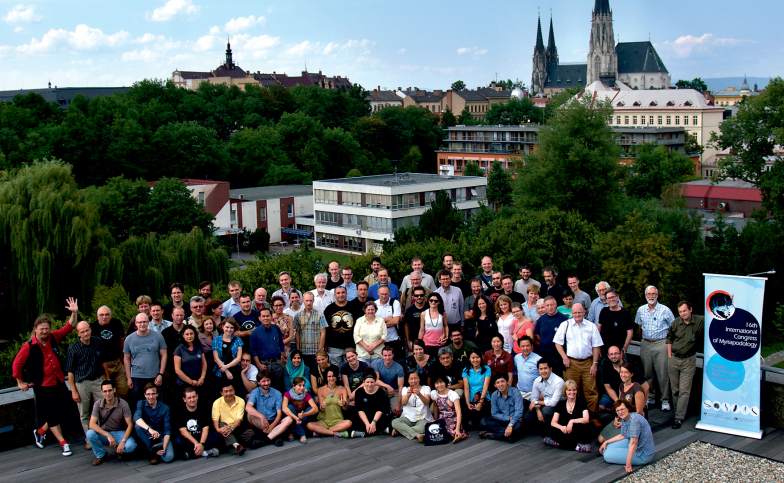 Figure 1
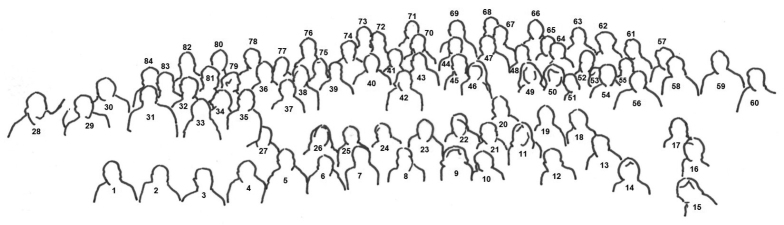 Figure 2
Peer Reviews
No public reviews on file for this paper yet. If you reviewed it on a platform where reviews are public (OpenReview, ICLR, NeurIPS, ICML), you can paste yours below so the community can read it here.
Videos
No videos yet. Explain this paper in a talk, walkthrough, or lecture? Add one.
Taxonomy
TopicsMarine Biology and Ecology Research · Aquatic Invertebrate Ecology and Behavior · Parasite Biology and Host Interactions
The papers in this special issue of ZooKeys were presented at the 16th International Congress of Myriapodology (16ICM) held in Olomouc, the Czech Republic on July 20–25, 2014. International Congresses of Myriapodology are scientific meetings of scientists, students and enthusiastic amateurs with specific interest in millipedes, centipedes, symphylans and pauropods, as well as velvet worms. Those are organised under the auspices of the Centre International de Myriapodologie (http://www.myriapodology.org). To date, these congresses have a 46 year tradition and have taken place in 13 countries:
1ICM: 1968 – Paris, France
2ICM: 1972 – Manchester, UK
3ICM: 1975 – Hamburg, Germany
4ICM: 1978 – Gargnano, Italy
5ICM: 1981 – Radford, USA
6ICM: 1984 – Amsterdam, The Netherlands
7ICM: 1987 – Vittorio Veneto, Italy
8ICM: 1990 – Innsbruck, Austria
9ICM: 1993 – Paris, France
10ICM: 1996 – Copenhagen, Denmark
11ICM: 1999 – Bialowieza, Poland
12ICM: 2002 – Mtunzini, South Africa
13ICM: 2005 – Bergen, Norway
14ICM: 2008 – Görlitz, Germany
15ICM: 2011 – Brisbane, Australia
16ICM: 2014 – Olomouc, Czech Republic
16ICM was the first myriapodological congress to be held in the Czech Republic. The 84 participants and 18 accompanying persons came from 24 countries on five continents, making the 16th Congress a truly international and global meeting of myriapod specialists (Figs 1, 2).
The organisers of the 16ICM are very grateful to the Palacký University, Olomouc, which provided us a pleasant area for all scientific as well as social parts of the Congress. We also thank the Biology Centre CAS and partial support from several unnamed colleagues who allowed the participation of young students at this Congress.
Many thanks to Lyubomir Penev and the friendly staff at Pensoft Publishers for making the 16ICM papers freely available to a global online audience.