Early outgrowth pro-angiogenic cell number and function do not correlate with left ventricular structure and function in conventional hemodialysis patients: a cross-sectional study
James R. Lineen, Michael Kuliszewski, Niki Dacouris, Christine Liao, Dmitriy Rudenko, Djeven P. Deva, Marc Goldstein, Howard Leong-Poi, Ron Wald, Andrew T. Yan, Darren A. Yuen

TL;DR
This study found that in patients on hemodialysis, heart structure and function do not correlate with the number or function of pro-angiogenic cells, which may hinder heart repair.
Contribution
The study is the first to show that EPC responses to cardiac hypertrophy are blunted in end-stage renal disease.
Findings
No significant correlations were found between EPC parameters and left ventricular mass or ejection fraction.
Circulating CD34+ and CD133+ EPC levels were low in chronic dialysis patients.
The reparative EPC response to cardiac hypertrophy appears impaired in ESRD.
Abstract
Left ventricular hypertrophy (LVH) is commonly found in chronic dialysis (CD) recipients, and is associated with impaired microvascular cardiac perfusion and heart failure. In response to LVH and cardiac ischemia, early outgrowth pro-angiogenic cellS(EPCs) mobilize from the bone marrow to facilitate angiogenesis and endothelial repair. In the general population, EPC number and function correlate inversely with cardiovascular risk. In end-stage renal disease (ESRD), EPC number and function are generally reduced. To test whether left ventricular abnormalities retain their potent ability to promote EPC reparative responses in the setting of ESRD. Cross-sectional study. St. Michael’s Hospital, Toronto, Ontario, Canada. 47 prevalent chronic dialysis recipients. (1) circulating CD34+ and CD133+ EPC number, (2) cultured EPC migratory ability, in vitro differentiation potential, and…
Genes, proteins, chemicals, diseases, species, mutations and cell lines named across the full text — each resolved to its canonical identifier and authoritative record.
Click any figure to enlarge with its caption.
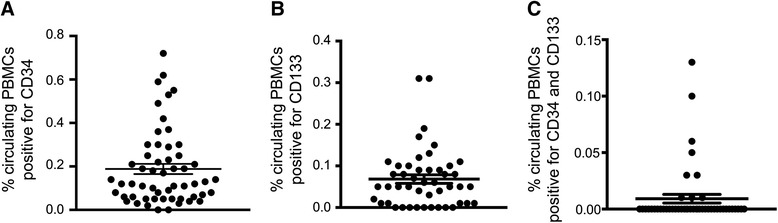 Figure 1
 Figure 2
Peer Reviews
No public reviews on file for this paper yet. If you reviewed it on a platform where reviews are public (OpenReview, ICLR, NeurIPS, ICML), you can paste yours below so the community can read it here.
Videos
No videos yet. Explain this paper in a talk, walkthrough, or lecture? Add one.
Taxonomy
TopicsAdvanced MRI Techniques and Applications · NMR spectroscopy and applications · Advanced NMR Techniques and Applications