Paternal and maternal bonding styles in childhood are associated with the prevalence of chronic pain in a general adult population: the Hisayama Study
Kozo Anno, Mao Shibata, Toshiharu Ninomiya, Rie Iwaki, Hiroshi Kawata, Ryoko Sawamoto, Chiharu Kubo, Yutaka Kiyohara, Nobuyuki Sudo, Masako Hosoi

TL;DR
This study finds that how parents bond with children affects the likelihood of chronic pain in adulthood, with paternal bonding having a stronger link.
Contribution
The study identifies paternal and maternal bonding styles as novel risk factors for chronic pain in a general adult population.
Findings
Affectionless paternal bonding significantly increases chronic pain risk (OR: 2.21).
Affectionless maternal bonding also increases chronic pain risk (OR: 1.60).
The paternal bonding effect remains significant even after adjusting for depression.
Abstract
Previous research has suggested that extraordinary adverse experiences during childhood, such as abuse, are possible risk factors for the development of chronic pain. However, the relationship between the perceived parental bonding style during childhood and chronic pain has been much less studied. In this cross-sectional study, 760 community-dwelling Japanese adults were asked if they had pain that had been present for six months or more. They completed the Parental Bonding Instrument (PBI), a self-administrated questionnaire designed to assess perceived parental bonding, and the Patient Health Questionnaire-9 to assess current depressive symptoms. The PBI consists of care and overprotection subscales that are analyzed by assigning the parental bonding style to one of four quadrants: Optimal bonding (high care/low overprotection), neglectful parenting (low care/low overprotection),…
Genes, proteins, chemicals, diseases, species, mutations and cell lines named across the full text — each resolved to its canonical identifier and authoritative record.
Click any figure to enlarge with its caption.
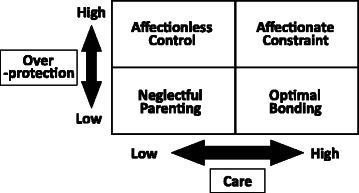 Figure 1
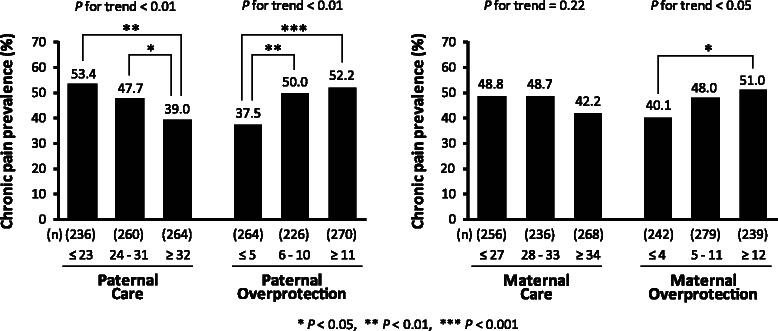 Figure 2
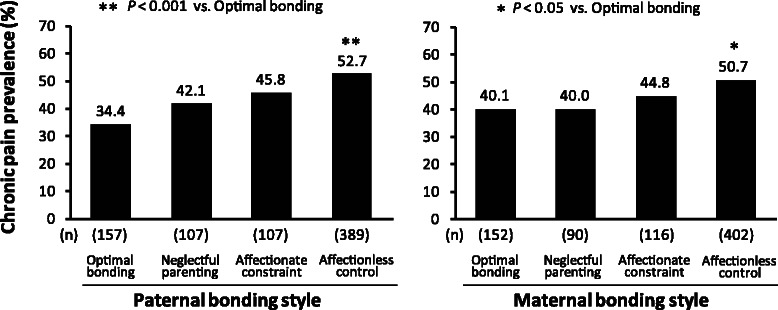 Figure 3
Peer Reviews
No public reviews on file for this paper yet. If you reviewed it on a platform where reviews are public (OpenReview, ICLR, NeurIPS, ICML), you can paste yours below so the community can read it here.
Videos
No videos yet. Explain this paper in a talk, walkthrough, or lecture? Add one.
Taxonomy
TopicsPediatric Pain Management Techniques · Pediatric Pain Management Techniques · Maternal Mental Health During Pregnancy and Postpartum