Evaluation of the Interactions between Water Extractable Soil Organic Matter and Metal Cations (Cu(II), Eu(III)) Using Excitation-Emission Matrix Combined with Parallel Factor Analysis
Jing Wei, Lu Han, Jing Song, Mengfang Chen

TL;DR
This study examines how soil organic matter interacts with copper and europium ions, revealing that they compete for binding sites.
Contribution
The novel use of EEM and PARAFAC to analyze competitive binding of Cu(II) and Eu(III) with soil organic matter components.
Findings
Cu(II) and Eu(III) showed stability constants ranging from 5.49 to 5.94 and 5.26 to 5.81, respectively.
Cu(II) and Eu(III) compete for the same binding sites on water extractable organic matter components.
Four WEOM components were identified using EEM and PARAFAC: fulvic-like, humic-like, microbial degraded humic-like, and protein-like.
Abstract
The objectives of this study were to evaluate the binding behavior of Cu(II) and Eu(III) with water extractable organic matter (WEOM) in soil, and assess the competitive effect of the cations. Excitation-emission matrix (EEM) fluorescence spectrometry was used in combination with parallel factor analysis (PARAFAC) to obtain four WEOM components: fulvic-like, humic-like, microbial degraded humic-like, and protein-like substances. Fluorescence titration experiments were performed to obtain the binding parameters of PARAFAC-derived components with Cu(II) and Eu(III). The conditional complexation stability constants (logKM) of Cu(II) with the four components ranged from 5.49 to 5.94, and the Eu(III) logKM values were between 5.26 to 5.81. The component-specific binding parameters obtained from competitive binding experiments revealed that Cu(II) and Eu(III) competed for the same binding…
Genes, proteins, chemicals, diseases, species, mutations and cell lines named across the full text — each resolved to its canonical identifier and authoritative record.
Click any figure to enlarge with its caption.
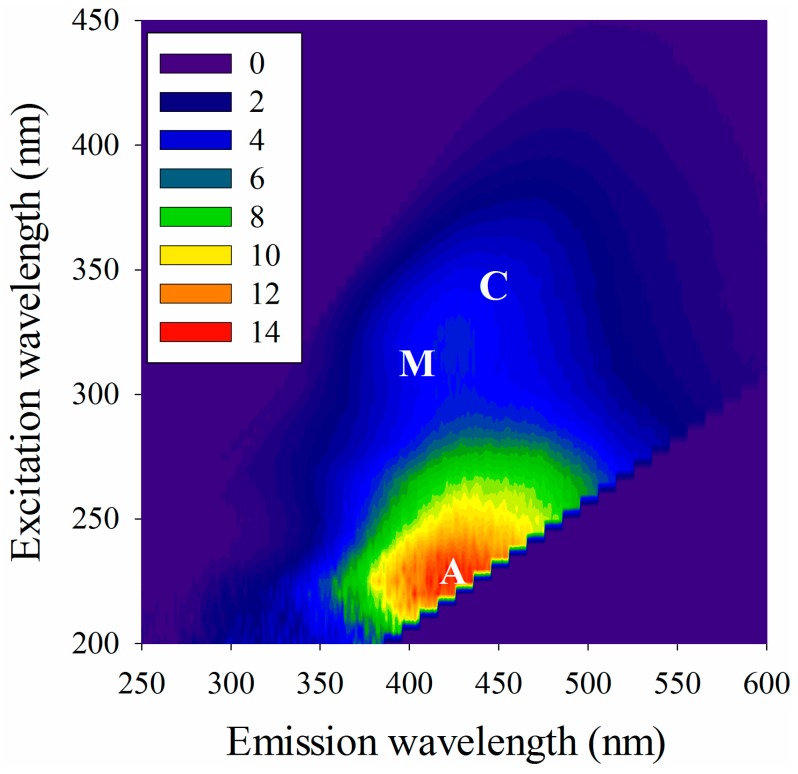 Figure 1
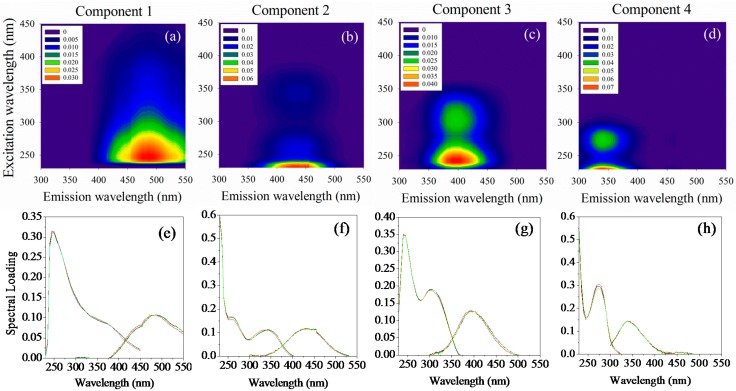 Figure 2
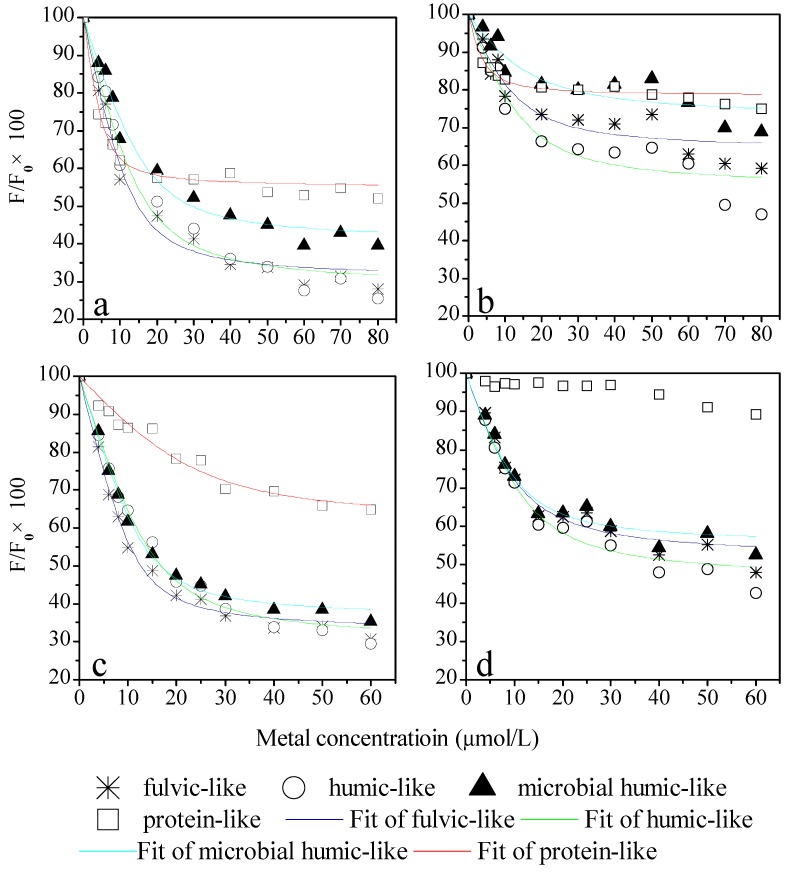 Figure 3
Peer Reviews
No public reviews on file for this paper yet. If you reviewed it on a platform where reviews are public (OpenReview, ICLR, NeurIPS, ICML), you can paste yours below so the community can read it here.
Videos
No videos yet. Explain this paper in a talk, walkthrough, or lecture? Add one.
Taxonomy
TopicsWelding Techniques and Residual Stresses · Metallurgy and Material Forming · Advanced Welding Techniques Analysis