Orbital Reconstruction in a Self-assembled Oxygen Vacancy Nanostructure
H. Jang, G. Kerr, J. S. Lim, C.-H. Yang, C.-C. Kao, J.-S. Lee

TL;DR
Researchers found that oxygen vacancies in a specific material can change electronic structures and reduce conductivity without chemical reactions.
Contribution
The study reveals orbital reconstruction in BiFeO3 due to oxygen vacancies without redox reactions.
Findings
Oxygen vacancies in BiFeO3 lead to in-plane orbital band reconstruction of Fe3+.
Localized valence bands form around the Fermi level, reducing conductivity.
Substitution of Ca2+ for Bi3+ controls vacancy confinement and electronic structure.
Abstract
We demonstrate the microscopic role of oxygen vacancies spatially confined within nanometer inter-spacing (about 1 nm) in BiFeO3, using resonant soft X-ray scattering techniques and soft X-ray spectroscopy measurements. Such vacancy confinements and total number of vacancy are controlled by substitution of Ca2+ for Bi3+ cation. We found that by increasing the substitution, the in-plane orbital bands of Fe3+ cations are reconstructed without any redox reaction. It leads to a reduction of the hopping between Fe atoms, forming a localized valence band, in particular Fe 3d-electronic structure, around the Fermi level. This band localization causes to decrease the conductivity of the doped BiFeO3 system.
Genes, proteins, chemicals, diseases, species, mutations and cell lines named across the full text — each resolved to its canonical identifier and authoritative record.
Click any figure to enlarge with its caption.
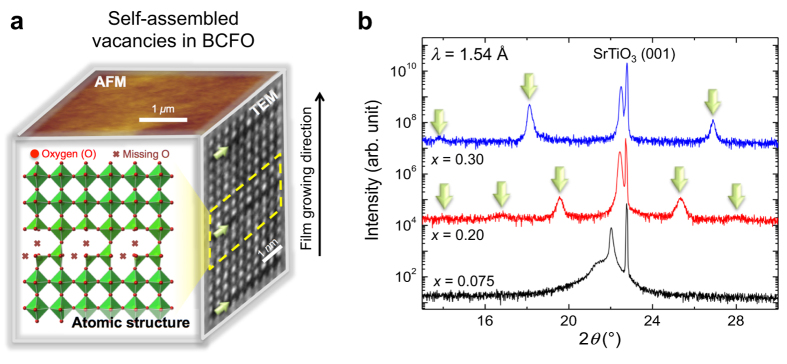 Figure 1
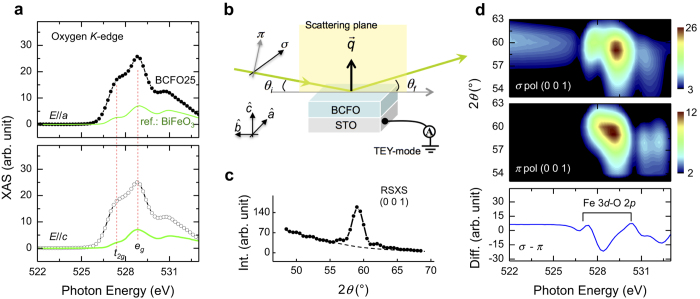 Figure 2
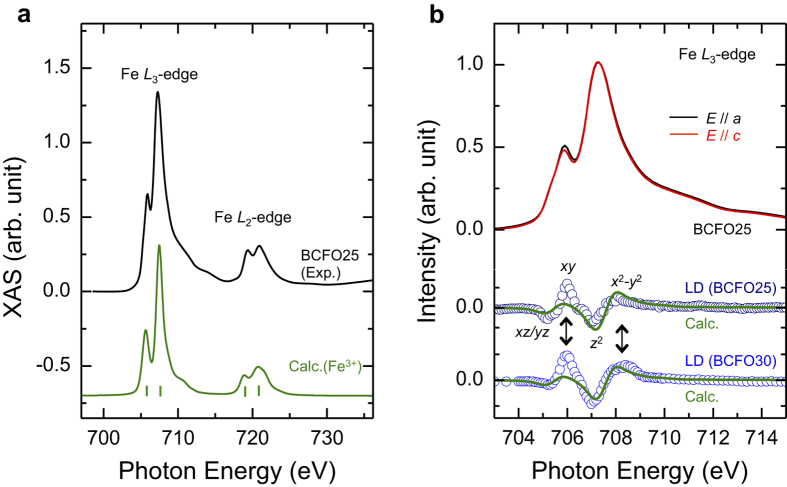 Figure 3
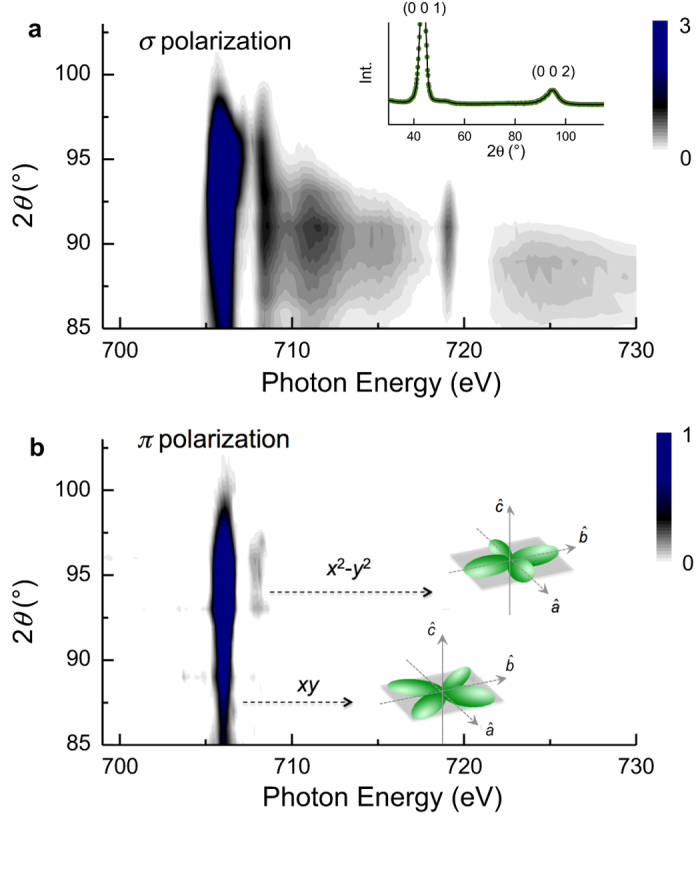 Figure 4
Peer Reviews
No public reviews on file for this paper yet. If you reviewed it on a platform where reviews are public (OpenReview, ICLR, NeurIPS, ICML), you can paste yours below so the community can read it here.
Videos
No videos yet. Explain this paper in a talk, walkthrough, or lecture? Add one.
Taxonomy
TopicsHistorical Art and Architecture Studies · Spanish Literature and Culture Studies
In an intrinsic manner, oxygen vacancies always reside in all oxide compounds modulating chemical and physical properties on the scheme of defect chemistry. Beyond regarding this as an intrinsic defect, nowadays the oxygen vacancy has been considered as a parameter for controlling functionalities of oxide compounds such as quantum materials with strong electron correlation12345 and energy materials6789. In this context, it has been demonstrated that changes in electronic conductivity on the correlated perovskite ABO_3_34 and Li-based batteries68 are associated with total oxygen vacancies. Furthermore, the spatially inhomogeneous distribution of the oxygen vacancies is regarded as another important parameter, as demonstrated in multiferroic BiFeO_3_1011121314. Ferroelectric polarization in BiFeO_3_ can be tuned by an external electric field. Meanwhile, the external electric field additionally induces oxygen vacancy migration because oxygen vacancies are positively charged1115, leading to a switchable photovoltaic effect in BiFeO_3_101112131416. In spite of the vacancy’s importance in those applications, however, a role of oxygen vacancies has been puzzling and discussed only conceptually. Thus, the lack of microscopic understanding limits the improvement of the functionalities of oxide compounds.
For this reason, we discuss the microscopic role of oxygen vacancies for a representative multiferroic photovoltaic system, BiFeO_3_. In general, the photovoltaic effect is associated with a modification of the electrons present in both the valence and conduction band when a material absorbs energy via the light17. However, the multiferroic BiFeO_3_ case is more complicated because the oxygen vacancy’s migration is also affected by the built-in electric field. Here, we investigate an electronic structure with varying the oxygen vacancy in BiFeO_3_ using resonant soft X-ray scattering and soft X-ray absorption spectroscopy measurement and corresponding atomic model calculations. Considering previous works, the number of the oxygen vacancies in BiFeO_3_ can be readily controlled with Ca^2+^ substitution (x) for Bi^3+^ cations—Bi_1–xCaxFeO_3–δ (hereafter, BCFO)1518. Each planar defect an arrangement of Bi/Ca cations is adopted and promotes the formation of oxygen vacancy, showing a brownmillerite-like intra-plane, which leads to a superstructure (see Fig. 1a)1519. Considering the previous TEM studies192021, furthermore, the oxygen vacancy in the superstructure is confined within a single unit cell in a self-assembled manner and the planar structures periodically appear at a few nanometers interval depending on the Ca substitution ratio (see Methods).
In the doped BCFO case, anionic electron number is reduced by the formation of positively charged oxygen-vacancy15. In this manner, electron-hole pairs are modified by the oxygen vacancy. According to the reported photovoltaic properties of BCFO as a function of the vacancy concentration22, however, it does not show a monotonic increase even in a monotonic enhancement of the oxygen vacancy in BCFO. In particular, such effect decreases beyond *x *~ 15%22. This means that the reported diode effect1011 of BiFeO_3_ cannot be simply employed for explaining a change in BCFO via the oxygen vacancy. This implies that near cations (i.e., Fe in this case) chemically responds to the oxygen vacancies, leading to our attention for a role of oxygen vacancies via spectroscopic scheme such as electronic configuration.
Results
Figure 2a shows O K-edge X-ray absorption spectroscopy (XAS) spectra on Ca^2+^ 25% doped BCFO sample (BCFO25), aiming to address the spectroscopy scheme of the oxygen vacancy. The spectra were acquired by recording the total electron yield (TEY) – details of the experimental geometry are shown in Fig. 2b (see Methods). The spectral features represent hybridization effects between O 2p-Fe 3d bands23. There are two pronounced features around E = 527.4 eV and 528.8 eV, corresponding to the Fe t_2g_ and eg orbitals coupled with oxygen bands, respectively. Interestingly, these features are nearly identical to un-doped BiFeO_3_ (green lines in Fig. 2a), although the number of vacancies in the two samples is completely different. Moreover, the polarization dependence (E//a and E//c), which is sensitive to orbital anisotropy24 and crystal symmetry25, is similar to BiFeO_3_. This means that even with substantial oxygen vacancies, a change in the electronic structure of oxygen is hard to observe by this XAS measurement.
For the next step, we employed the site-selective spectroscopic technique—resonant soft X-ray scattering (RSXS). Since the oxygen vacancies in Ca^2+^ doped BiFeO_3_ are confined periodically15, this allows the exploration of electronic configurations around an oxygen vacancy. Figure 2c shows a θ–2θ scan of BCFO25 at E ~ 525 eV—details of the experimental geometry are shown in Fig. 2b. It clearly shows the superstructure reflection, **q **= (001), indicating periodically confined vacancies, which is consistent with the structural formation as shown in Fig. 1a. To investigate the site-selective (i.e., confined vacancies) spectroscopic features, energy scans at fixed q were performed with two (σ and π) incident polarizations (Fig. 2d). Note that electronic anisotropy can be resolved by controlling σ or π polarization in this RSXS measurement2627. The measured RSXS profiles are quite unlike XAS spectra, showing the polarization dependence around the anisotropic Fe t_2g_ and e_g_ orbital bands hybridized with oxygen. In this context, the difference in the RSXS intensity profile between σ and π represents the anisotropic Fe 3d orbital state as modified by the oxygen vacancies.
Since Fe cations in BCFO are chemically correlated with the oxygen vacancies, we need to scrutinize the Fe electronic structures. Figure 3a shows the XAS spectrum for the Fe L2,3-edges. The spectral features are almost identical to the known Fe^3+^ cation feature2328. This means that the Fe valence is retained as a single 3+ state. This is in agreement with atomic multiplet calculations29 on the single valence state under D4h symmetry (see Methods). Moreover, this calculation can generate linear dichroism (LD = E//a − E//c). The calculated LD is comparable to experimental results (Fig. 3b) except for a small deviation around the in-plane orbital characters (xy and x^2^ – y^2^). This deviation, in particular the x^2^ – y^2^ character, is more pronounced in more heavily doped system (30% doped BCFO30). These findings might be associated with the implication (i.e., Fe 3d orbital state modified by oxygen vacancy) of O K-edge RSXS measurements. In other words, the in-plane orbital characters as modified by the oxygen vacancies undergo an additional anisotropic effect beyond the tetragonal crystal symmetry.
We now consider RSXS measurements at the Fe L2,3-edges, for exploring Fe orbital anisotropy around the oxygen vacancies. Like the observed superstructure at the O K-edge, we clearly see a superstructure reflection at q = (001), in addition to the second order (002) reflection (Fig. 4a inset). In the Fe L-edge RSXS study, we focused on the **q **= (002) peak of BCFO25. Figure 4a shows the Fe L-edge RSXS profile for σ incident polarization. Note that the Fe profiles have been subtracted by a diffuse scattering part, e.g. fluorescence background (see Supplementary Information). In comparison with the Fe XAS spectrum, the RSXS profile is quite complicated. This complexity arises from modification of the Fe local structure by the oxygen vacancies. The elongated octahedral Fe (D_4v) coordination in doped BiFeO_3 can be transformed to tetrahedral (Td) and square pyramidal (C4v) symmetry via oxygen vacancies1930. The resonant scattering is produced by the scattering form factor which is basically determined from the crystal symmetry. Therefore, the Fe RSXS profile in Fig. 4a is constructed by all symmetries in the BCFO. Accordingly, the current RSXS profile corresponding to both the complicated structural effects and regarding their Fe spectroscopic information causes a difficulty in exploring the Fe 3d orbital state modified by the oxygen vacancy.
To overcome this difficulty, we employed polarized X-rays and the principle of Brewster’s angle31 in this measurement. Moreover, this is why we focused on the (002) peak of BCFO25 (see Supplementary Information). Note that we do not control a polarization of the out-going photon, indicating the scattered X-ray always shows both σf and πf polarizations. Considering the principle, in here θi + θf ~ 90° Brewster geometry, structural contribution (via πi − πf channel) is drastically suppressed in incident πi-polarization, while the structural contribution (via σi − σf channel) is still large in incident σi-polarization32. As a consequence, we clearly observed the Fe spectroscopic behavior via the πi − σf channel of incident πi-polarization at **q **= (002) (shown in Fig. 4b). Remarkably, there are only two pronounced features around E = 706 eV and 708 eV, agreeing with the implication of the Fe L-edge XAS measurements, which respectively corresponds to xy in t_2g_ orbital bands and x^2^ – y^2^ in e_g_ orbital ones. This indicates that the Fe^3+^ band, in particular in-plane orbital bands, becomes anisotropic around the Fermi level, revealing the role of oxygen vacancy in BCFO system.
Discussion
Considering the Fe octahedral structure in the BCFO, the in-plane orbital characters in the crystal symmetry of the BCFO is not energetically preferred because of the c-axis elongation, showing the self-assembled structure as shown in Fig. 1a. Nevertheless, local in-plain Fe orbital bands on the self-assembled layers formed by the oxygen vacancy are clearly reconstructed by the hybridization with the vacancy. This reconstruction behavior is clearly observed when the structural effect is suppressed through Brewster geometry in RSXS measurement, leading to the additional anisotropic effect in the doped BCFO. Eventually, electrons hopping behavior around the Fermi level is disturbed by the additional anisotropic effect that attributes to the localized orbital bands, reinforcing insulating behavior on the BCFO.
In summary, we have experimentally demonstrated the role of oxygen vacancy which is confined into the two-dimensional self-assembled layers occurring periodically at a few nanometers interval in the Ca-doped BiFeO_3_ films by using XAS and RSXS techniques. The central finding here is that the orbital state of Fe^3+^ cation is modified via the hybridization with the oxygen vacancy, which is competing with the electronic configuration of the Fe valence band in BCFO. This gives a key idea why with increasing doping ratio the diode effect of BiFeO_3_ becomes weak even in higher contents of the oxygen vacancy in the previous report22. These microscopic aspects of oxygen vacancies open a window into a new regime of energy materials, and oxides in general.
Methods
Sample preparation
Using pulsed laser deposition (KrF excimer laser, λ = 248 nm), BCFO films were grown on SrTiO_3_ (001) substrates at 600–700 °C in 50–100 mTorr oxygen pressure. The films were cooled down at a rate of 5 °C/min with an oxygen pressure of ~1 atm. With increasing the x ratio, practically the oxygen vacancy in BCFO film is increasing1518. As varying Ca substitution ratio (*x *= 0.075 ~ 0.30), we monitored BCFO films’ superstructural form, including crystalline quality, using by X-ray diffraction with Cu Kα1 (λ = 1.54 Å) radiation (see Fig. 1b). Aiming to manipulate the periodicity of the oxygen vacancy which is confined around interfaces of the superstructure, finally, the x range was chosen to 0.20, 0.25, and 0.30 (see Supplementary Information).
Synchrotron experiments
The XAS spectra show white line resonances at the Fe L2,3-edges. The spectra result from Fe 2p * → 3d* dipole transitions, are divided roughly into the L3 (2p3/2) and L2 (2p1/2) regions. For the LD measurements via XAS, the polarization direction of the linearly polarized X-rays (98% polarized) was tuned by elliptically polarized undulator, with horizontal (σ) and vertical (π) polarizations corresponding to complete in-plane (E//a) and majority out-of-plane (E//c) polarized components, respectively (see Fig. 2b). Theses spectroscopic experiments, XAS and RSXS, were carried out at beamlines 8-2 and 13-3 of the Stanford Synchrotron Radiation Lightsource (SSRL). Note that all measurements were done by zero-electric field polarization.
Atomic multiplet calculations
The calculations were carried out for the configuration interaction via combination between the initial 2p^6^3d^5^ state and its charge transfer 2p^6^3d^6^L state under the D4h crystal symmetry. The used Coulomb interactions are Udd = 5 eV and Upd = 6 eV. The charge transfer energy is Δ = 2.7 eV. The crystal field (10Dq = 1.6 eV) was used for this calculation. The Slater integrals are with ~80% of the atomic values.
Additional Information
How to cite this article: Jang, H. et al. Orbital Reconstruction in a Self-assembled Oxygen Vacancy Nanostructure. Sci. Rep. 5, 12402; doi: 10.1038/srep12402 (2015).
Supplementary Material
Supplementary Information
The reference list from the paper itself. Each links out to its DOI / PubMed record.
- 1Muller D. A., Nakagawa N., Ohtomo A., Grazul J. L. & Hwang H. Y. Atomic-scale imaging of nanoengineered oxygen vacancy profiles in Sr Ti O 3. Nature 430, 657–661 (2004).1529559510.1038/nature 02756 · doi ↗ · pubmed ↗
- 2Alloul H., Bobroff J., Gabay M. & Hirschfeld P. J. Defects in correlated metals and superconductors. Rev. Mod. Phys. 81, 45–108 (2009).
- 3Pavlenko N., Kopp T., Tsymbal E. Y., Sawatzky G. A. & Mannhart J. Magnetic and superconducting phases at the La Al O 3/Sr Ti O 3 interface: The role of interfacial Ti 3d electrons Phys. Rev. B 85, 020407 (2012).
- 4Lee H. S., Choi S. G., Park H.-H. & Rozenberg M. J. A new route to the Mott-Hubbard metal-insulator transition: Strong correlations effects in Pr 0.7Ca 0.3Mn O 3. Sci. Rep. 3, 1704 (2013).
- 5Bhattacharya A. & May S. J. Magnetic Oxide Heterostructures. Annu. Rev. Mater. Res. 44, 65–90 (2014).
- 6Song J. et al. Role of Oxygen Vacancies on the Performance of Li[Ni 0.5–x Mn 1.5+x]O 4 (x = 0, 0.05, and 0.08) Spinel Cathodes for Lithium-Ion Batteries. Chem. Mater. 24, 3101–3109 (2012).
- 7Muñoz-García A. B. et al. Unveiling Structure–Property Relationships in Sr 2Fe 1.5Mo 0.5O 6−δ, an Electrode Material for Symmetric Solid Oxide Fuel Cells. J. Am. Chem. Soc. 134, 6826–6833 (2012).2244910210.1021/ja 300831 k · doi ↗ · pubmed ↗
- 8Sushko P. V., Rosso K. M., Zhang J.-G., Liu J. & Sushko M. L. Li-Ion Batteries: Oxygen Vacancies and Ordering of d-levels Control Voltage Suppression in Oxide Cathodes: the Case of Spinel Li Ni 0.5Mn 1.5O 4-δ. Adv. Funct. Mater. 23, 5454–5454 (2013).