Evaluation of matrix-assisted laser desorption ionization-time of flight mass spectrometry (MALDI-TOF MS) for identification and clustering of Neisseria gonorrhoeae
Anna Carannante, Elena De Carolis, Paola Vacca, Antonietta Vella, Caterina Vocale, Maria Antonia De Francesco, Marco Cusini, Simonetta Del Re, Ivano Dal Conte, Antonio Cristaudo, Patrizia Ober, Maurizio Sanguinetti, Paola Stefanelli

TL;DR
This study evaluates MALDI-TOF MS as a tool for identifying and clustering Neisseria gonorrhoeae, showing promising results for surveillance.
Contribution
The study demonstrates MALDI-TOF MS's potential for real-time detection and clustering of gonorrhea strains.
Findings
MALDI-TOF MS correctly identified 92 out of 93 gonococci at the species level.
G1407 isolates were divided into two clusters using MALDI-TOF MS.
MALDI-TOF MS is proposed as a promising tool for gonorrhea surveillance.
Abstract
The sexually transmitted infection gonorrhea remains a public health concern for becoming resistant to drug treatments available. The purpose of this study was to evaluate the usefulness of the matrix-assisted laser desorption ionization-time of flight mass spectrometry (MALDI-TOF MS) to identify and cluster Neisseria gonorrhoeae. From a current monitoring in Italy, as part of the European Gonococcal Antimicrobial Surveillance Programme (EURO-GASP), 93 gonococci collected from 2007 to 2012 susceptible (44 isolates) and resistant (49 isolates) to cefixime were selected. Minimum Inhibitory Concentration (MIC) values for cefixime was assessed by Etest carried out in agreement with the manufacturer’s instructions and interpreted referring to European Committee on Antimicrobial Susceptibility testing (EUCAST) clinical breakpoints criteria. Data obtained by N. gonorrhoeae multiantigen…
Genes, proteins, chemicals, diseases, species, mutations and cell lines named across the full text — each resolved to its canonical identifier and authoritative record.
Click any figure to enlarge with its caption.
 Figure 1
 Figure 2
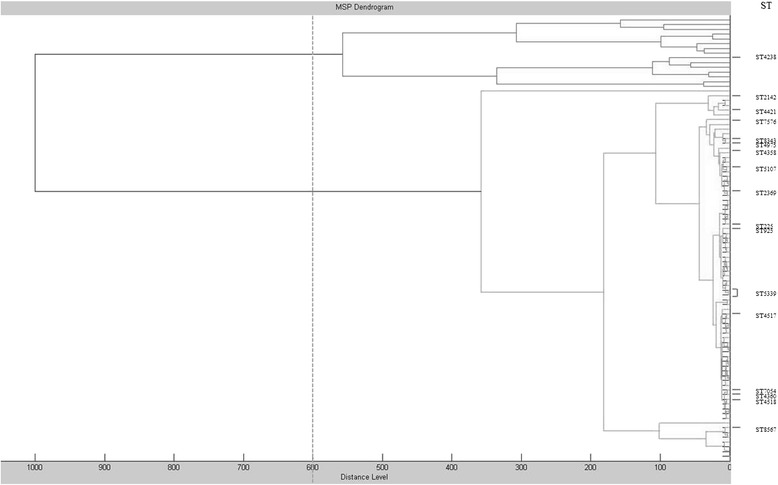 Figure 3
Peer Reviews
No public reviews on file for this paper yet. If you reviewed it on a platform where reviews are public (OpenReview, ICLR, NeurIPS, ICML), you can paste yours below so the community can read it here.
Videos
No videos yet. Explain this paper in a talk, walkthrough, or lecture? Add one.
Taxonomy
TopicsPorphyrin and Phthalocyanine Chemistry · Molecular Junctions and Nanostructures · Surface Chemistry and Catalysis