Near-infrared photons: a non-invasive probe for studying bone blood flow regulation in humans
Tiziano Binzoni, Lorenzo Spinelli

TL;DR
This paper explores using near-infrared photons as a non-invasive way to study blood flow in human bones, offering a safer and more flexible alternative to traditional methods.
Contribution
The paper introduces near-infrared photons as a novel non-invasive optical method for studying bone blood flow regulation in humans.
Findings
Near-infrared photons can overcome limitations of traditional methods like ionizing radiation or contrast agents.
Optical approaches offer unique solutions for repeated and safe monitoring of bone blood flow.
The paper encourages further scientific attention to this promising technique.
Abstract
The study of bone blood flow regulation in humans has always represented a difficult task for the clinician and the researcher. Classical measurement techniques imply the presence of ionizing radiation or contrast agents, or they are slow or cannot be repeated too often in time. In the present review, we would like to give a perspective on how the optical approach might overcome some of these problems and give unique solutions to the study of bone blood flow regulation. We hope that the present contribution will encourage the scientific community to put a greater attention on this approach.
Genes, proteins, chemicals, diseases, species, mutations and cell lines named across the full text — each resolved to its canonical identifier and authoritative record.
Click any figure to enlarge with its caption.
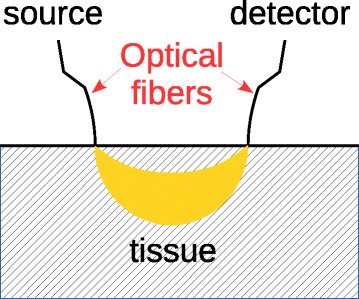 Figure 1
Peer Reviews
No public reviews on file for this paper yet. If you reviewed it on a platform where reviews are public (OpenReview, ICLR, NeurIPS, ICML), you can paste yours below so the community can read it here.
Videos
No videos yet. Explain this paper in a talk, walkthrough, or lecture? Add one.
Taxonomy
TopicsHuman Health and Disease