Far-Red Light-Mediated Seedling Development in Arabidopsis Involves FAR-RED INSENSITIVE 219/JASMONATE RESISTANT 1-Dependent and -Independent Pathways
Huai-Ju Chen, Cheng-Ling Chen, Hsu-Liang Hsieh

TL;DR
This study explores how Arabidopsis seedlings respond to far-red light and jasmonic acid, revealing the role of FIN219/JAR1 in regulating growth through hormone signaling and transcription factors.
Contribution
The study identifies FIN219/JAR1-dependent and -independent pathways in integrating far-red light and jasmonic acid signaling during Arabidopsis seedling development.
Findings
FIN219/JAR1 is involved in modulating Arabidopsis seedling sensitivity to methyl jasmonate under far-red light.
FIN219 regulates multiple transcription factors, including bHLH TFs, in response to far-red light and MeJA.
Loss-of-function mutants of certain bHLH TFs show altered hypocotyl and root elongation responses to MeJA.
Abstract
Plant growth and development is often regulated by the interaction of environmental factors such as light and various phytohormones. Arabidopsis FAR-RED INSENSITIVE 219 (FIN219)/JASMONATE RESISTANT 1 (JAR1) participates in phytochrome A-mediated far-red (FR) light signaling and interacts with different light signaling regulators. FIN219/JAR1 is a jasmonic acid (JA)-conjugating enzyme responsible for the formation of JA-isoleucine. However, how FIN219/JAR1 integrates FR light and JA signaling remains largely unknown. We used a microarray approach to dissect the effect of fin219 mutation on the interaction of FR light and JA signaling. The fin219-2 mutant was less sensitive than the wild type to various concentrations of methyl jasmonate (MeJA) under low and high FR light. High FR light reduced the sensitivity of Arabidopsis seedlings to MeJA likely through FIN219. Intriguingly, in…
Genes, proteins, chemicals, diseases, species, mutations and cell lines named across the full text — each resolved to its canonical identifier and authoritative record.
Click any figure to enlarge with its caption.
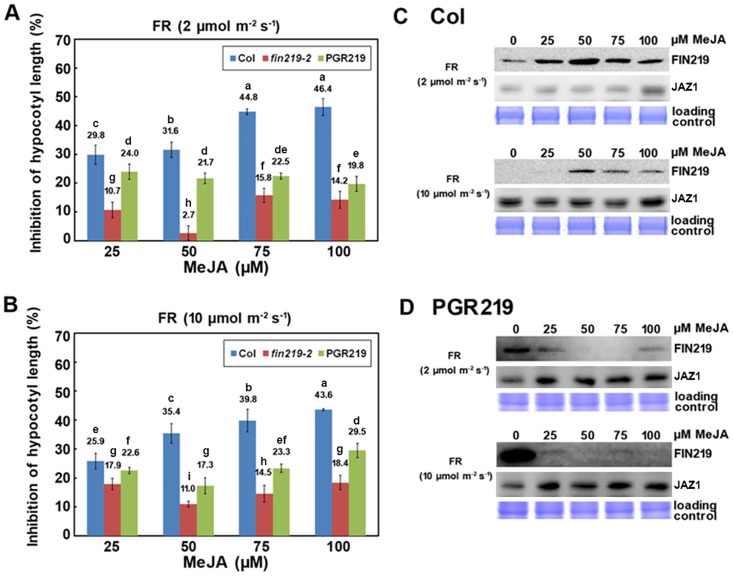 Figure 1
 Figure 2
 Figure 3
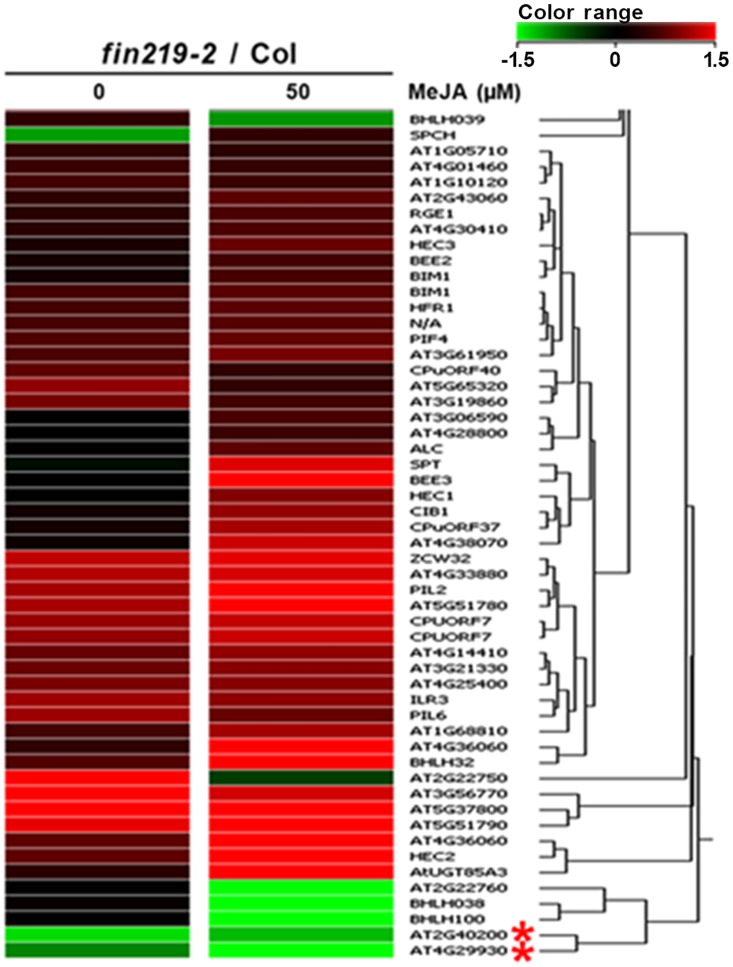 Figure 4
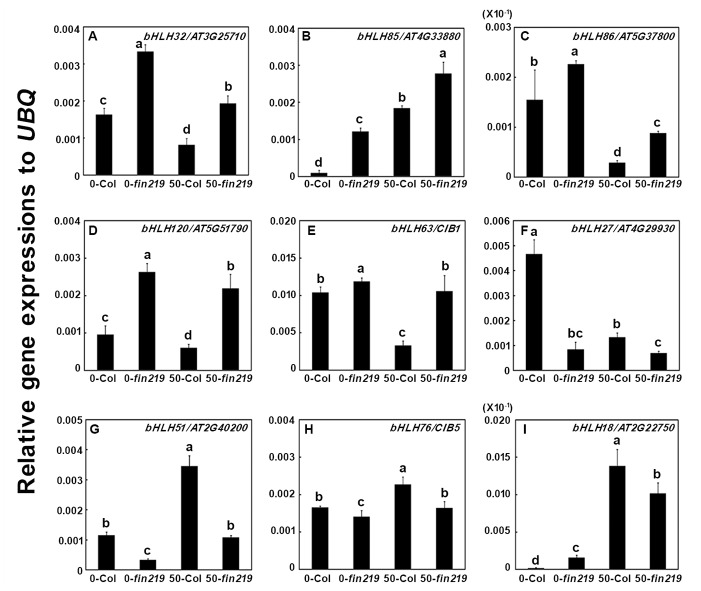 Figure 5
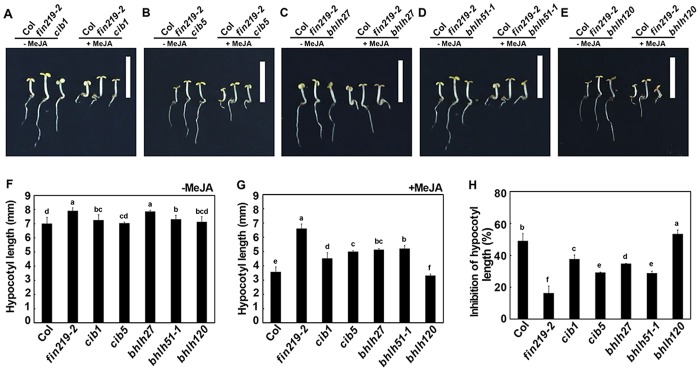 Figure 6
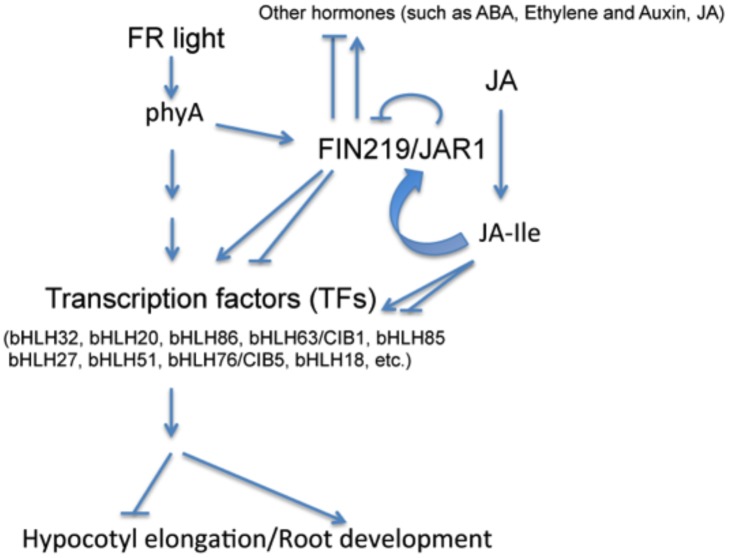 Figure 7
 Figure 8
Peer Reviews
No public reviews on file for this paper yet. If you reviewed it on a platform where reviews are public (OpenReview, ICLR, NeurIPS, ICML), you can paste yours below so the community can read it here.
Videos
No videos yet. Explain this paper in a talk, walkthrough, or lecture? Add one.
Taxonomy
TopicsWorkplace Violence and Bullying · Cultural and political discourse analysis