Reduced secreted clusterin as a mechanism for Alzheimer-associated CLU mutations
Karolien Bettens, Steven Vermeulen, Caroline Van Cauwenberghe, Bavo Heeman, Bob Asselbergh, Caroline Robberecht, Sebastiaan Engelborghs, Mathieu Vandenbulcke, Rik Vandenberghe, Peter Paul De Deyn, Marc Cruts, Christine Van Broeckhoven, Kristel Sleegers

TL;DR
This study shows that certain CLU gene mutations linked to Alzheimer's disease reduce the secretion of the CLU protein, potentially contributing to disease progression.
Contribution
The paper identifies specific CLU mutations that impair protein secretion and provides functional evidence for their role in Alzheimer's disease.
Findings
Three CLU mutations (p.I303NfsX13, p.R338W, p.I360N) disrupt protein localization and reduce secretion.
Mutated CLU accumulates in the endoplasmic reticulum and is poorly transported to the Golgi.
Reduced CLU secretion is proposed as a mechanism for these mutations in Alzheimer's disease.
Abstract
The clusterin (CLU) gene has been identified as an important risk locus for Alzheimer’s disease (AD). Although the actual risk–increasing polymorphisms at this locus remain to be identified, we previously observed an increased frequency of rare non-synonymous mutations and small insertion-deletions of CLU in AD patients, which specifically clustered in the β-chain domain of CLU. Nonetheless the pathogenic nature of these variants remained unclear. Here we report a novel non-synonymous CLU mutation (p.I360N) in a Belgian Alzheimer patient and have explored the pathogenic nature of this and 10 additional CLU mutations on protein localization and secretion in vitro using immunocytochemistry, immunodetection and ELISAs. Three patient-specific CLU mutations in the β-chain (p.I303NfsX13, p.R338W and p.I360N) caused an alteration of the subcellular CLU localization and diminished CLU…
Genes, proteins, chemicals, diseases, species, mutations and cell lines named across the full text — each resolved to its canonical identifier and authoritative record.
Click any figure to enlarge with its caption.
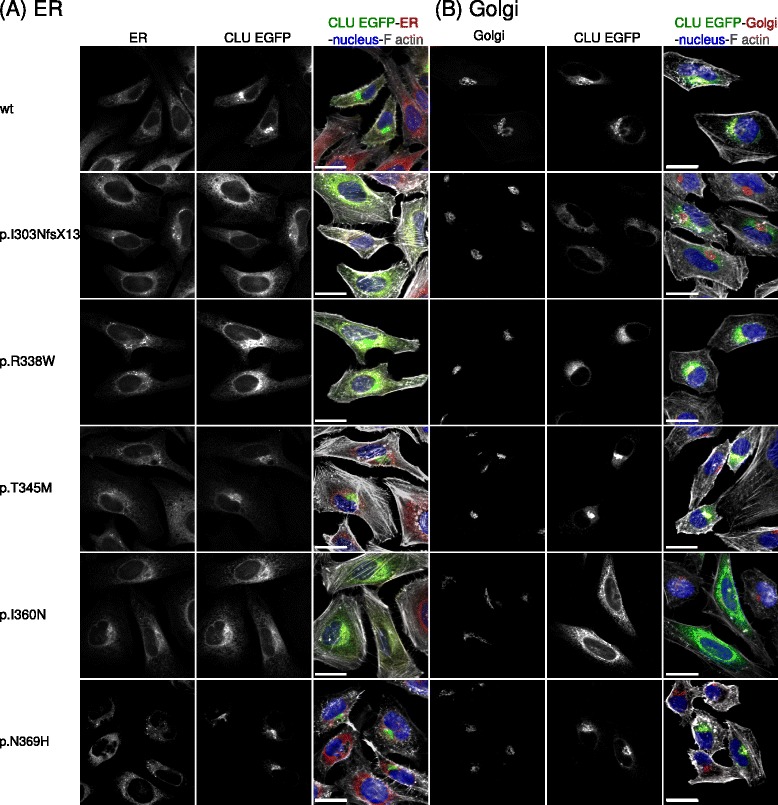 Figure 1
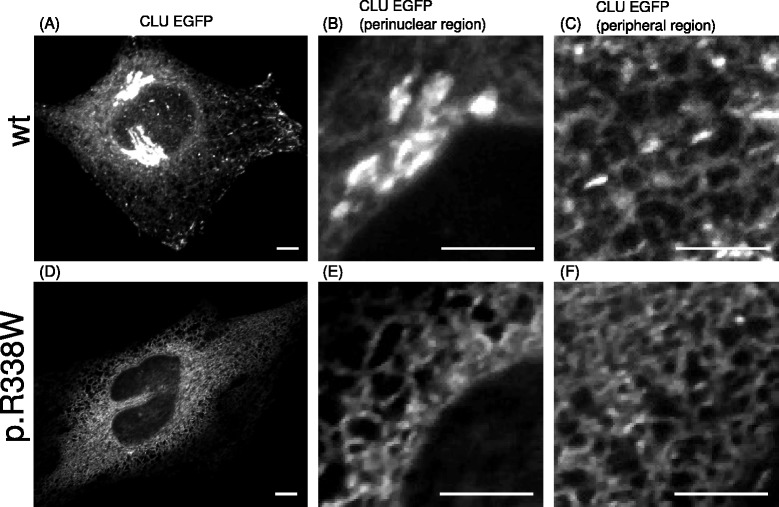 Figure 2
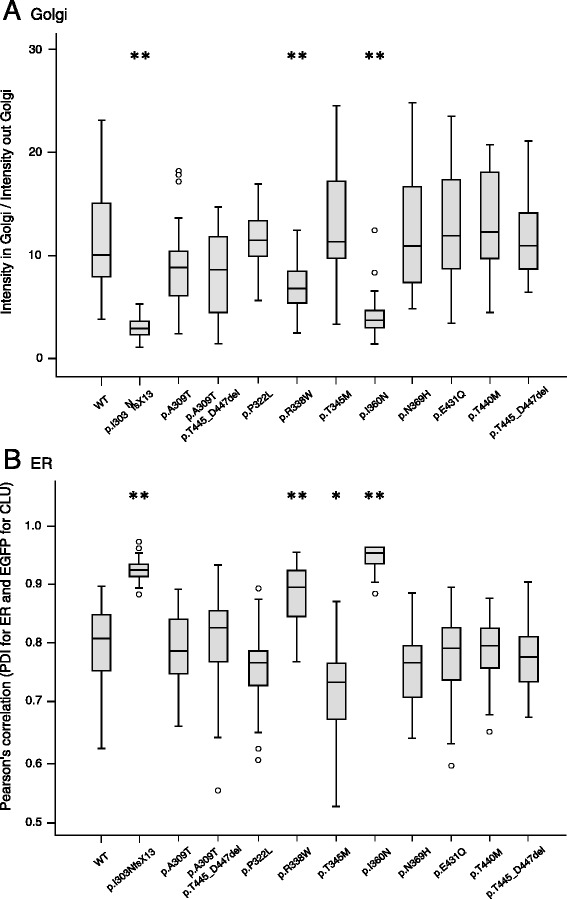 Figure 3
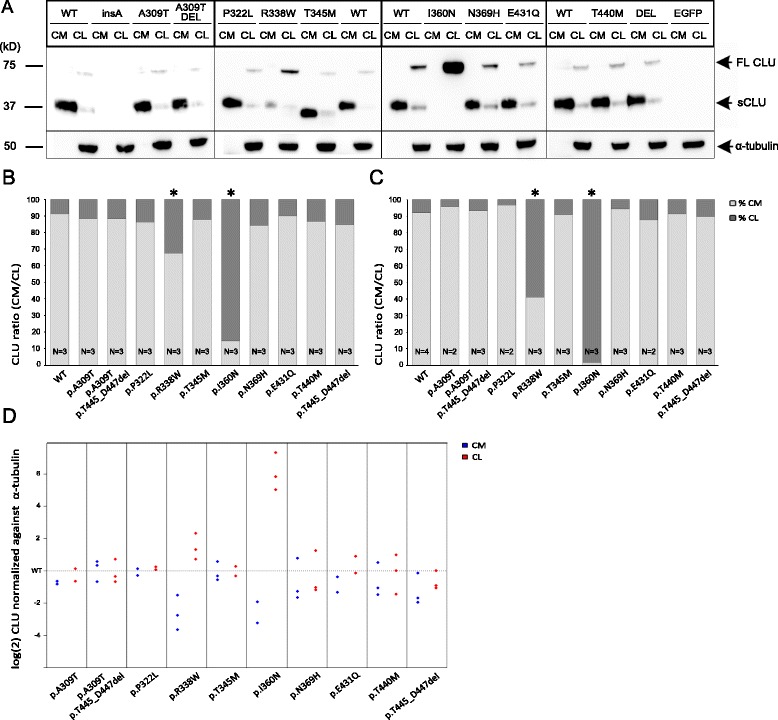 Figure 4
Peer Reviews
No public reviews on file for this paper yet. If you reviewed it on a platform where reviews are public (OpenReview, ICLR, NeurIPS, ICML), you can paste yours below so the community can read it here.
Videos
No videos yet. Explain this paper in a talk, walkthrough, or lecture? Add one.
Taxonomy
TopicsLiterature and Culture Studies · French Urban and Social Studies · French Historical and Cultural Studies