Therapeutic targeting of polo-like kinase 1 using RNA-interfering nanoparticles (iNOPs) for the treatment of non-small cell lung cancer
Joshua A. McCarroll, Tanya Dwarte, Huricha Baigude, Jason Dang, Lu Yang, Rafael B. Erlich, Kathleen Kimpton, Joann Teo, Sharon M. Sagnella, Mia C. Akerfeldt, Jie Liu, Phoebe A. Phillips, Tariq M. Rana, Maria Kavallaris

TL;DR
Researchers developed RNA-interfering nanoparticles to target and silence a cancer-related protein in lung cancer cells, showing promise for new cancer treatments.
Contribution
A novel RNAi nanoparticle (iNOP-7) is shown to effectively deliver siRNA to silence PLK1 in NSCLC both in vitro and in vivo.
Findings
iNOP-7 nanoparticles efficiently delivered siRNA to NSCLC cells without toxicity.
iNOP-7-PLK1 siRNA reduced PLK1 expression and inhibited NSCLC growth in vitro and in mouse models.
The treatment reduced lung tumor burden in orthotopic mouse models.
Abstract
Non-small cell lung cancer (NSCLC) remains the most common cause of cancer death worldwide due its resistance to chemotherapy and aggressive tumor growth. Polo-like kinase 1 (PLK1) is a serine-threonine protein kinase which is overexpressed in cancer cells, and plays a major role in regulating tumor growth. A number of PLK1 inhibitors are in clinical trial; however, poor tumor bioavailability and off-target effects limit their efficacy. Short-interfering-RNA (siRNA) holds promise as a class of therapeutics, which can selectively silence disease-causing genes. However, siRNA cannot enter cells without a delivery vehicle. Herein, we investigated whether RNAi-interfering nanoparticles could deliver siRNA to NSCLC cells and silence PLK1 expression in vitro and in vivo. iNOP-7 was non-toxic, and delivered siRNA with high efficiency to NSCLC cells. iNOP-7-PLK1 siRNA silenced PLK1 expression…
Genes, proteins, chemicals, diseases, species, mutations and cell lines named across the full text — each resolved to its canonical identifier and authoritative record.
Click any figure to enlarge with its caption.
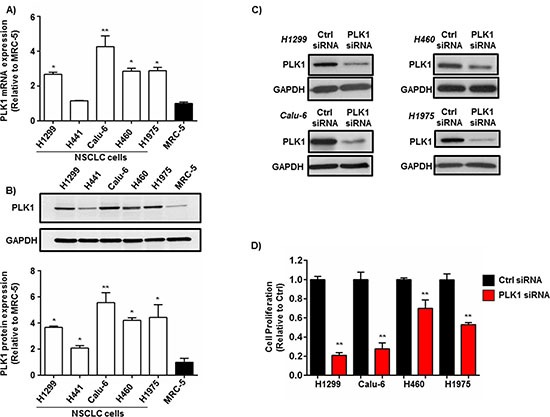 Figure 1
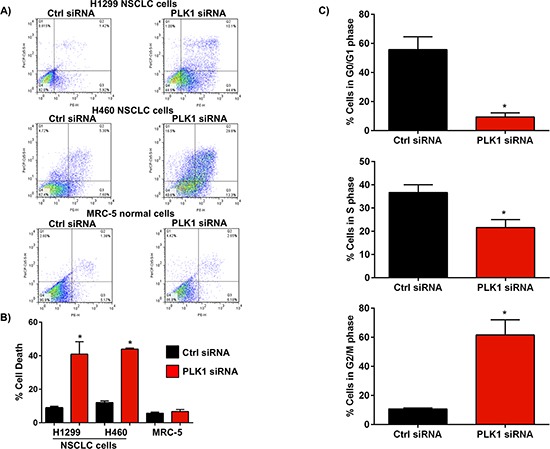 Figure 2
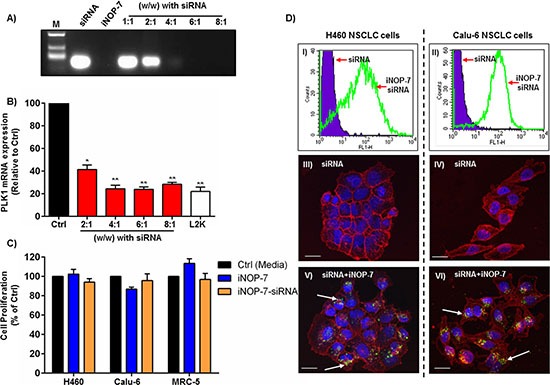 Figure 3
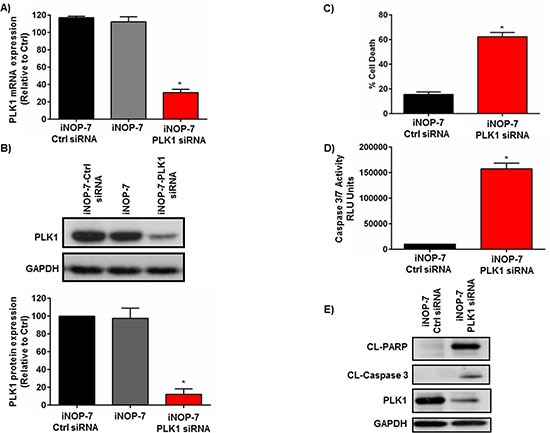 Figure 4
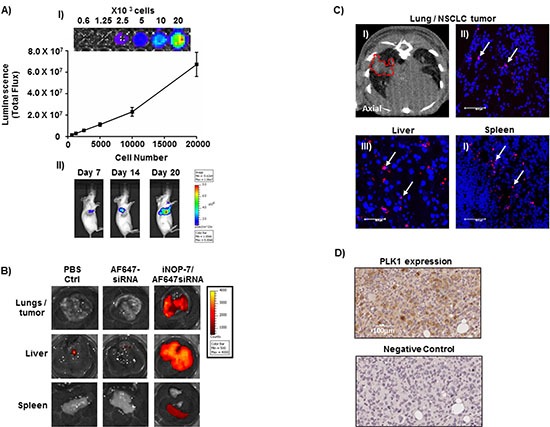 Figure 5
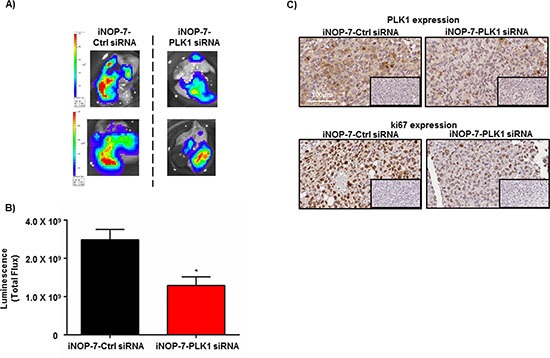 Figure 6
Peer Reviews
No public reviews on file for this paper yet. If you reviewed it on a platform where reviews are public (OpenReview, ICLR, NeurIPS, ICML), you can paste yours below so the community can read it here.
Videos
No videos yet. Explain this paper in a talk, walkthrough, or lecture? Add one.
Taxonomy
TopicsMeteorological Phenomena and Simulations · Climate variability and models · Oceanographic and Atmospheric Processes