Corrigendum: Simple, standardized incorporation of genetic risk into non-genetic risk prediction tools for complex traits: coronary heart disease as an example
Benjamin A. Goldstein, Joshua W. Knowles, Elias Salfati, John P. A. Ioannidis, Themistocles L. Assimes

Abstract
Genes, proteins, chemicals, diseases, species, mutations and cell lines named across the full text — each resolved to its canonical identifier and authoritative record.
Click any figure to enlarge with its caption.
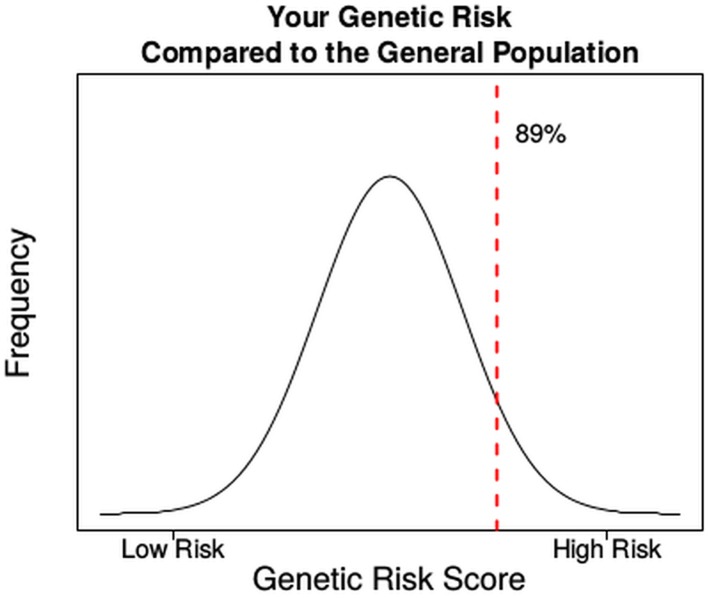 Figure 1
- —NIH
- —American Heart Association
- —National Fellow to Faculty Award
Peer Reviews
No public reviews on file for this paper yet. If you reviewed it on a platform where reviews are public (OpenReview, ICLR, NeurIPS, ICML), you can paste yours below so the community can read it here.
Videos
No videos yet. Explain this paper in a talk, walkthrough, or lecture? Add one.
Taxonomy
TopicsCardiovascular Disease and Adiposity · Nutrition, Genetics, and Disease
The original Figure 2 did not display the full sample risk report as described in the paper. Here we illustrate how one can convey personalized genetic risk to a patient and how the inclusion of the Genetic Risk Score changes the clinical interpretation of the individual's risk.
Funding
BG is supported by an NIH career development award K25DK097279. JK is supported by an American Heart Association, National Fellow to Faculty Award, 10FTF3360005. TA is supported by an NIH career development award K23DK088942.
Your Risk ScoreBased on the traditional Framingham risk score, your risk of coronary heart disease over the next 10 years is approximately 5.5%.We tested for a total of 90 possible risks variants or alleles. Out of these 90, you carry 49 variants that are associated with higher risk. Your genetic profile puts you in the 89 percentile for risk. This means 89% of the general population have a genetic risk score more favorable than you and 11% have a genetic risk score less favorable than you.Based on the traditional Framingham risk score plus the genetic risk score, your risk of coronary heart disease over the next 10 years is approximately 7.6%.Your 10 year risk of coronary heart disease risk is ≥7.5% when considering your genetic risk. This information may be discussed with your physician in terms of what would be recommended as most appropriate management given your estimated risk.
Conflict of interest statement
The authors declare that the research was conducted in the absence of any commercial or financial relationships that could be construed as a potential conflict of interest.