In Situ Regeneration of Si-based ARROW-B Surface Plasmon Resonance Biosensors
Hsin-Feng Hsu, Yen-Ting Lin, Yang-Tung Huang, Ming-Feng Lu, Chyong-Hua Chen

TL;DR
This paper presents a Si-based biosensor that can be reused in situ by regenerating its surface, enabling repeated high-sensitivity biomolecular detection without realignment.
Contribution
The paper introduces an in situ regeneration process for Si-based ARROW-B SPR biosensors, enhancing reusability and eliminating optical system realignment.
Findings
The biosensor achieved a sensitivity of 3.0 × 10³ µW/RIU and a resolution of 6.2 × 10⁻⁵ RIU.
The sensor could be reused over 10 times without significant loss in sensing performance.
Ammonia-hydrogen peroxide mixtures effectively removed bound molecules like BSA and SAM from the sensor surface.
Abstract
Si-based antiresonant reflecting optical waveguide type B (ARROW-B) surface plasmon resonance (SPR) biosensors allow label-free high-sensitivity detection of biomolecular interactions in real time. The ARROW-B waveguide, which has a thick guiding layer, provides efficient coupling with a single-mode fiber. The Si-based ARROW-B SPR biosensors were fabricated by using the standard semiconductor fabrication processes with a single-step lithography. A fluid flow system was designed to transport samples or analytes. The waveguide consists of propagation and SPR sensing regions. The propagation regions in the front and rear of the SPR sensing region have a symmetric cladding structure to isolate them from environmental changes. A high-index O-ring is used to seal the liquid flow channel. The intensity interrogation method was used to characterize the sensors. The sensitivity of the biosensors…
Genes, proteins, chemicals, diseases, species, mutations and cell lines named across the full text — each resolved to its canonical identifier and authoritative record.
Click any figure to enlarge with its caption.
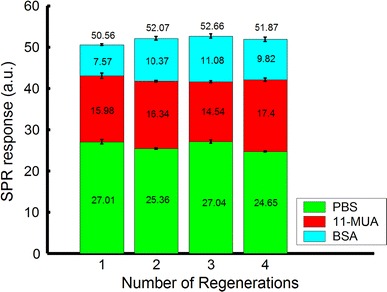 Figure 10
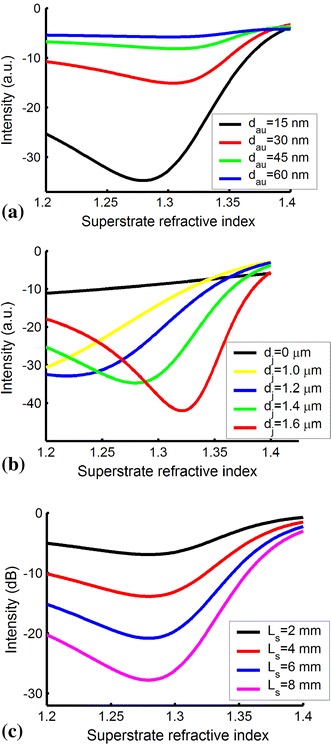 Figure 1
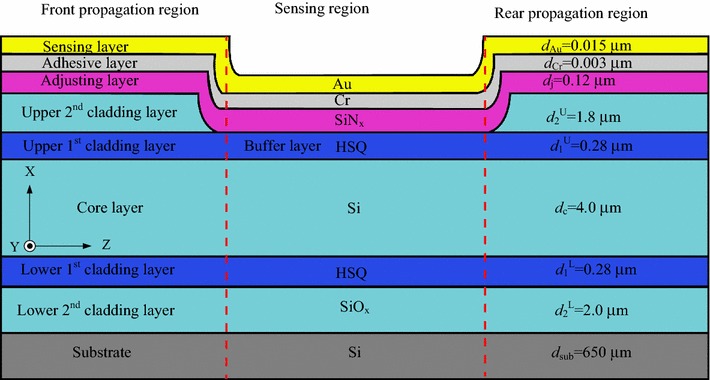 Figure 2
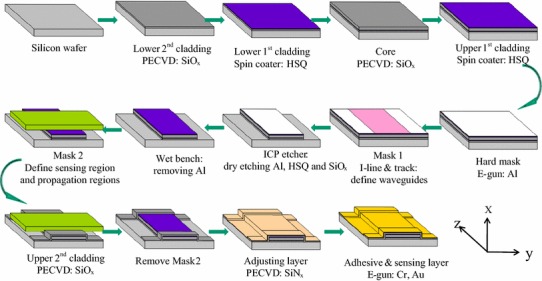 Figure 3
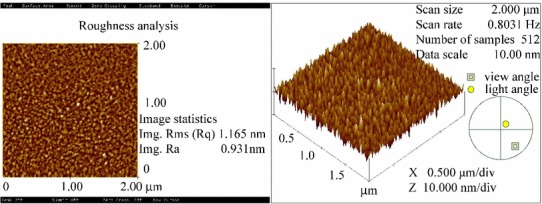 Figure 4
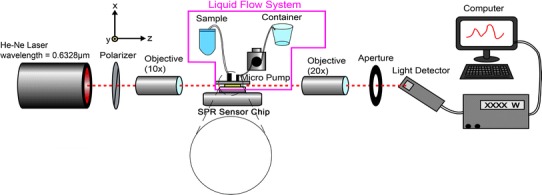 Figure 5
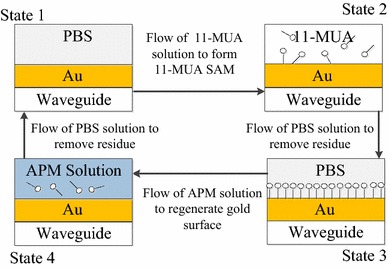 Figure 6
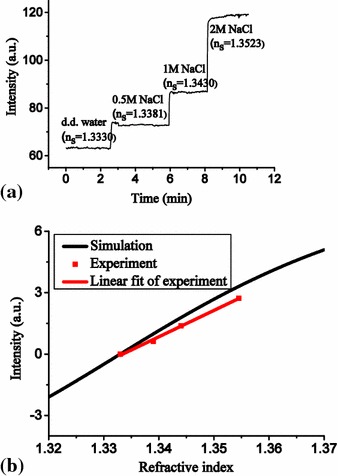 Figure 7
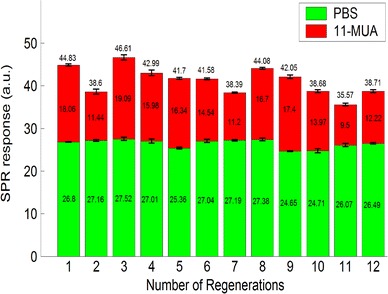 Figure 8
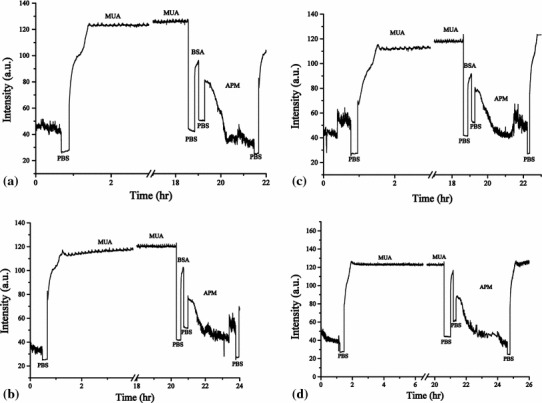 Figure 9
Peer Reviews
No public reviews on file for this paper yet. If you reviewed it on a platform where reviews are public (OpenReview, ICLR, NeurIPS, ICML), you can paste yours below so the community can read it here.
Videos
No videos yet. Explain this paper in a talk, walkthrough, or lecture? Add one.
Taxonomy
TopicsPhotonic and Optical Devices · Microfluidic and Capillary Electrophoresis Applications · Analytical Chemistry and Sensors