Iodized Salt in Cambodia: Trends from 2008 to 2014
Arnaud Laillou, Borath Mam, Sam Oeurn, Chantum Chea

TL;DR
This paper examines the decline in iodized salt compliance in Cambodia from 2008 to 2014, showing a significant drop in iodine content and an increase in non-iodized salt.
Contribution
The study provides new empirical evidence on the effectiveness of Cambodia's iodized salt program over six years, highlighting a concerning decline in compliance.
Findings
The median iodine content in salt dropped from 22 mg/kg in 2011 to 0 mg/kg in 2014.
The proportion of non-iodized salt increased from 22% in 2011 to 62% in 2014.
92% of tested salt does not meet Cambodian government iodization requirements.
Abstract
Though the consequences of nutritional iodine deficiency have been known for a long time, in Cambodia its elimination has only become a priority in the last 18 years. The Royal Government of Cambodia initiated the National Sub-Committee for Control of Iodine Deficiency Disorders in 1996 to fight this problem. Using three different surveys providing information across all provinces, we examined the compliance of salt iodization in Cambodia over the last 6 years. Salt samples from the 24 provinces were collect at the household level in 2008 (n = 566) and 2011 (n = 1275) and at the market level in 2014 (n = 1862) and analysed through a wavelength spectrophotometer for iodine content. According to the samples collected, the median iodine content significantly dropped from 22 mg/kg (25th/75th percentile: 2/37 mg/kg) in 2011 to 0 mg/kg in 2014 (25th/75th percentile: 0/8.9 mg/kg) (p < 0.001).…
Genes, proteins, chemicals, diseases, species, mutations and cell lines named across the full text — each resolved to its canonical identifier and authoritative record.
Click any figure to enlarge with its caption.
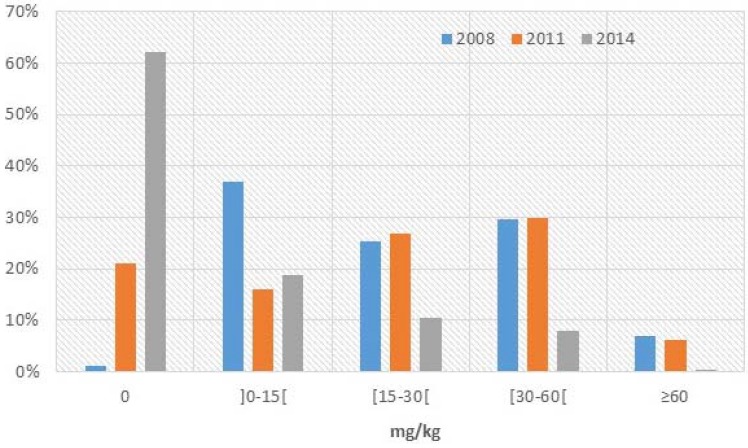 Figure 1
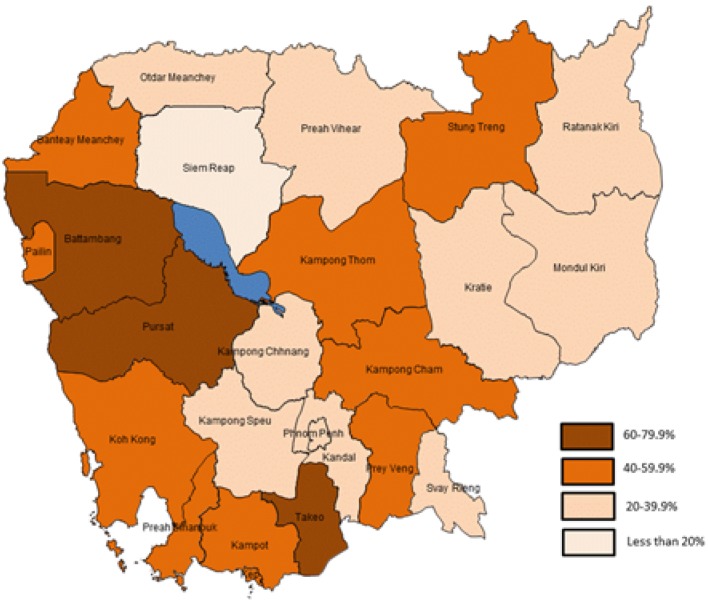 Figure 2
Peer Reviews
No public reviews on file for this paper yet. If you reviewed it on a platform where reviews are public (OpenReview, ICLR, NeurIPS, ICML), you can paste yours below so the community can read it here.
Videos
No videos yet. Explain this paper in a talk, walkthrough, or lecture? Add one.
Taxonomy
TopicsLegal Systems and Judicial Processes