Multiple Adjacent Isolated Thoracic Spinous Process Fractures in High-Energy Trauma
Jacob M. Kirsch, Amit Nathani, Rakesh D. Patel

TL;DR
Rare thoracic spine fractures from high-energy trauma require careful evaluation and conservative treatment can lead to good outcomes.
Contribution
Highlights the rarity and management approach for multiple adjacent thoracic spinous process fractures in trauma patients.
Findings
Multiple adjacent thoracic spinous process fractures are rare in high-energy trauma.
CT scans are most effective for detecting these fractures.
Conservative management with bracing yields excellent functional results.
Abstract
Isolated thoracic spinous process fractures involving multiple adjacent vertebral segments are a rare occurrence in the setting of high-energy trauma. These findings should prompt further investigation to exclude other concomitant osseous or ligamentous injuries. Evaluation by computed tomography is often most useful to detect these fractures. Proper treatment of extensive multilevel injury is poorly defined in the literature. In our experience, conservative management consisting of initial bracing with graduated lifting restrictions has produced excellent functional results.
Genes, proteins, chemicals, diseases, species, mutations and cell lines named across the full text — each resolved to its canonical identifier and authoritative record.
Click any figure to enlarge with its caption.
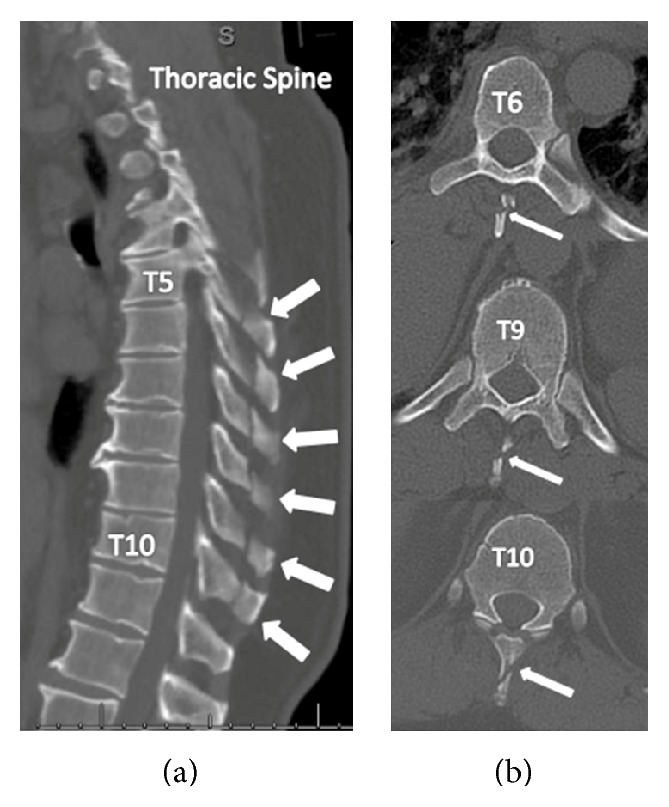 Figure 1
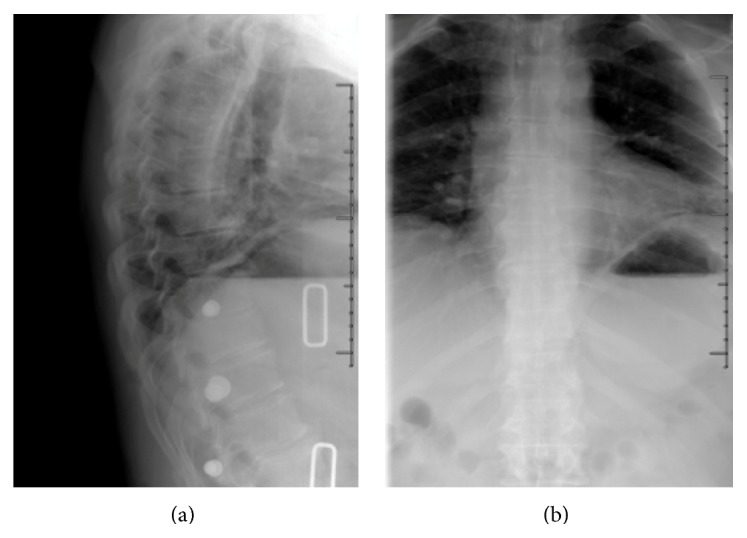 Figure 2
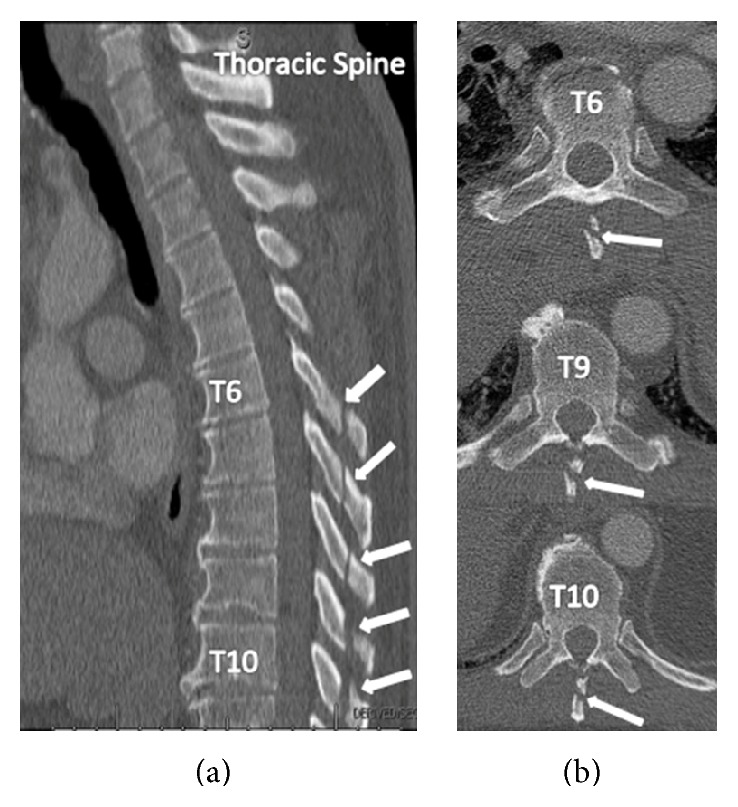 Figure 3
Peer Reviews
No public reviews on file for this paper yet. If you reviewed it on a platform where reviews are public (OpenReview, ICLR, NeurIPS, ICML), you can paste yours below so the community can read it here.
Videos
No videos yet. Explain this paper in a talk, walkthrough, or lecture? Add one.
Taxonomy
TopicsTrauma Management and Diagnosis · Automotive and Human Injury Biomechanics · Spinal Fractures and Fixation Techniques