Overcoming Data Loss in Wearable Disease Detection with GAN-Based Imputation
Jürgen Wallner, Sarah Berbuir, Lukas Birner, Adrian Dendorfer, Bivek Panthi, Beatrix Rahnsch, Julius Muma, Stephen Munga, David Obor, Till Bärnighausen, Sandra Barteit

TL;DR
A GAN-based system improves early detection of infectious diseases by imputing missing wearable sensor data, even in low-resource settings.
Contribution
A lightweight GAN framework that imputes missing heart rate data and enables early infection detection using rule-based anomaly detection.
Findings
The system triggered early alerts in 100 malaria cases, including 42 solely through imputation.
Alerts occurred 11.9 days before symptom onset, matching the parasitemia window.
The GAN reduced reconstruction error by 58% when generalizing from COVID-19 data to malaria.
Abstract
High rates of missing data in wearable sensor streams hinder early detection of infectious diseases, especially in low-resource settings with inconsistent device adherence and connectivity. We developed a lightweight generative adversarial network (GAN) framework that imputes missing heart rate data and integrates with a rule-based anomaly detection algorithm to identify early signs of infection. In a cohort from rural Kenya (n = 300, 161 malaria-positives), our system triggered early alerts in 100 cases, including 42 solely with imputation. Alerts preceded symptom onset by 11.9 days, aligning with the 11.7-day parasitemia window from controlled trials. Despite 50% data coverage, alerts occurred on 3.5 consecutive days during the infection window, improving early detection by 35%. The GAN, trained only on external COVID-19 data (n = 3318), generalized to malaria, reducing reconstruction…
Genes, proteins, chemicals, diseases, species, mutations and cell lines named across the full text — each resolved to its canonical identifier and authoritative record.
Click any figure to enlarge with its caption.
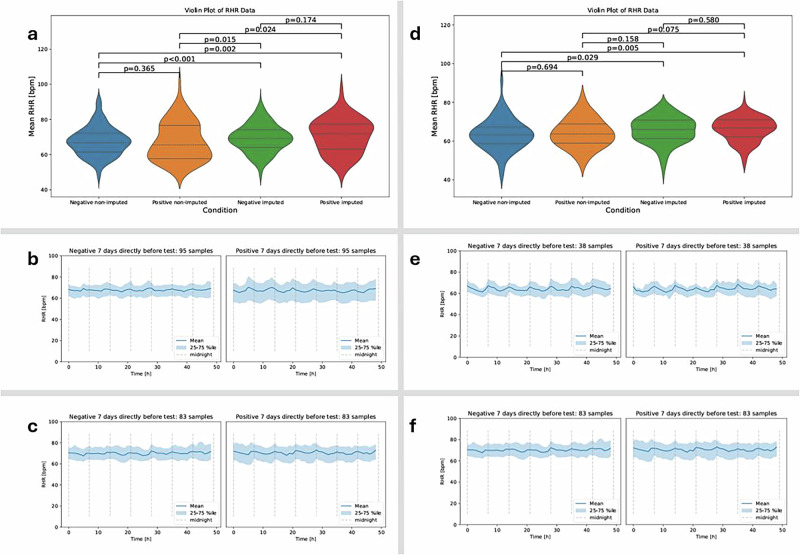 Figure 1
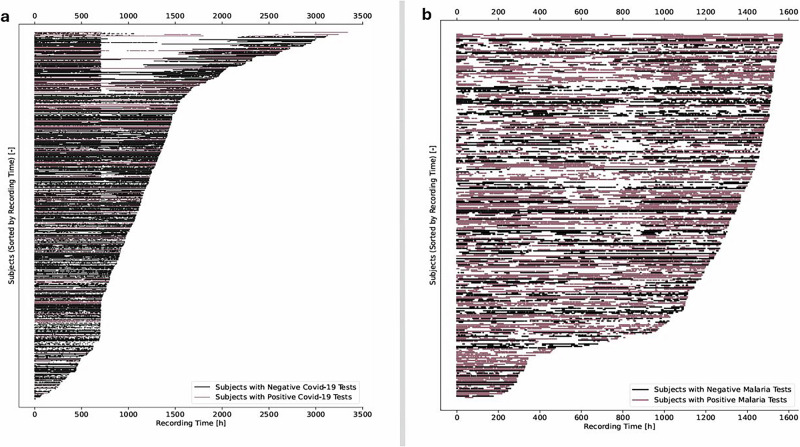 Figure 2
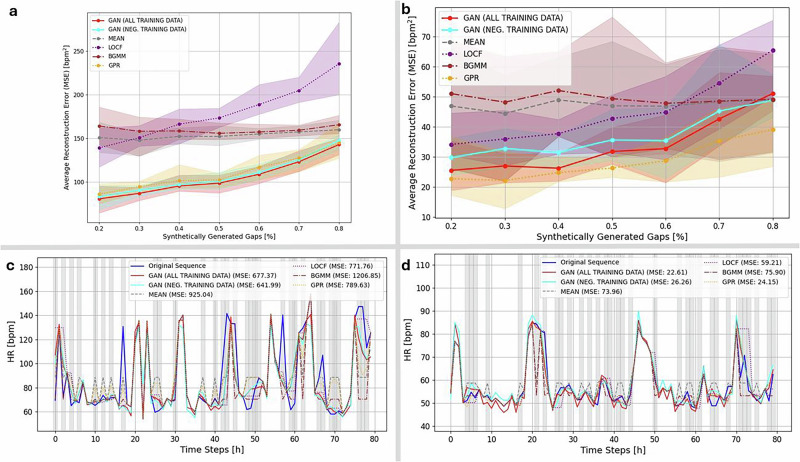 Figure 3
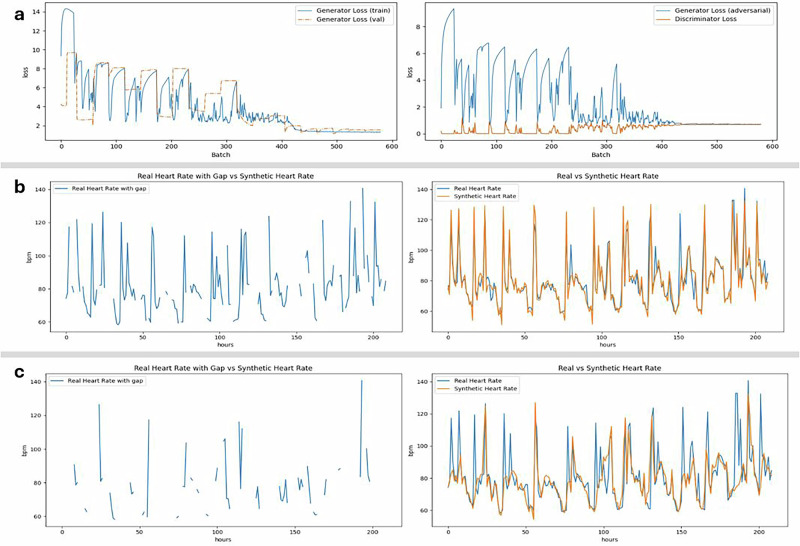 Figure 4
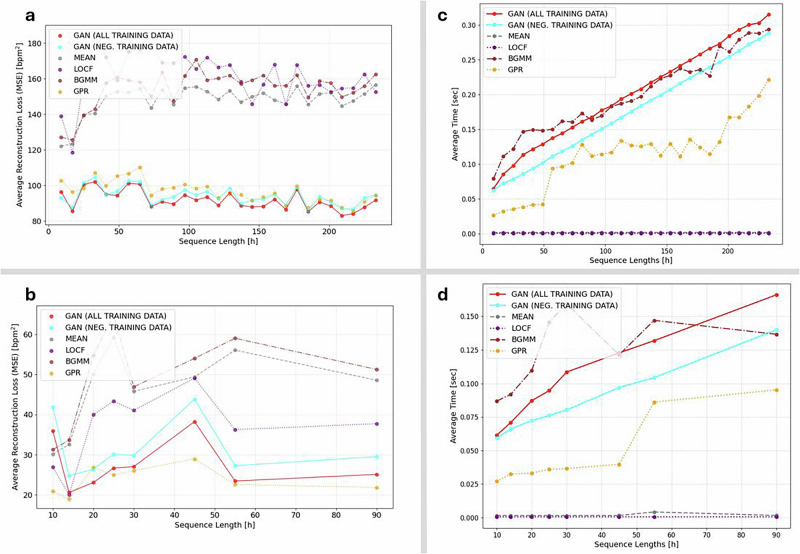 Figure 5
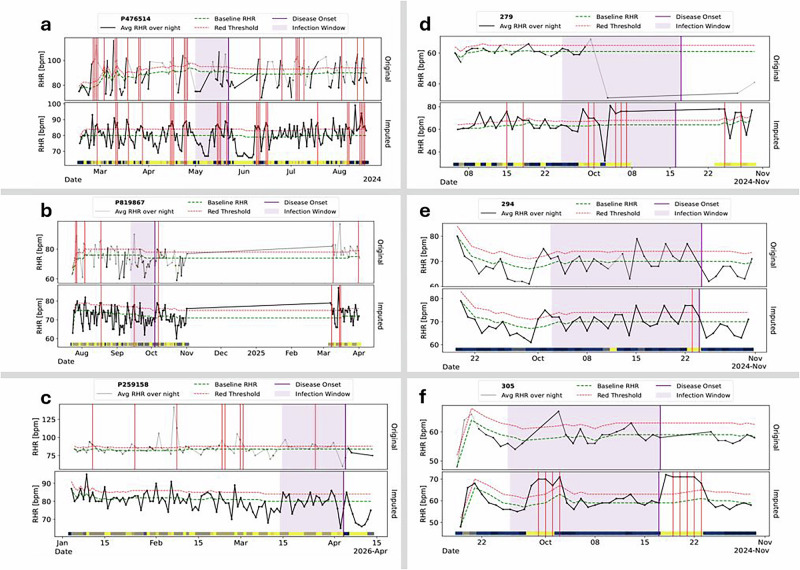 Figure 6
Peer Reviews
No public reviews on file for this paper yet. If you reviewed it on a platform where reviews are public (OpenReview, ICLR, NeurIPS, ICML), you can paste yours below so the community can read it here.
Videos
No videos yet. Explain this paper in a talk, walkthrough, or lecture? Add one.
Taxonomy
TopicsNon-Invasive Vital Sign Monitoring · COVID-19 diagnosis using AI · Anomaly Detection Techniques and Applications