Lipopolysaccharide confinement in the bacterial outer membrane is governed by interactions within the conserved Lipid A anchor
Joe Nabarro, Rosalyn M Leaman, Samuel Lenton, Leonore Mantion, Richard J Spears, Mark C Coles, Dmitri O Pushkin, Martin A Fascione, Christoph G Baumann

TL;DR
This study reveals how lipopolysaccharide (LPS) is confined in the bacterial outer membrane through specific interactions in the Lipid A anchor, which is crucial for the membrane's function.
Contribution
The study identifies the biophysical mechanisms behind LPS confinement in Gram-negative bacteria, including the role of divalent cations and hydrophobic interactions.
Findings
LPS confinement is independent of the oligosaccharide domain structure and is conserved across multiple bacterial species.
Divalent cations, especially Mg2+, significantly influence LPS lateral mobility more than Ca2+.
Disruption of LPS-LPS interactions leads to a new sub-population of freely diffusing LPS molecules.
Abstract
The outer membrane of Gram-negative bacteria is an asymmetric bilayer in which lipopolysaccharide (LPS), the principal component of the outer leaflet, promotes tight packing and ordering of the membrane components that are essential for the barrier and load-bearing functions of this membrane. Lipopolysaccharide mobility is known to be restricted in the outer membrane, but this confinement and the underlying biophysical interactions responsible remain to be fully characterized. Here, we apply a bio-orthogonal strategy for in situ site-specific fluorescent labeling of LPS. Using fluorescence microscopy, we quantify LPS lateral confinement in the outer membrane of Escherichia coli and demonstrate that this confinement is independent of oligosaccharide domain structure. We show that lipopolysaccharide assembles into discrete supramolecular structures, and that restricted lateral mobility…
Genes, proteins, chemicals, diseases, species, mutations and cell lines named across the full text — each resolved to its canonical identifier and authoritative record.
Click any figure to enlarge with its caption.
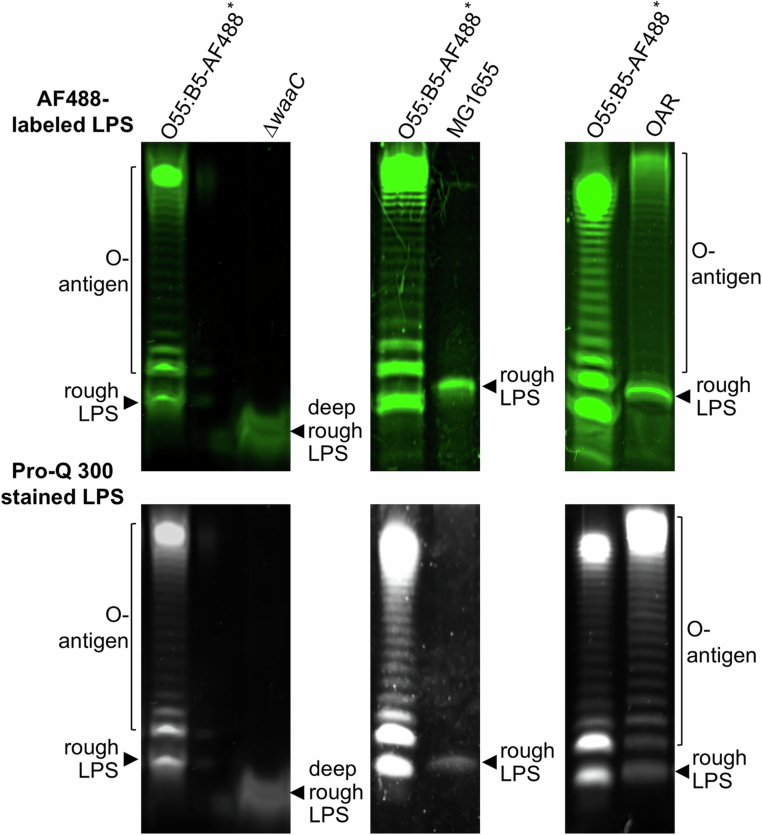 Figure 10
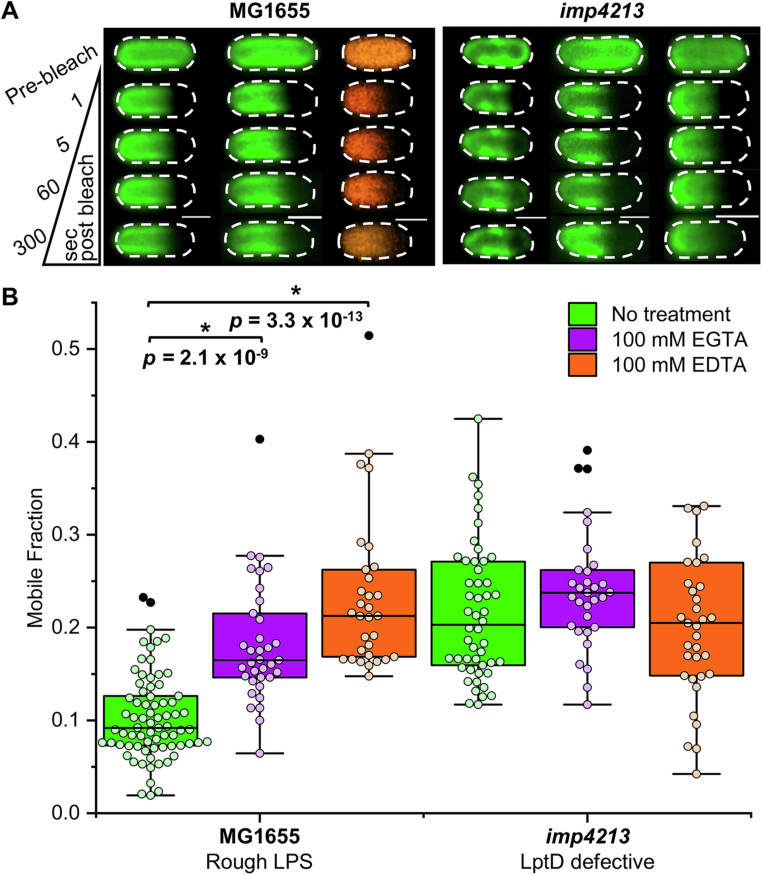 Figure 11
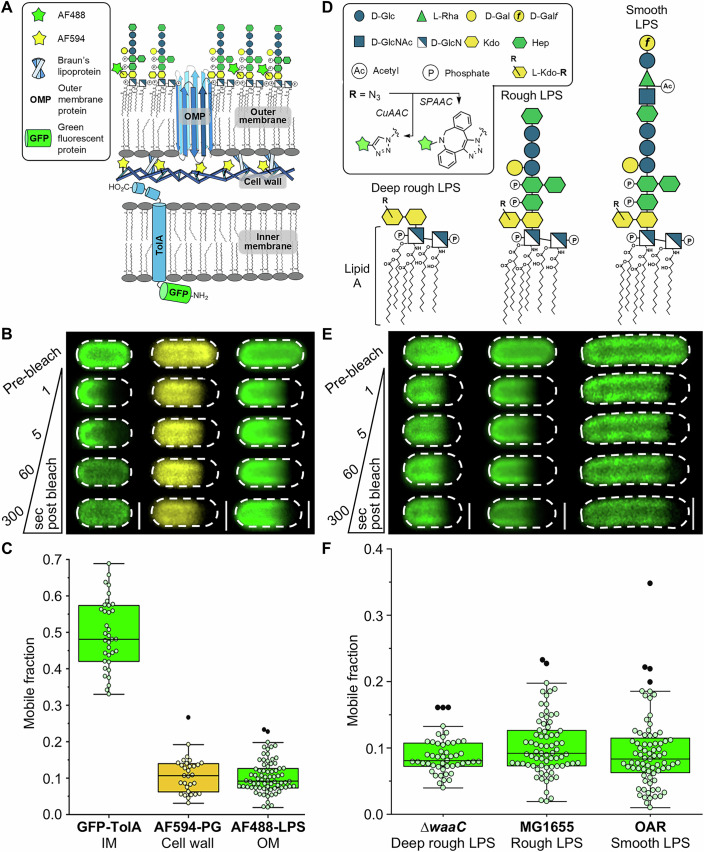 Figure 1
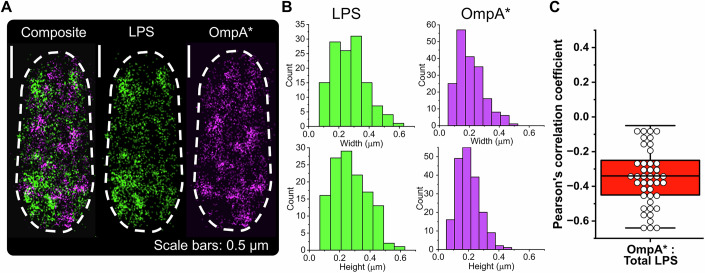 Figure 2
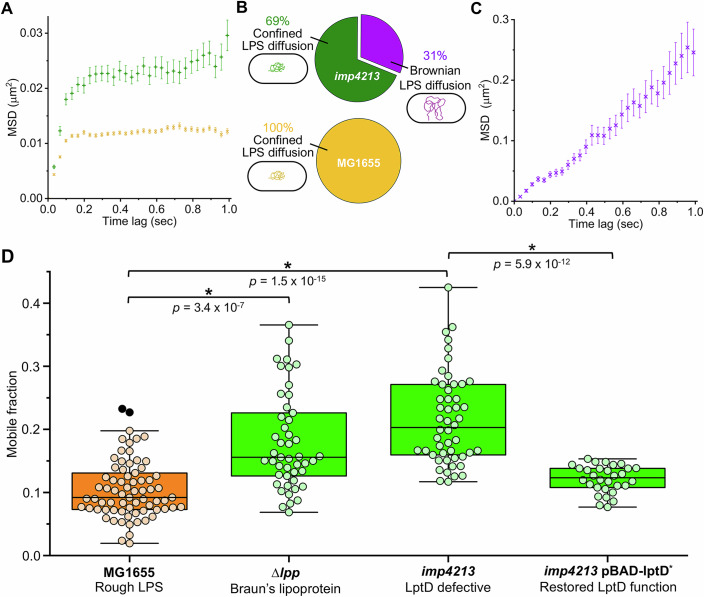 Figure 3
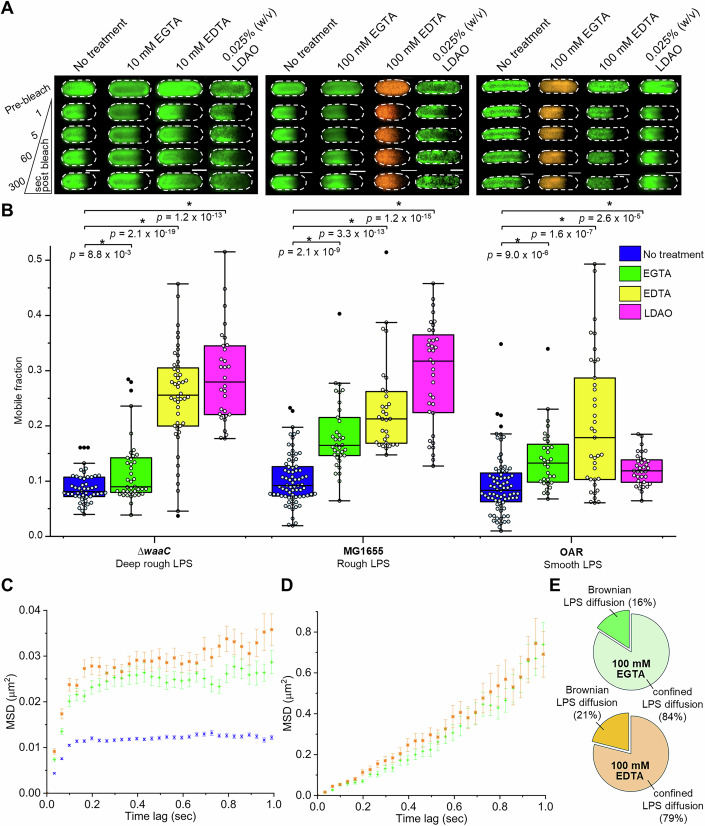 Figure 4
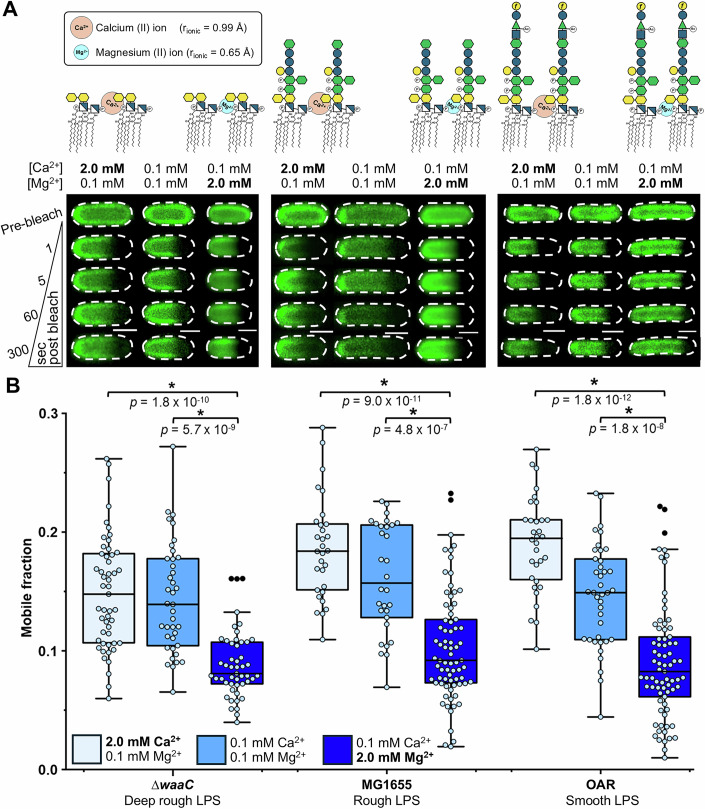 Figure 5
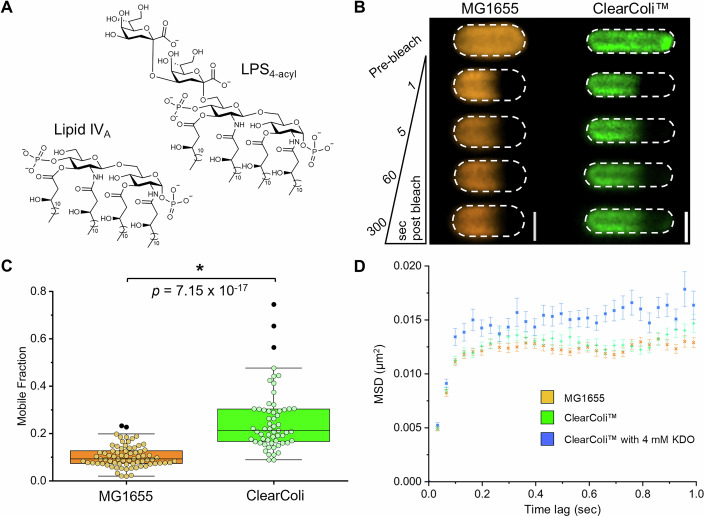 Figure 6
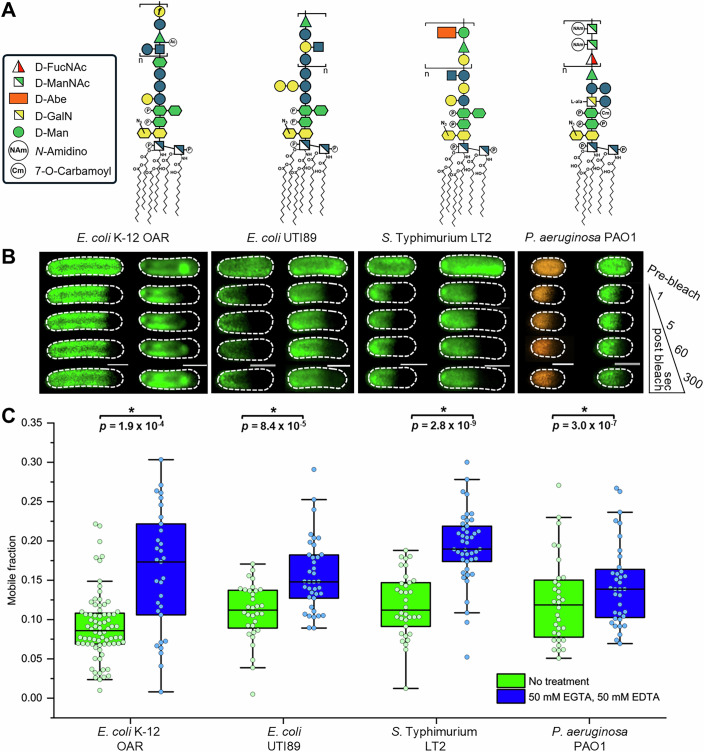 Figure 7
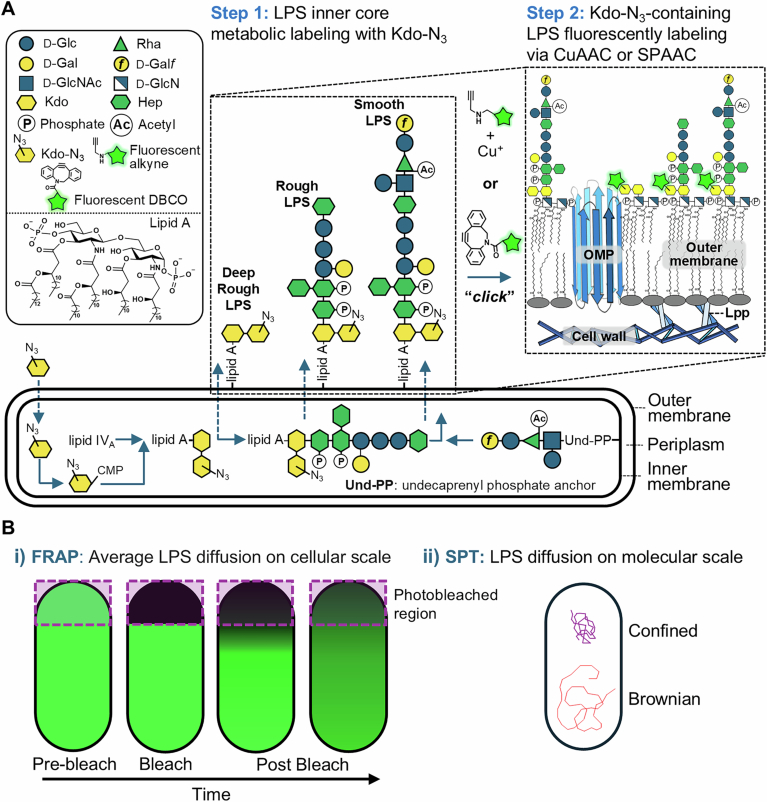 Figure 8
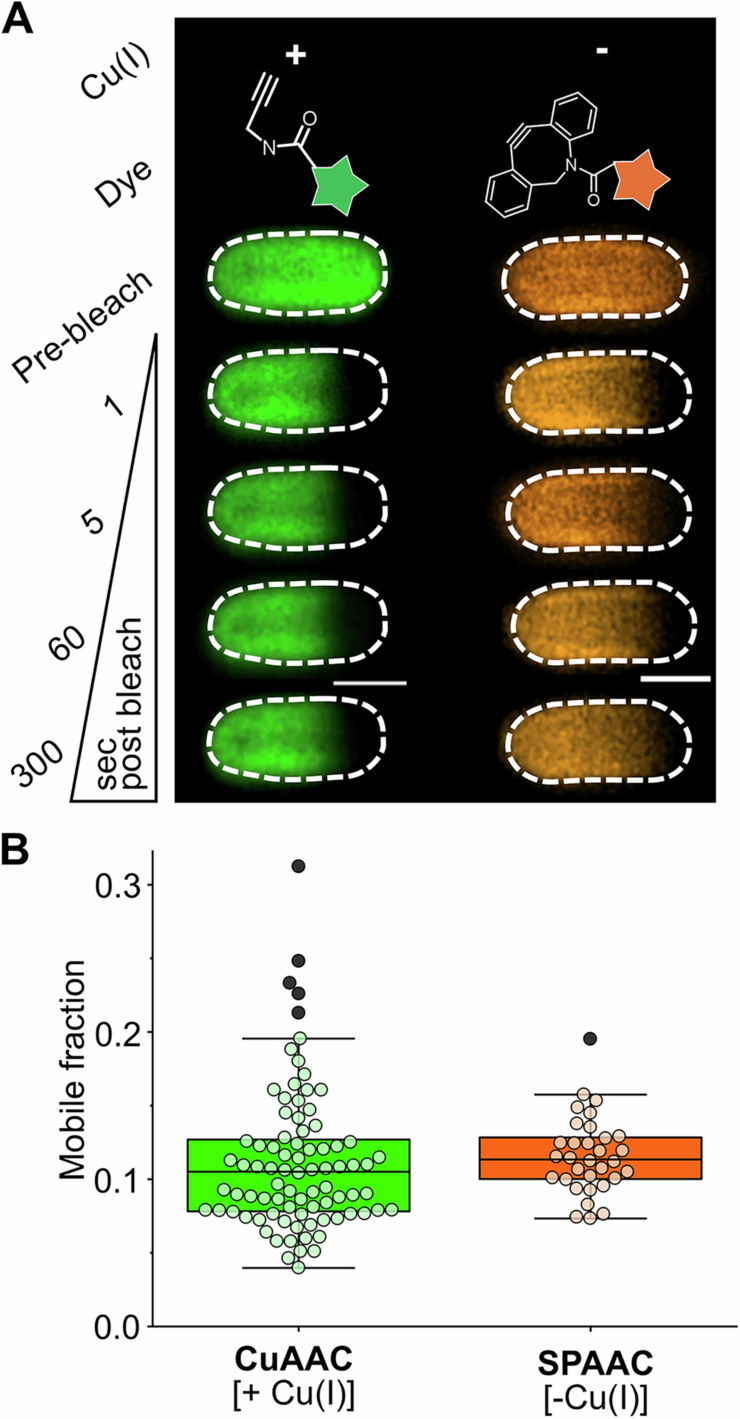 Figure 9
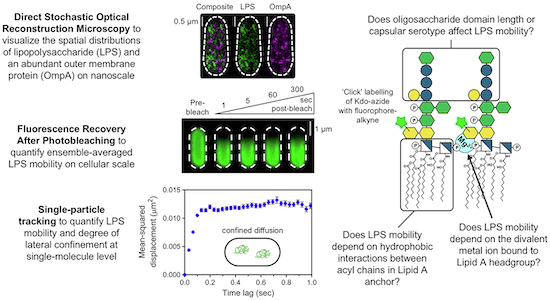 Figure 12
 Figure 13
Peer Reviews
No public reviews on file for this paper yet. If you reviewed it on a platform where reviews are public (OpenReview, ICLR, NeurIPS, ICML), you can paste yours below so the community can read it here.
Videos
No videos yet. Explain this paper in a talk, walkthrough, or lecture? Add one.
Taxonomy
TopicsLipid Membrane Structure and Behavior · Escherichia coli research studies · Bacterial Genetics and Biotechnology