Regional nonsense constraint offers biological and clinical insights into genetic disease
Alexander J. M. Blakes, Nicola Whiffin, Colin A. Johnson, Jamie M. Ellingford, Siddharth Banka

TL;DR
This study improves understanding of how nonsense mutations affect genes, helping identify disease-causing variants and new genes linked to rare diseases.
Contribution
The study introduces a new metric for regional nonsense constraint informed by nonsense-mediated mRNA decay.
Findings
2764 genes show significant regional nonsense constraint, including 641 known disease genes.
De novo nonsense and frameshift variants are 9.5-fold enriched in constrained regions.
22 candidate disease genes were identified with clusters of de novo variants in constrained regions.
Abstract
Reliably predicting the molecular impact of premature termination codons (PTCs) is essential for the clinical interpretation of “loss-of-function” variants in human disease. Measures of selective constraint can identify genes and genomic regions which are intolerant to deleterious genetic variation. However, existing loss-of-function constraint metrics do not comprehensively account for nonsense-mediated mRNA decay (NMD), a quality control pathway which critically regulates PTCs. Here, we use sequencing data from 730,947 individuals to develop an NMD-informed regional nonsense constraint metric. We find 2764 genes with significant regional nonsense constraint, including 641 known autosomal dominant disease genes. Using sequencing data in 32,260 trios from three rare disease cohorts, we find that de novo nonsense and frameshift variants are 9.5-fold enriched and associated with up to…
Genes, proteins, chemicals, diseases, species, mutations and cell lines named across the full text — each resolved to its canonical identifier and authoritative record.
Click any figure to enlarge with its caption.
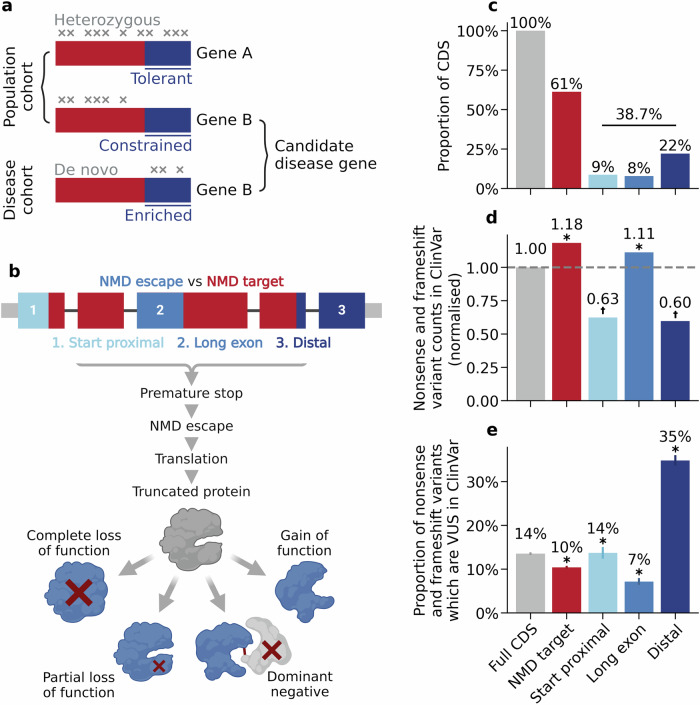 Figure 1
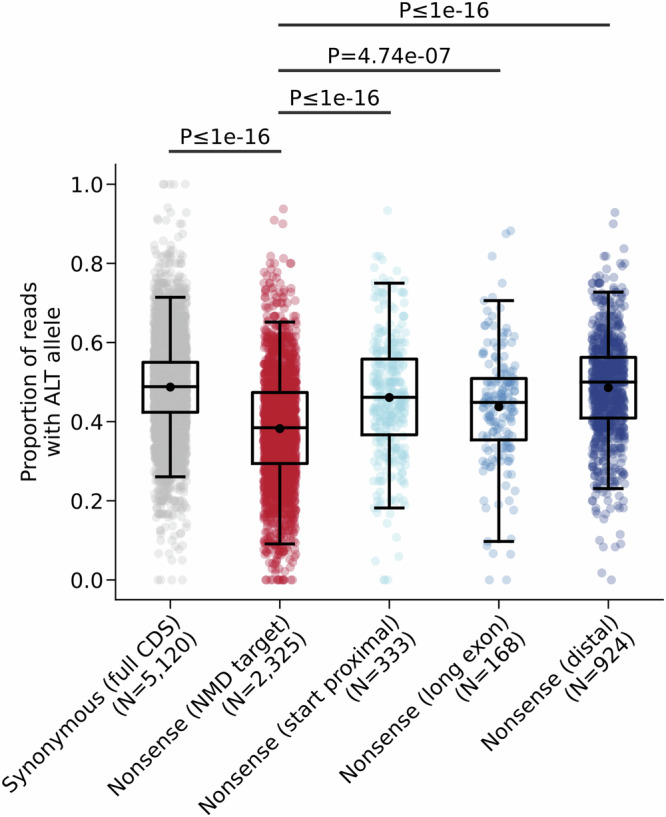 Figure 2
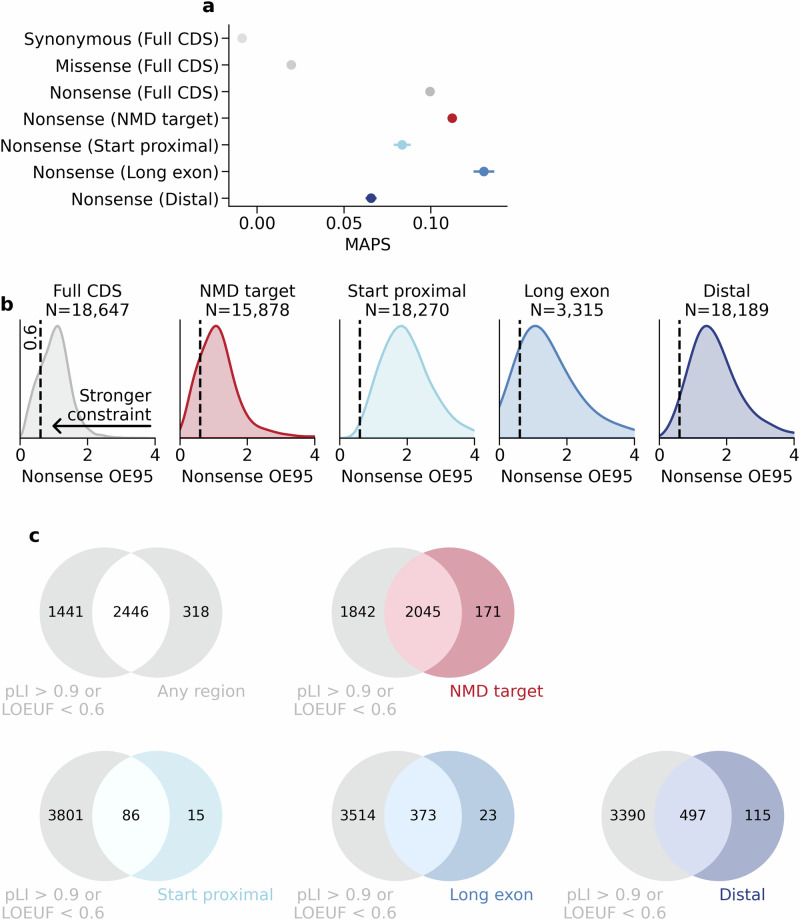 Figure 3
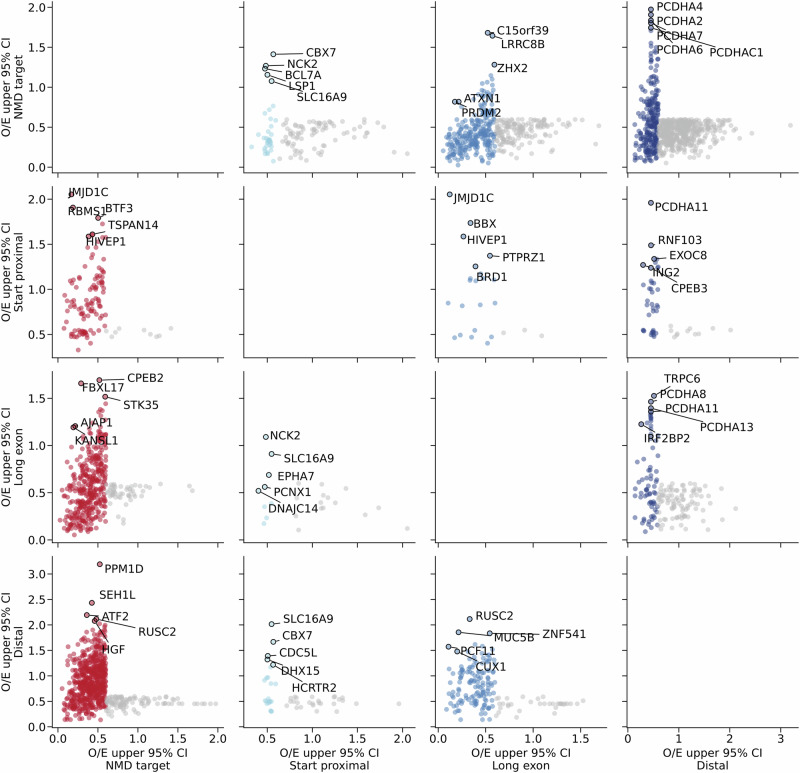 Figure 4
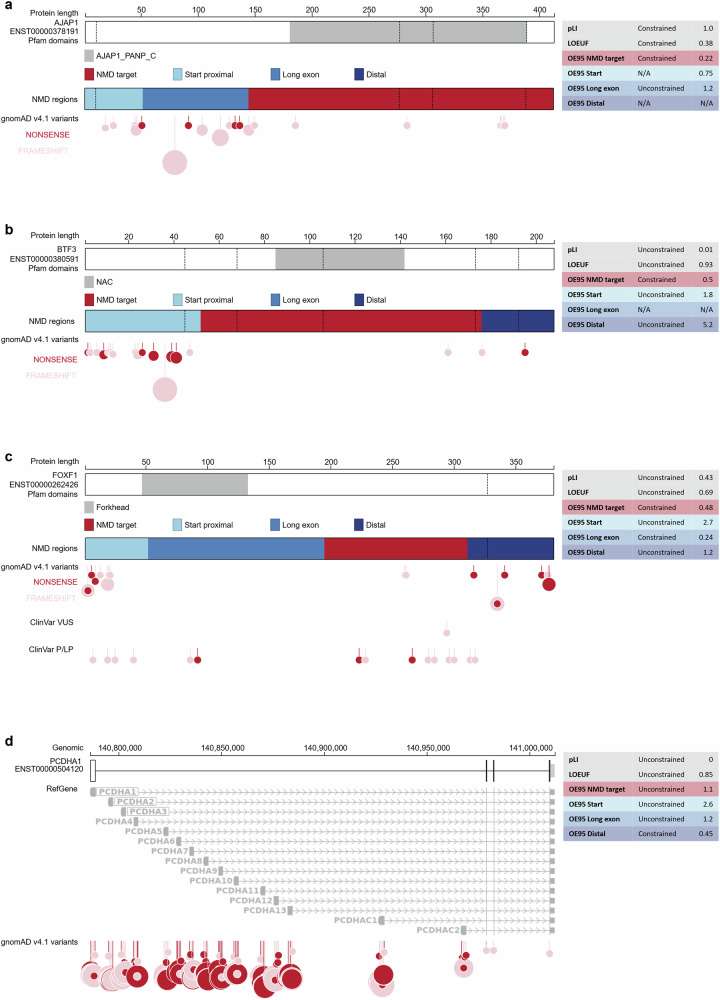 Figure 5
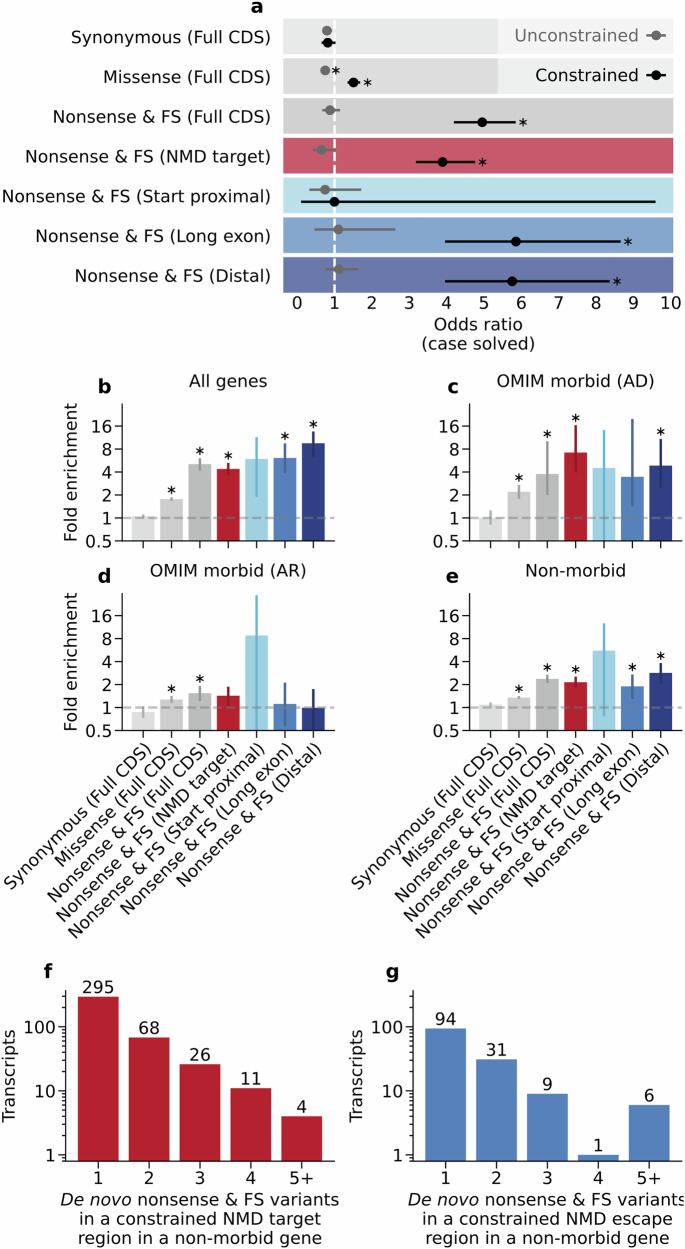 Figure 6
Peer Reviews
No public reviews on file for this paper yet. If you reviewed it on a platform where reviews are public (OpenReview, ICLR, NeurIPS, ICML), you can paste yours below so the community can read it here.
Videos
No videos yet. Explain this paper in a talk, walkthrough, or lecture? Add one.
Taxonomy
TopicsGenomics and Rare Diseases · RNA Research and Splicing · Genetic Neurodegenerative Diseases