Structural determinants for GPCR-mediated inhibition of TASK K2P channels by diacylglycerol and its dysfunction in disease
Thibault R H Jouen-Tachoire, Peter Proks, David Seiferth, Kate Crowther, Philip C Biggin, Thomas Baukrowitz, Marcus Schewe, Stephen J Tucker

TL;DR
This study reveals how diacylglycerol inhibits potassium channels through a specific structural site, explaining why this process fails in certain neurodevelopmental disorders.
Contribution
The study identifies a DAG interaction site in TASK K2P channels and explains the molecular basis for GPCR-mediated inhibition and its dysfunction in disease.
Findings
GPCR inhibition of TASK channels is state-dependent and mediated by DAG binding to a groove formed by M2, M3, and M4 domains.
Disease-causing mutations in TASK channels disrupt DAG interaction and lead to a common regulatory defect.
The inhibitory effect of DAG is linked to destabilization of the open state of the channel.
Abstract
Two-Pore Domain K+ (K2P) channels are crucial determinants of the resting membrane potential and of cellular electrical excitability in many different cell types. TASK-1 and TASK-3 K2P channel activity is also coupled to GPCR signalling pathways via Gαq and their subsequent inhibition is via direct interaction with diacylglycerol (DAG) generated from phosphatidylinositol-4,5-bisphosphate (PIP2) hydrolysis. This regulation is defective in two different neurodevelopmental disorders, but the molecular mechanisms underlying this inhibitory process and the reasons for the GPCR-insensitivity of these disease-causing mutations remain unclear. Here we show that GqPCR inhibition inversely correlates with channel open probability, and results from a state-dependent destabilisation of the open state by DAG promoting channel closure. We also identify a DAG interaction-site within a groove between…
Genes, proteins, chemicals, diseases, species, mutations and cell lines named across the full text — each resolved to its canonical identifier and authoritative record.
Click any figure to enlarge with its caption.
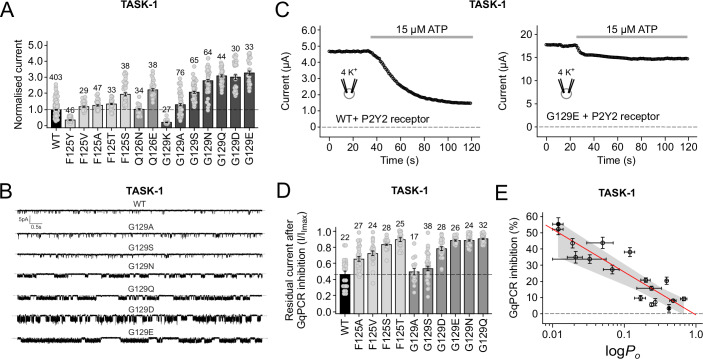 Figure 1
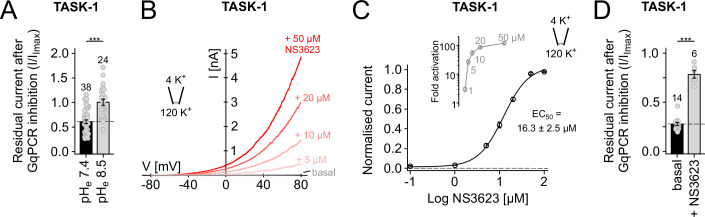 Figure 2
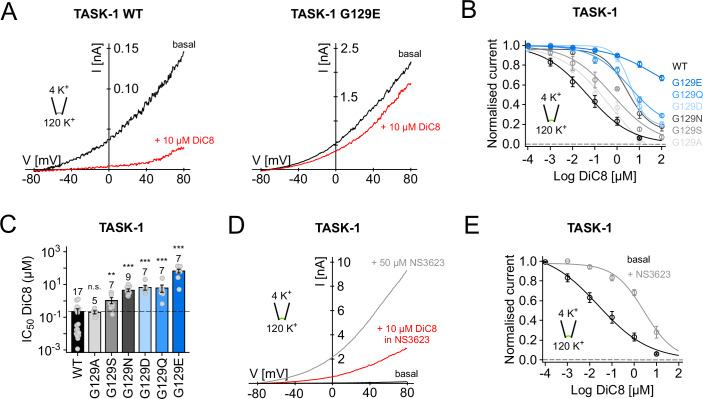 Figure 3
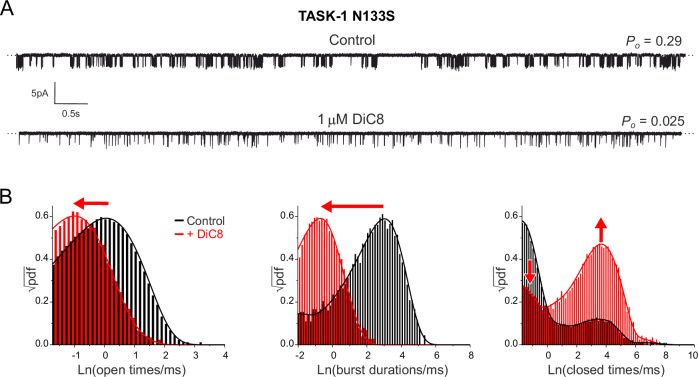 Figure 4
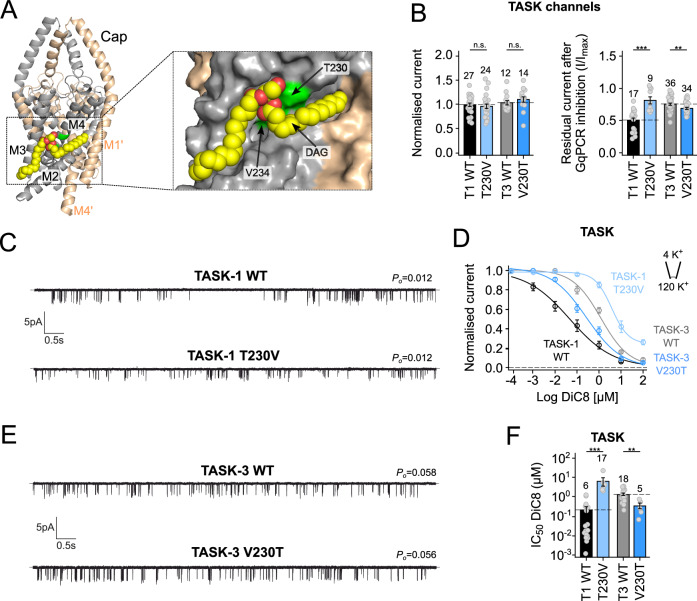 Figure 5
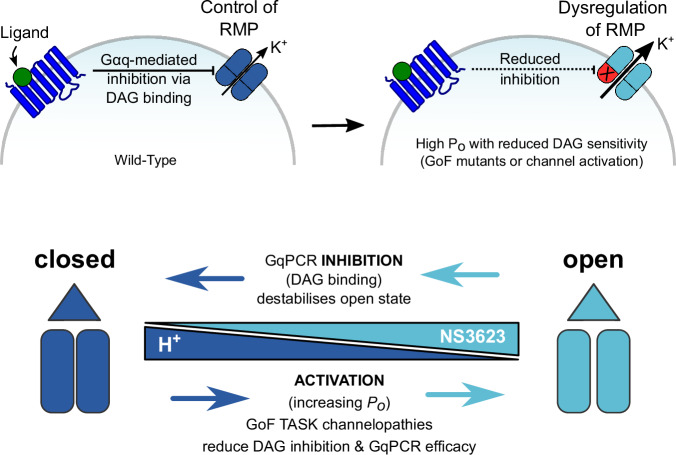 Figure 6
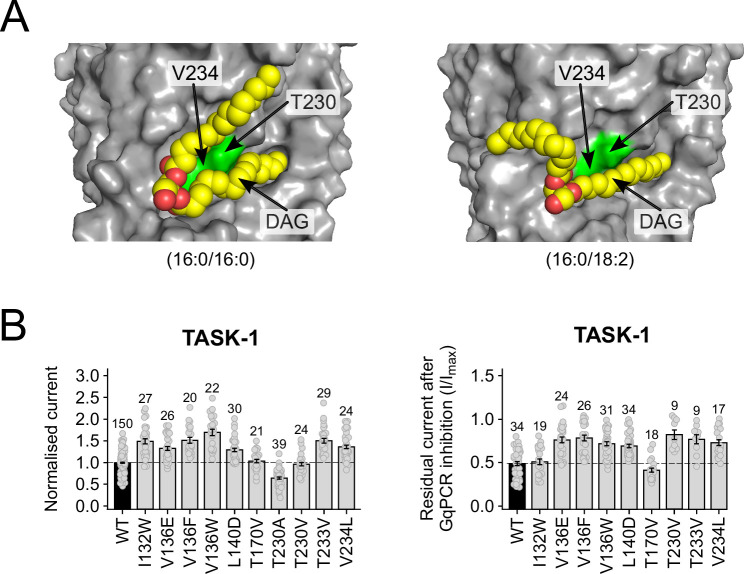 Figure 7
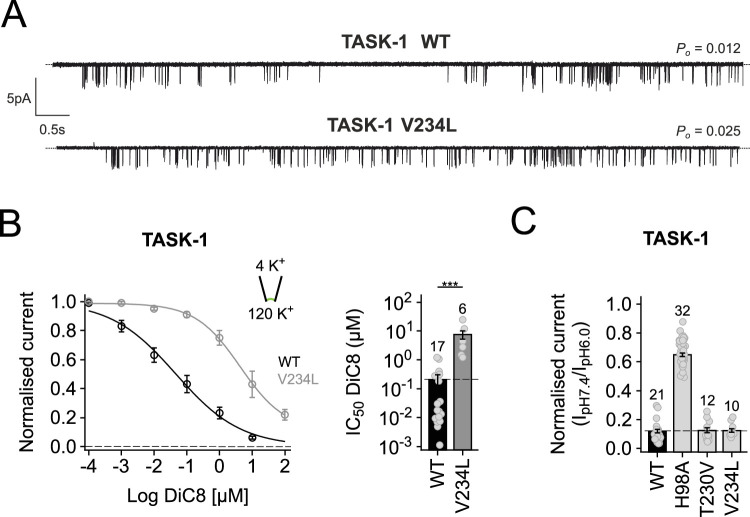 Figure 8
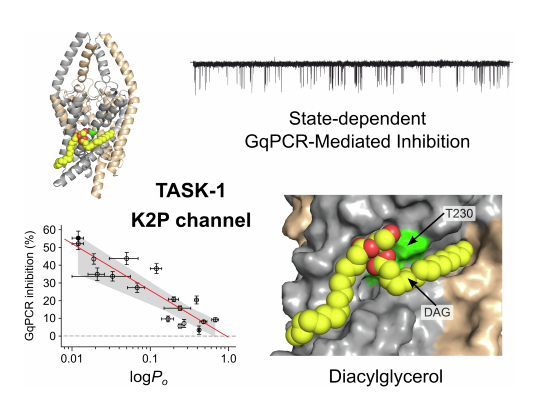 Figure 9
 Figure 10
Peer Reviews
No public reviews on file for this paper yet. If you reviewed it on a platform where reviews are public (OpenReview, ICLR, NeurIPS, ICML), you can paste yours below so the community can read it here.
Videos
No videos yet. Explain this paper in a talk, walkthrough, or lecture? Add one.
Taxonomy
TopicsIon channel regulation and function · Cellular transport and secretion · Protein Kinase Regulation and GTPase Signaling