SFPQ directs histone H3.3 deposition to R-loops in DNA repeats to protect genome stability
Alessandro Ferrando, Michele Giaquinto, Luisa M. R. Napolitano, Giulia Canarutto, Alessandro Framarini, Alice Gambelli, Pamela Veneziano Broccia, Annie Zappone, Eleonora Petti, Chiara Boncristiani, Andrea Parlante, Silvia Onesti, Silvano Piazza, Roberta Benetti, Stefan Schoeftner

TL;DR
The protein SFPQ helps prevent genome instability by managing R-loops at DNA repeats and recruiting H3.3 histones, with implications for cancer survival.
Contribution
SFPQ's role in recruiting DAXX to deposit H3.3 histones at R-loops in DNA repeats is newly identified as a mechanism to protect genome stability.
Findings
SFPQ suppresses R-loop mediated replication stress and DNA damage at repetitive DNA elements.
Loss of SFPQ leads to reduced H3.3 incorporation and activation of the cGAS/STING pathway.
SFPQ deficiency correlates with improved survival in sarcoma patients.
Abstract
R-loops are three-stranded nucleic acid structures composed of an RNA:DNA hybrid duplex and a displaced single-stranded DNA loop. Unscheduled or persistent R-loops drive genome instability by creating conflicts with transcription and replication. Up to 75% of the human genome comprises repetitive DNA elements that are prone to R-loop formation. We show that the RNA binding protein SFPQ suppresses R-loop mediated replication stress and DNA damage at repeat elements such as telomeres, (peri)-centromeres, LINE-1 and SINE elements. SFPQ exhibits in-vitro R-loop binding activity, associates with chromatin containing R-loops, and recruits the histone H3.3 specific chaperon DAXX to preserve a correct nucleosome template that counteracts R-loop accumulation. Loss of SFPQ results in DAXX displacement from repeat elements, reduced histone H3.3 incorporation, replication stress-mediated genome…
Genes, proteins, chemicals, diseases, species, mutations and cell lines named across the full text — each resolved to its canonical identifier and authoritative record.
Click any figure to enlarge with its caption.
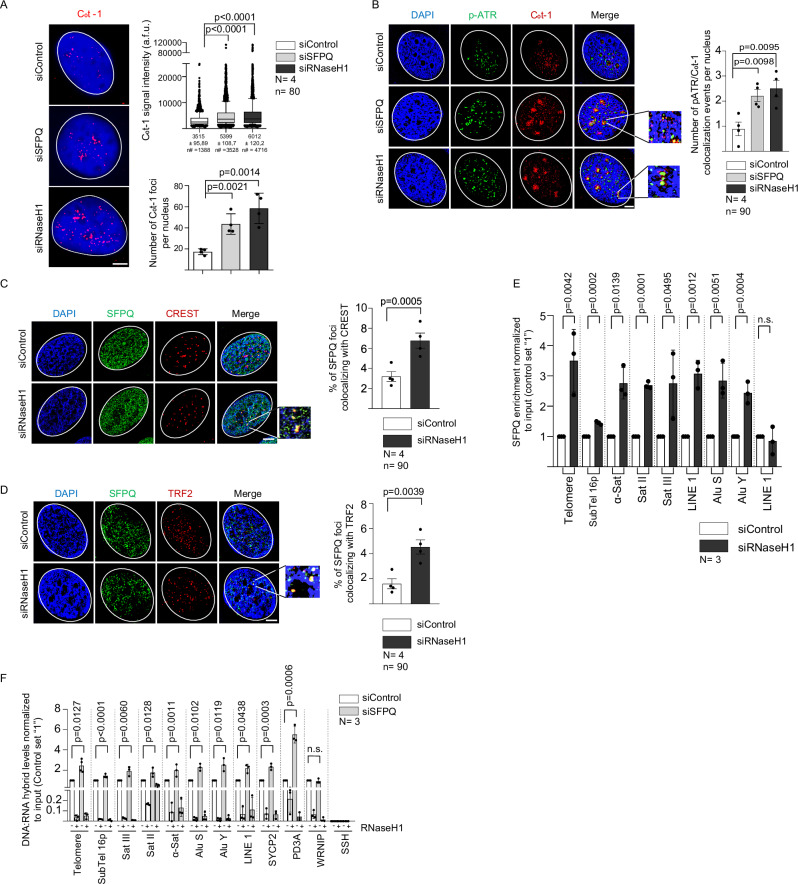 Figure 1
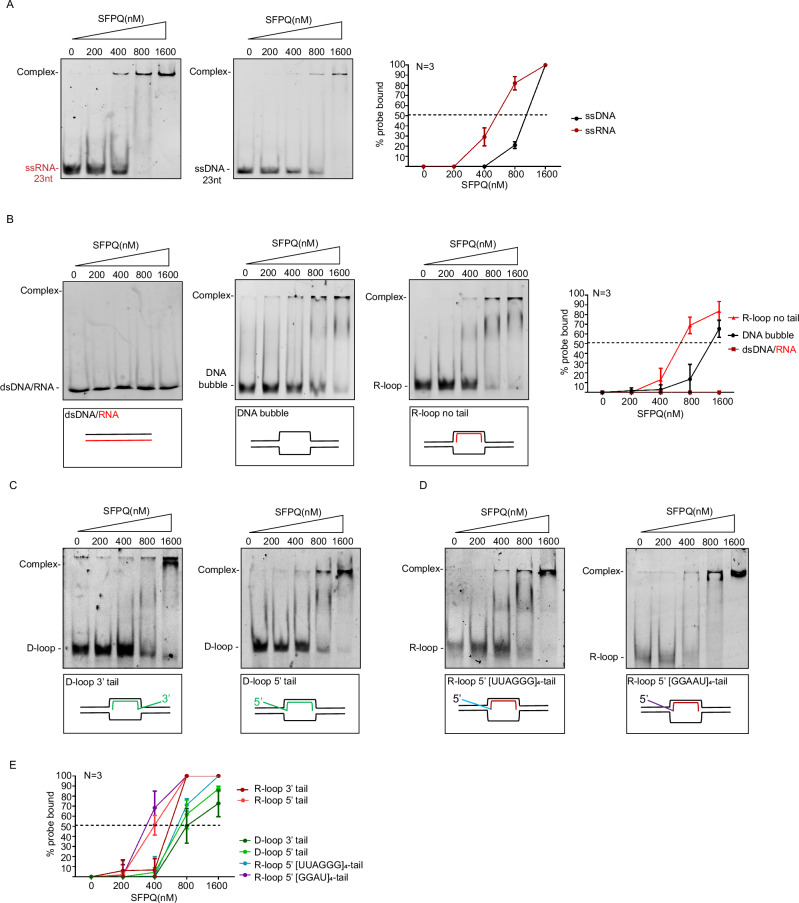 Figure 2
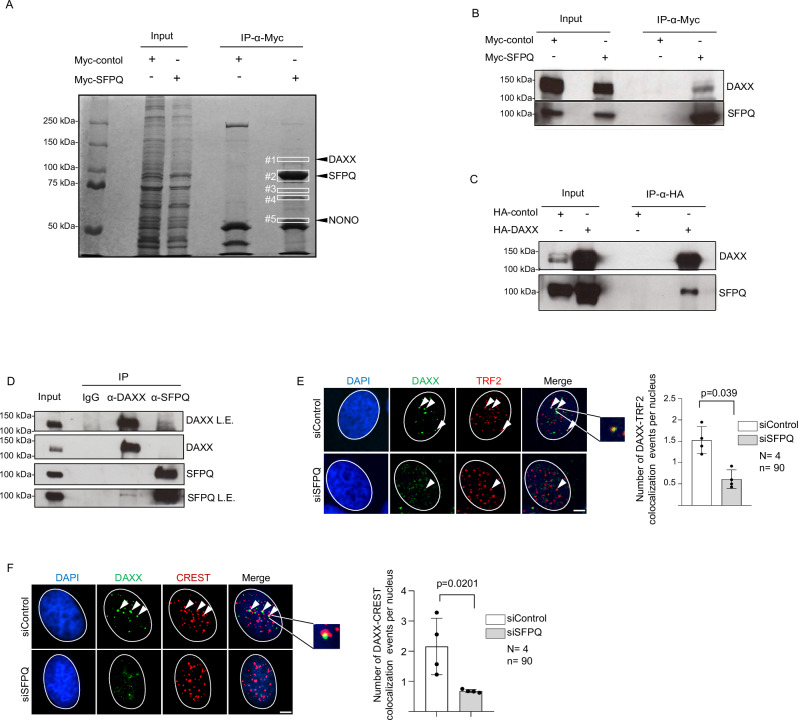 Figure 3
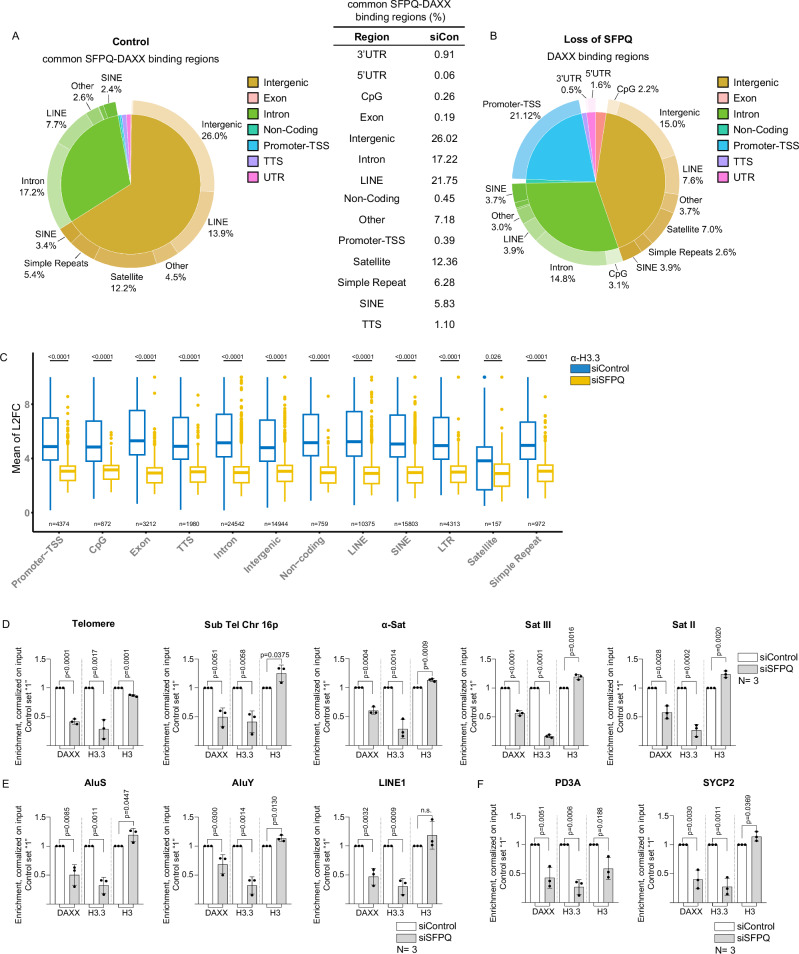 Figure 4
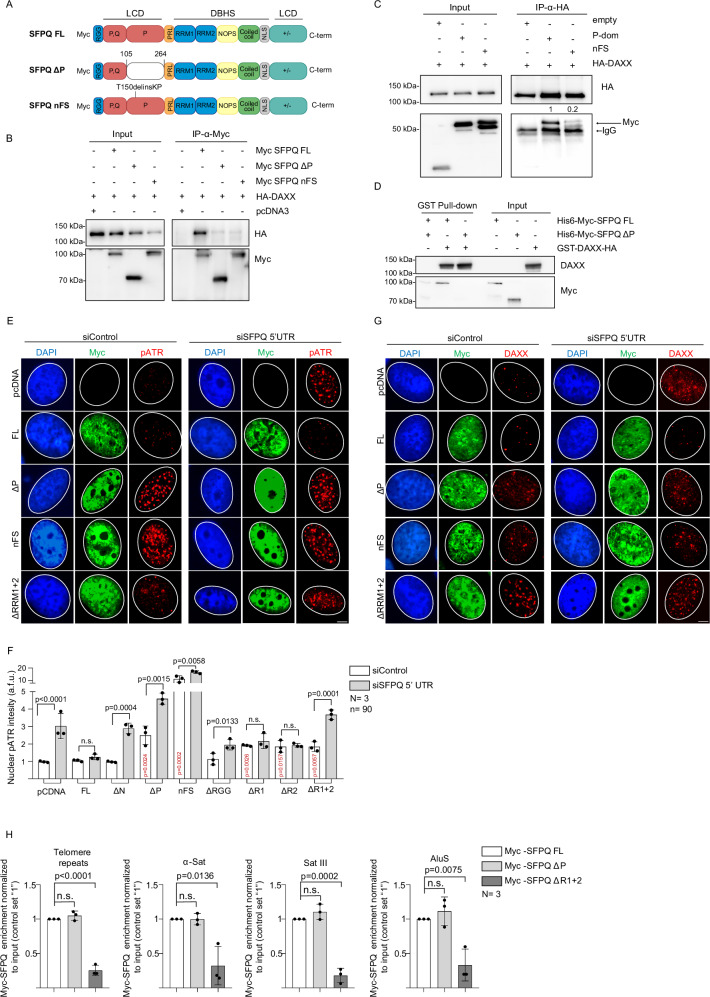 Figure 5
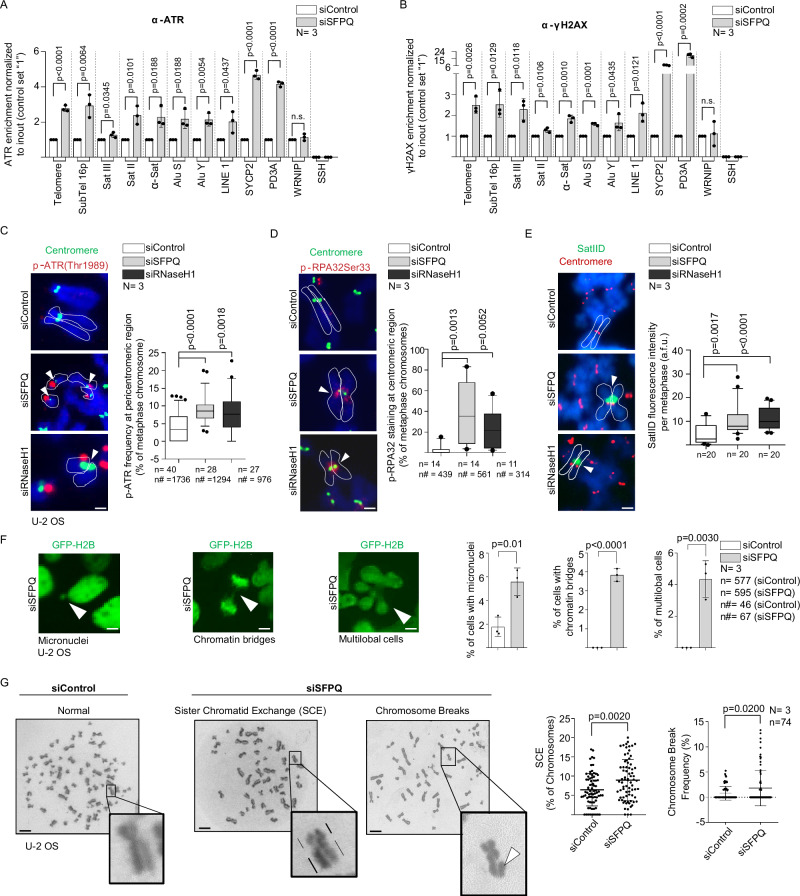 Figure 6
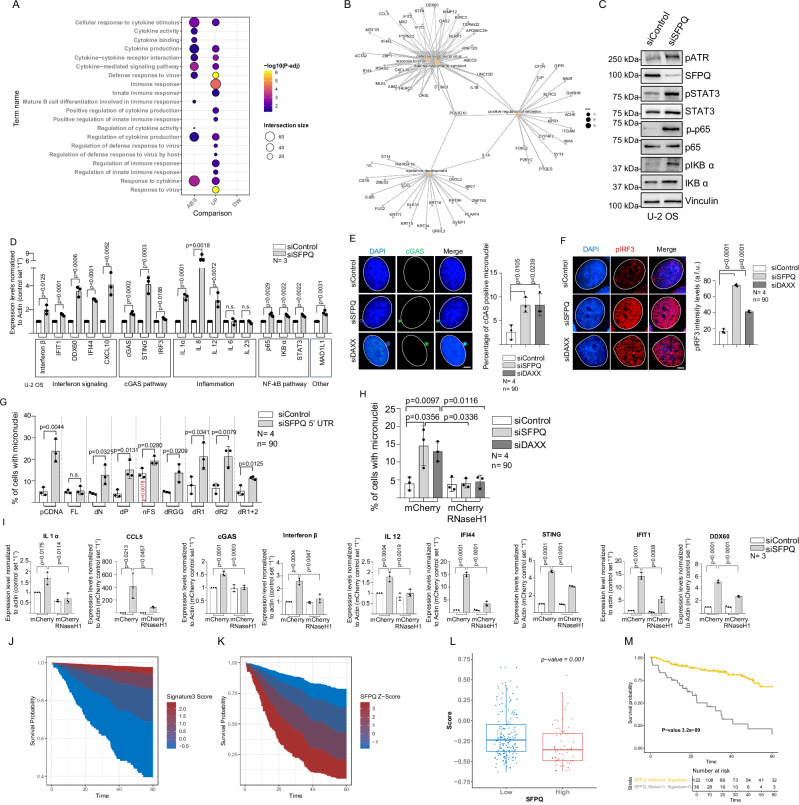 Figure 7
Peer Reviews
No public reviews on file for this paper yet. If you reviewed it on a platform where reviews are public (OpenReview, ICLR, NeurIPS, ICML), you can paste yours below so the community can read it here.
Videos
No videos yet. Explain this paper in a talk, walkthrough, or lecture? Add one.
Taxonomy
Topicsinterferon and immune responses · DNA Repair Mechanisms · Genomics and Chromatin Dynamics