Eight Years With an Airway Foreign Body: Asthma or Aspiration?
Nicole Henry, Hubert A Benzon, Kathleen L Boyne, Ashley Sarver, Laura Rosenthal, Faith Svigos, Veronica Drozdowski, Jonathan Shaffer, Michael A Evans

TL;DR
A 15-year-old boy with chronic respiratory symptoms was found to have an airway foreign body from a pen cap aspirated eight years earlier, highlighting the importance of considering delayed foreign body aspiration in diagnosis.
Contribution
This case report emphasizes the need for clinical suspicion of chronic foreign body aspiration in adolescents with persistent respiratory symptoms and provides insights into anesthetic management for complex foreign body retrieval.
Findings
A pen cap aspirated at age seven was identified eight years later as the cause of chronic respiratory symptoms in a 15-year-old.
Flexible and rigid bronchoscopy successfully retrieved the foreign body, leading to significant improvement in symptoms.
The case highlights the importance of interdisciplinary collaboration and individualized anesthetic planning in managing complex airway foreign bodies.
Abstract
Foreign body aspiration (FBA) is most commonly observed in children under the age of three and typically presents acutely with respiratory distress. In adolescents, FBA is less frequent and often results from behavioral incidents or accidental inhalation. Chronic retained airway foreign bodies are rare and often present with nonspecific or misleading symptoms, making timely diagnosis challenging. This case highlights the unusual presentation and anesthetic considerations in managing a delayed diagnosis of FBA in a 15-year-old male with a history of mild intermittent asthma who presented with new-onset hemoptysis, hematemesis, and a chronic, malodorous cough for a duration of eight months. Symptoms were followed by a coughing episode that produced blood-streaked sputum and post-tussive emesis. Imaging revealed left lower lobe bronchiectasis and mucus-impacted airways. Notably, at age…
Genes, proteins, chemicals, diseases, species, mutations and cell lines named across the full text — each resolved to its canonical identifier and authoritative record.
Click any figure to enlarge with its caption.
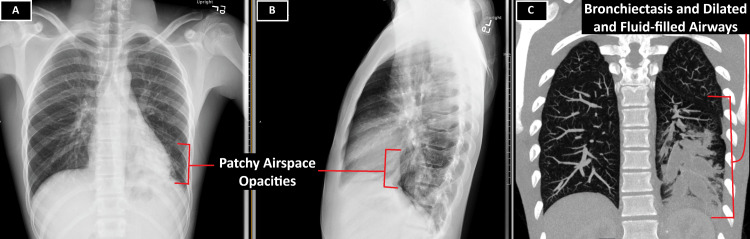 Figure 1
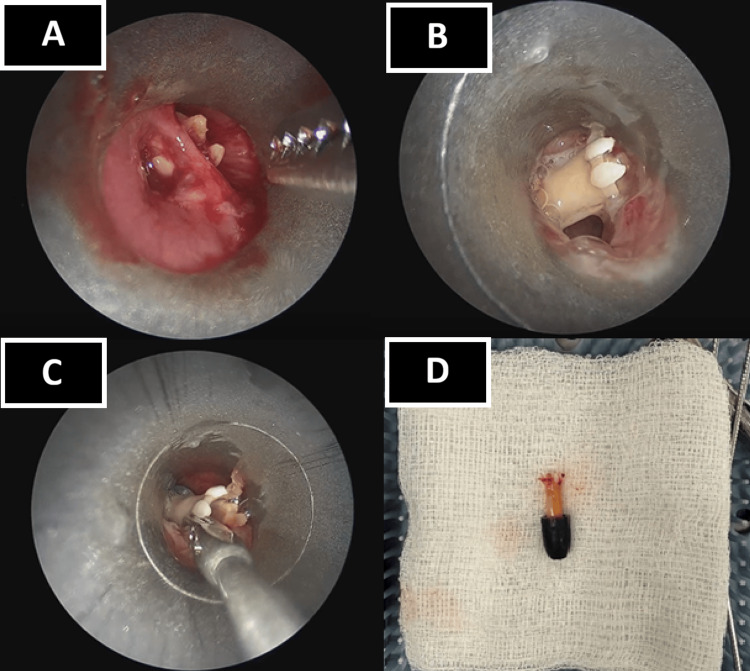 Figure 2
Peer Reviews
No public reviews on file for this paper yet. If you reviewed it on a platform where reviews are public (OpenReview, ICLR, NeurIPS, ICML), you can paste yours below so the community can read it here.
Videos
No videos yet. Explain this paper in a talk, walkthrough, or lecture? Add one.
Taxonomy
TopicsForeign Body Medical Cases · Traumatic Ocular and Foreign Body Injuries · Hemostasis and retained surgical items