Variable A-type lamin expression in Merkel cell carcinoma cell lines and its association with nuclear integrity
Merel Stiekema, Charlotte van Gorp, Amanda Macamo, Axel zur Hausen, Marc A. M. J. van Zandvoort, Frans C. S. Ramaekers, Jos L. V. Broers

TL;DR
This study explores how A- and B-type lamin expression differs in Merkel cell carcinoma cell lines and relates to nuclear integrity and cell behavior.
Contribution
The study reveals distinct lamin expression patterns in MCPyV-positive and -negative Merkel cell carcinoma cells and their impact on nuclear envelope stability.
Findings
MCPyV-positive cells show lower A-type and higher B-type lamin expression compared to MCPyV-negative cells.
Nuclear envelope ruptures in MCPyV-positive cells lead to cell death, unlike in MCPyV-negative cells.
Transfection with MCPyV tumor antigens did not reduce A-type lamin expression as expected.
Abstract
Merkel cell carcinoma (MCC) is an aggressive type of neuro-endocrine skin cancer and can be subdivided into Merkel cell polyomavirus (MCPyV)-positive and MCPyV-negative cases. The nuclear lamina, consisting of A- and B-type lamins, is altered in different types of cancer and can be disrupted by viral infections. This study investigated A- and B-type lamin expression levels in MCPyV-negative and MCPyV-positive MCC cell lines in relation to the MCPyV status, using (live cell) imaging, qPCR, and Western blotting. MCPyV-positive MCC (non-adherent) cells showed lower A-type lamin and higher B-type lamin expression at both protein and mRNA levels as compared to MCPyV-negative (adherent) cells. Nuclear envelope (NE) ruptures were reversible in MCPyV-negative cells, while in MCPyV-positive cells these lead to cell death. Transfection of MCPyV-negative cells with small (sT) or large tumor (LT)…
Genes, proteins, chemicals, diseases, species, mutations and cell lines named across the full text — each resolved to its canonical identifier and authoritative record.
Click any figure to enlarge with its caption.
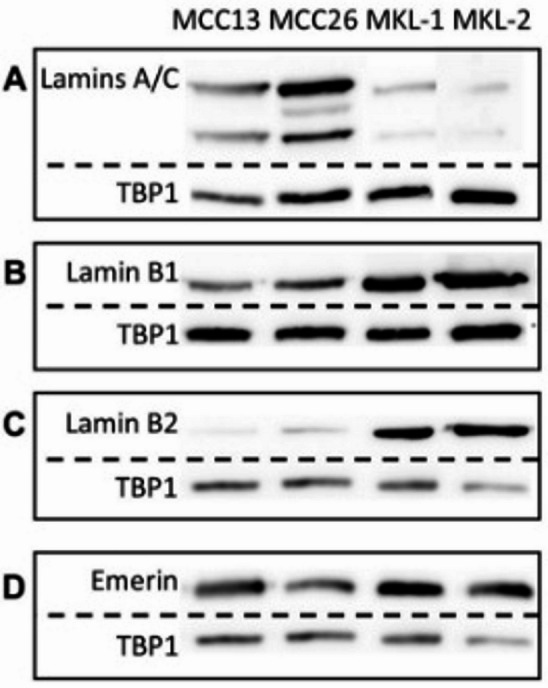 Figure 1
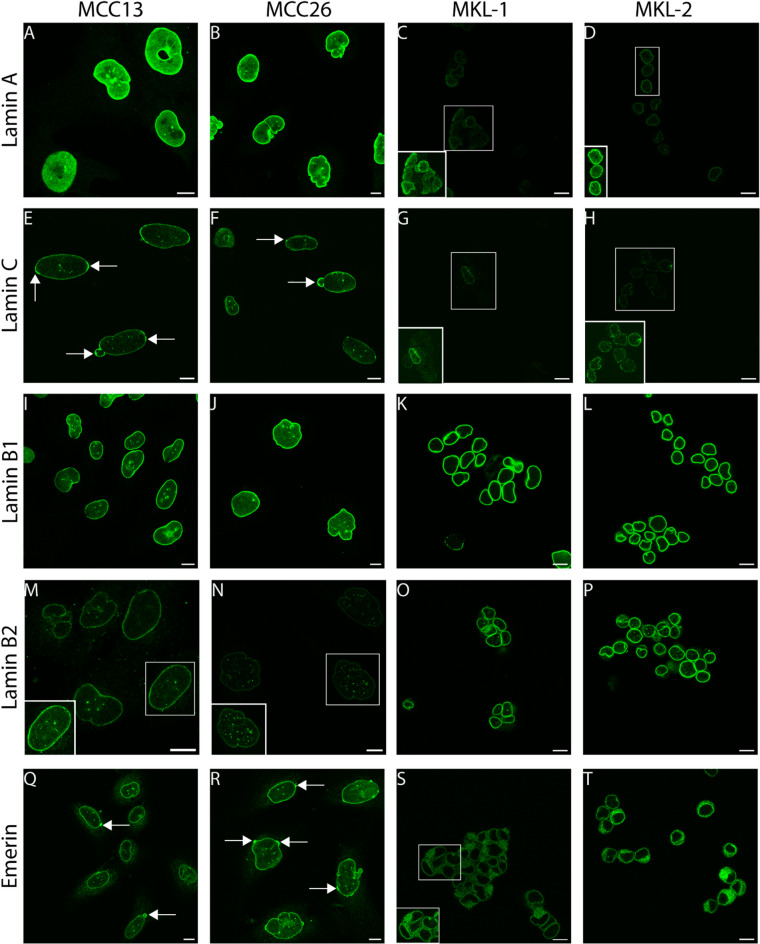 Figure 2
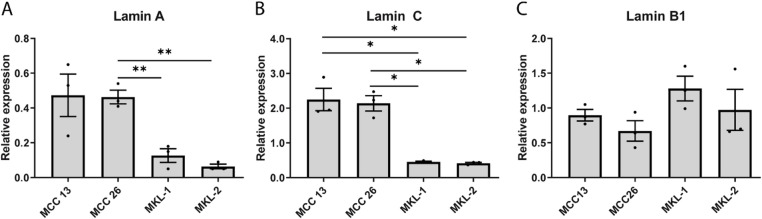 Figure 3
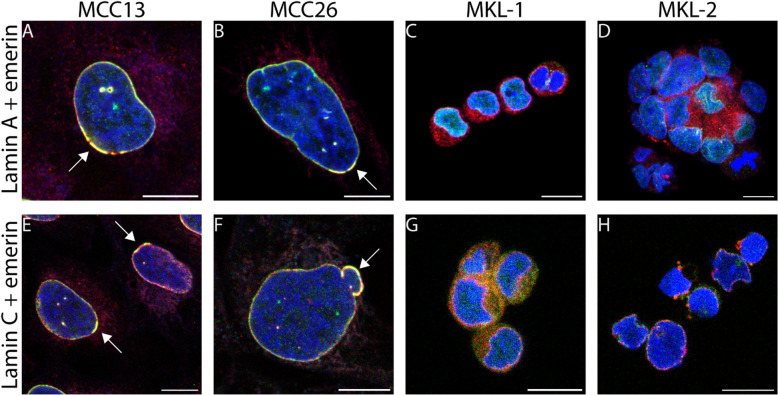 Figure 4
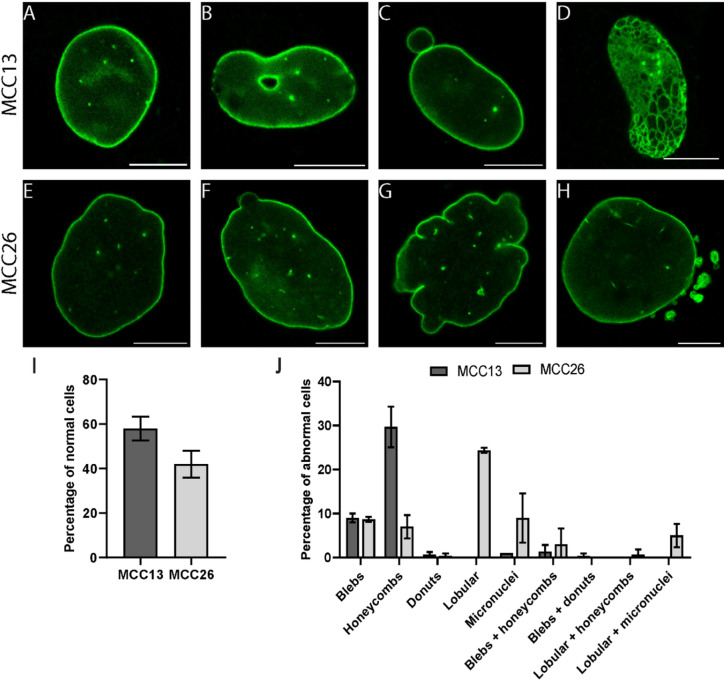 Figure 5
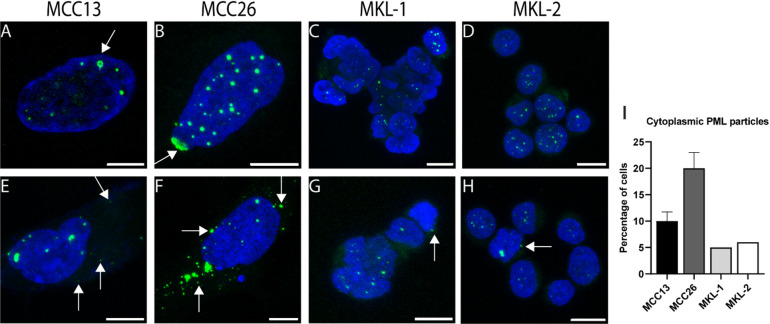 Figure 6
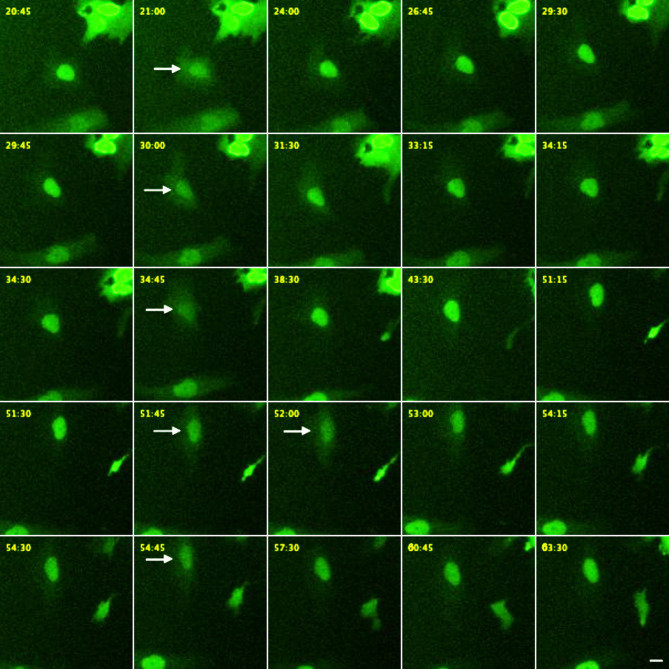 Figure 7
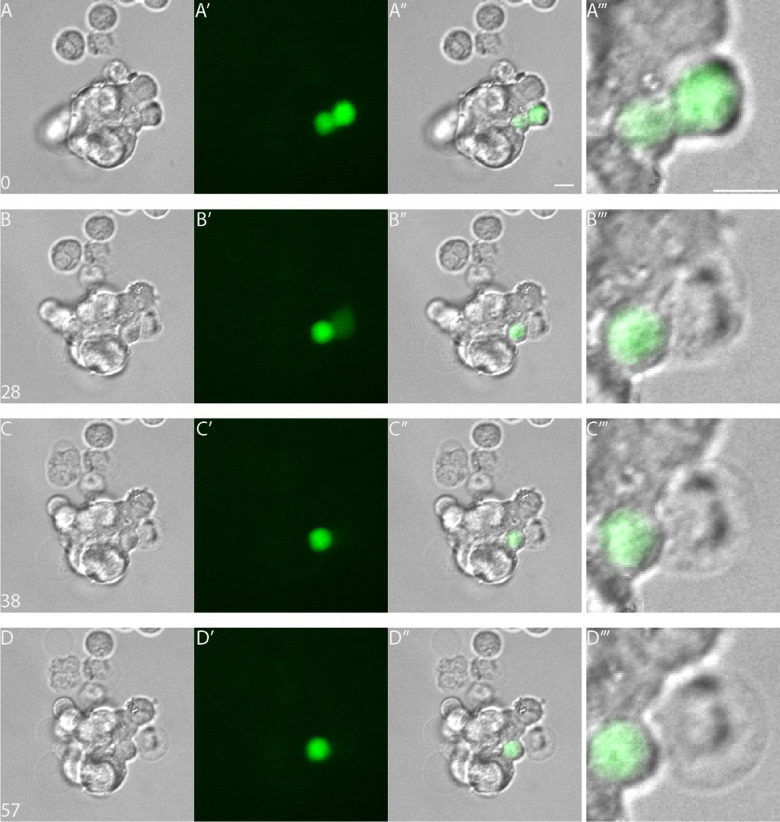 Figure 8
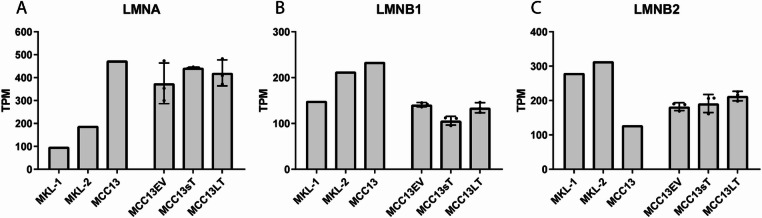 Figure 9
Peer Reviews
No public reviews on file for this paper yet. If you reviewed it on a platform where reviews are public (OpenReview, ICLR, NeurIPS, ICML), you can paste yours below so the community can read it here.
Videos
No videos yet. Explain this paper in a talk, walkthrough, or lecture? Add one.
Taxonomy
TopicsNuclear Structure and Function · Polyomavirus and related diseases · Skin and Cellular Biology Research