Sputtering-driven formation of interstitial oxygen for intrinsic NIR detection in IGZO phototransistor
Jinsik Choe, Hyeonmin Bong, Huiyeong Lee, Dong-Hun Yeo, Sahn Nahm, In Soo Kim, Mann-Ho Cho, Kwangsik Jeong, Sungjin Park

TL;DR
A new method uses sputtering to create oxygen defects in IGZO, enabling efficient near-infrared detection without extra materials.
Contribution
A defect-engineering approach using sputtering geometry to enable intrinsic NIR sensitivity in IGZO without dopants or heterostructures.
Findings
Off-axis sputtered IGZO shows pronounced NIR response due to interstitial oxygen defects.
The optimized device achieves high responsivity and detectivity under 850 nm illumination.
The method is scalable and compatible with large-area fabrication, with low device variation.
Abstract
Amorphous indium gallium zinc oxide (a-IGZO) is a promising wide-bandgap semiconductor for large-area optoelectronics; however, its intrinsic insensitivity to sub-bandgap photons typically necessitates extrinsic dopants or heterostructures for near-infrared (NIR) photodetection. Here, we report a heterostructure-free and dopant-free broadband phototransistor that achieves intrinsic NIR sensitivity through geometry-driven defect engineering during sputter deposition. Amorphous IGZO thin films with a nominal In: Ga: Zn atomic ratio of ≈ 1:2:1 were deposited using on-axis (vertical) and off-axis (horizontal) sputtering configurations. While on-axis IGZO only exhibited visible-light photosensitivity, off-axis IGZO displayed a pronounced NIR response, enabled by the formation of interstitial oxygen (Oi) shallow states. X-ray photoelectron spectroscopy (XPS) and composition-matched density…
Genes, proteins, chemicals, diseases, species, mutations and cell lines named across the full text — each resolved to its canonical identifier and authoritative record.
Click any figure to enlarge with its caption.
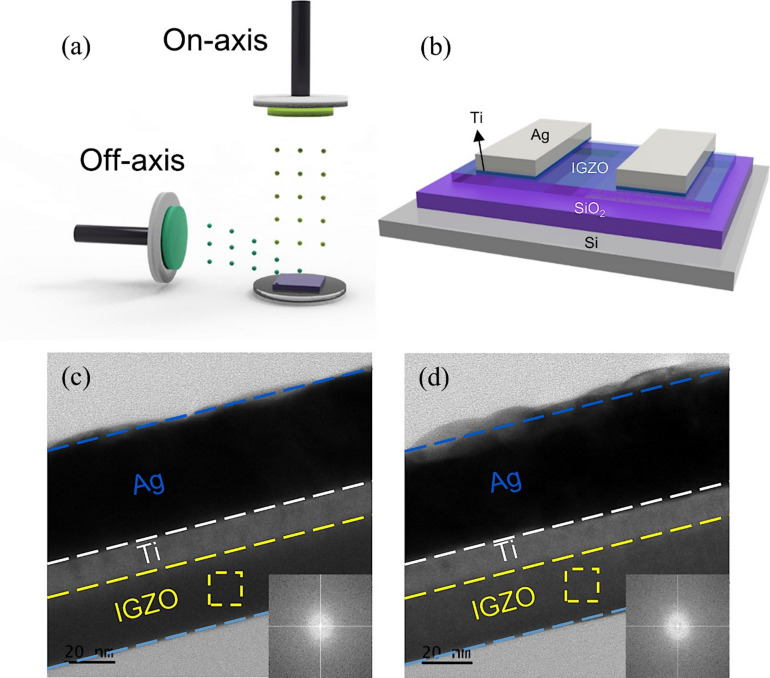 Figure 1
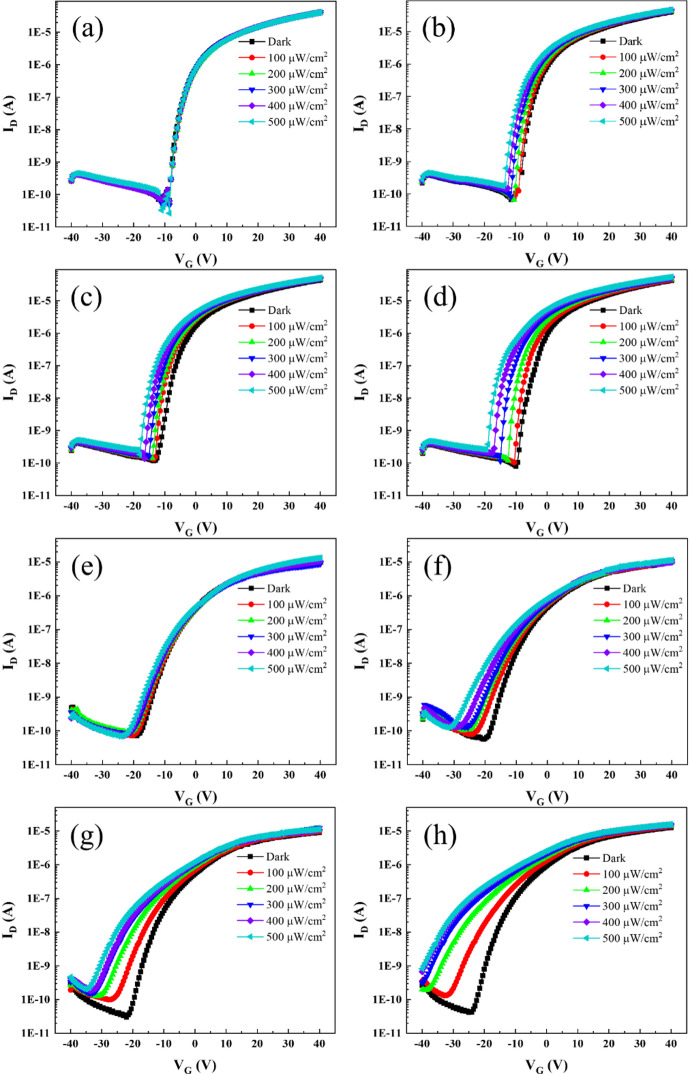 Figure 2
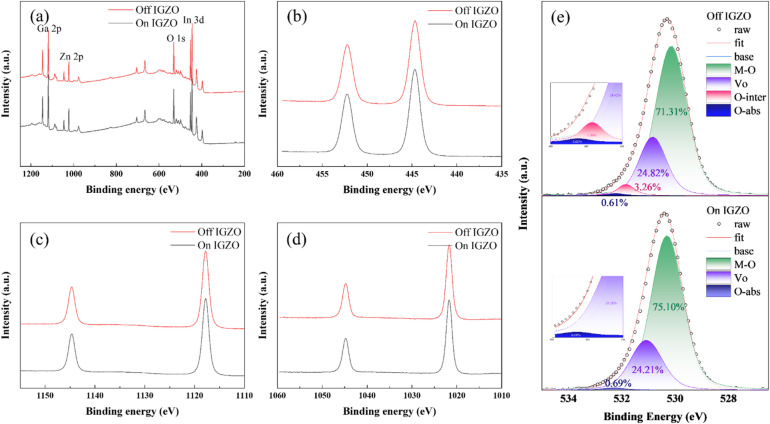 Figure 3
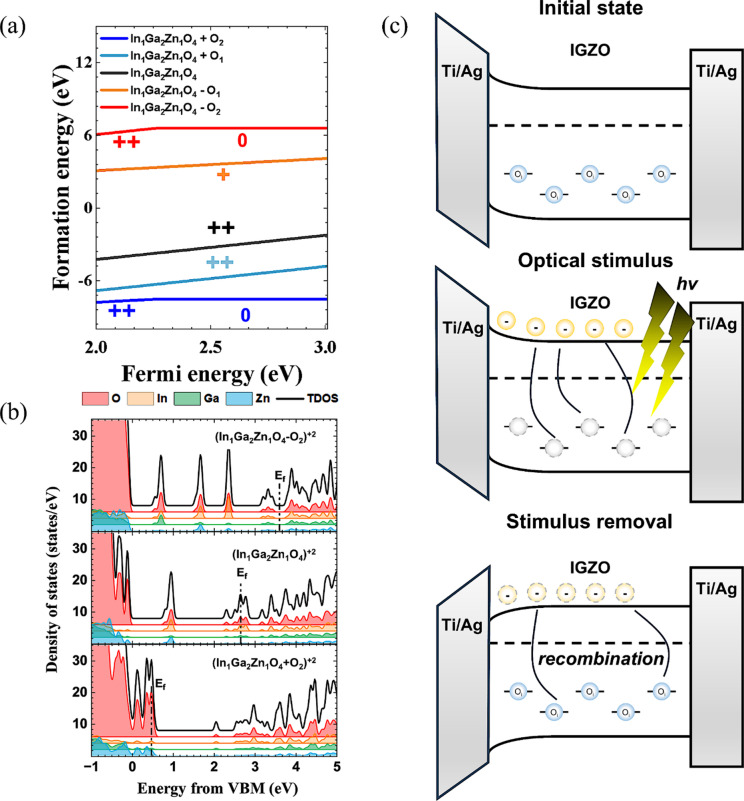 Figure 4
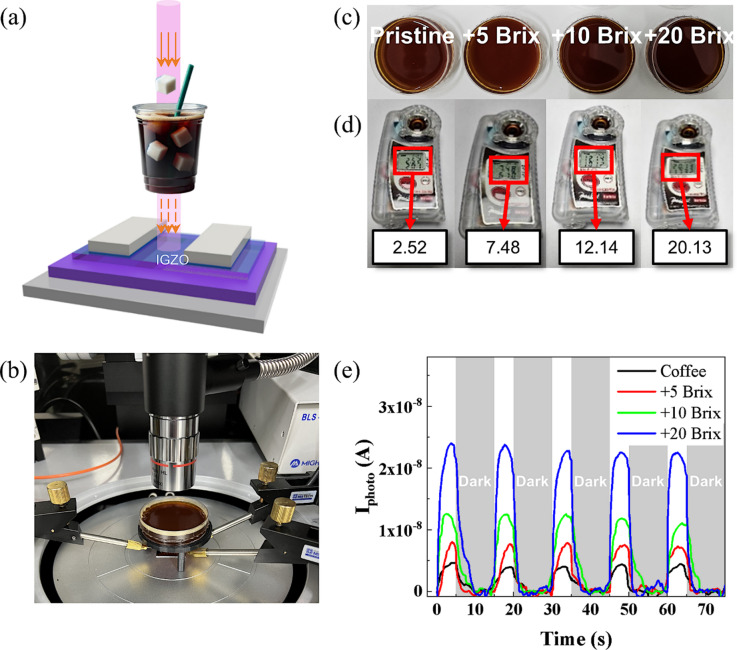 Figure 5
Peer Reviews
No public reviews on file for this paper yet. If you reviewed it on a platform where reviews are public (OpenReview, ICLR, NeurIPS, ICML), you can paste yours below so the community can read it here.
Videos
No videos yet. Explain this paper in a talk, walkthrough, or lecture? Add one.
Taxonomy
TopicsLuminescence Properties of Advanced Materials · bioluminescence and chemiluminescence research · Solid State Laser Technologies