Enhancing the response inhibition skill of soccer players with repeated tDCS: a randomized controlled ERP study
Kaihao Chen, Huan Yu, Shaokun Zhang, Zhikang Li, Jeho Song

TL;DR
This study shows that repeated tDCS over the right prefrontal cortex can improve soccer players' response speed and brain efficiency.
Contribution
The study demonstrates that repeated tDCS can enhance response inhibition in athletes through neurophysiological changes.
Findings
Active tDCS group showed significantly shorter Go reaction times post-intervention.
Active tDCS group exhibited increased P3 amplitude and reduced latency during Go and No-go trials.
Sham and control groups showed no significant behavioral or ERP changes.
Abstract
This study investigated the effects of repeated transcranial direct current stimulation on response inhibition and sought to elucidate the underlying neurobehavioral mechanisms. In a randomized, triple-blind, sham-controlled, 36 male soccer players were assigned to active-tDCS, sham-tDCS, or no-intervention control groups. The active-tDCS group received 20-min 1.5 mA tDCS over the right dorsolateral prefrontal cortex (DLPFC) five times weekly for 4 weeks, alongside regular training. The sham-tDCS group received 1-min 1.5 mA tDCS with regular training, and the no-intervention control group only regular trained. Pre- and post-intervention, all participants performed a Go/No-go task while behavioral and event-related potential (ERP) data were recorded. Behavioral metrics: Go reaction time (RT), Go accuracy (ACC), and No-go accuracy. ERP metrics: P3 amplitude and latency. Behavioral: Only…
Click any figure to enlarge with its caption.
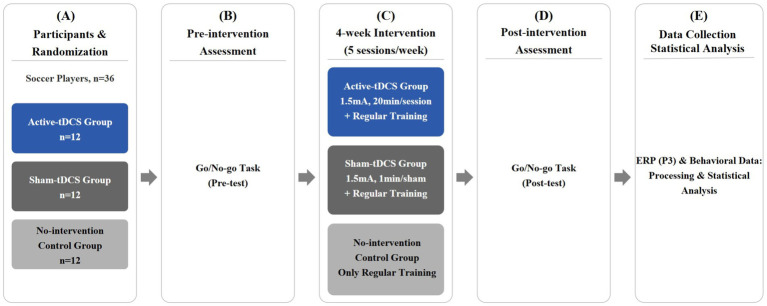 Figure 1
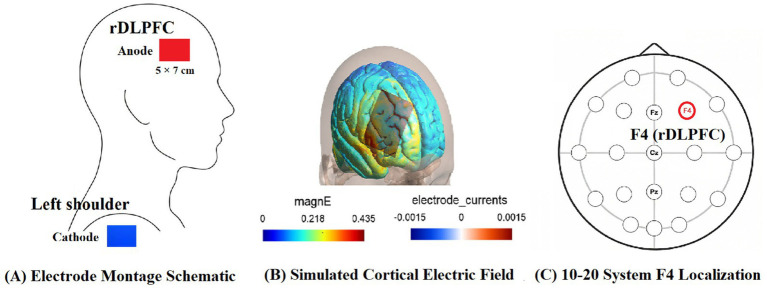 Figure 2
 Figure 3
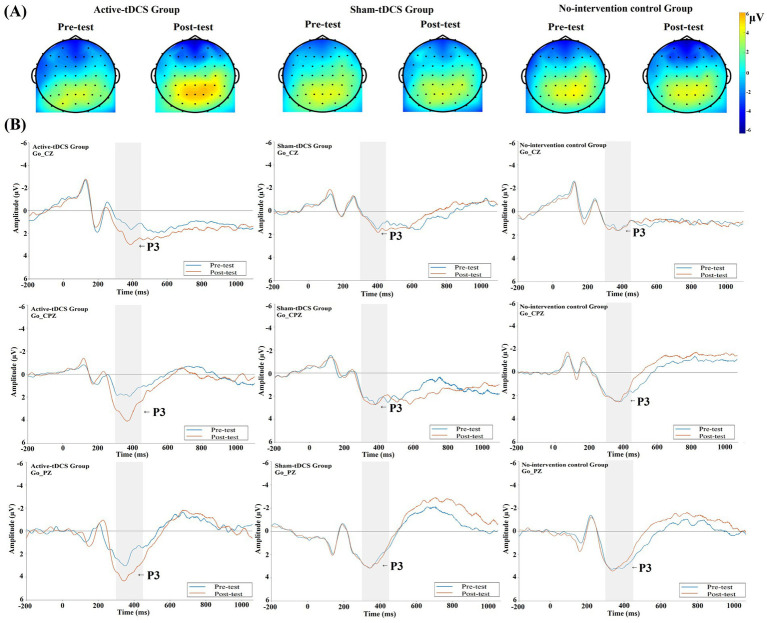 Figure 4
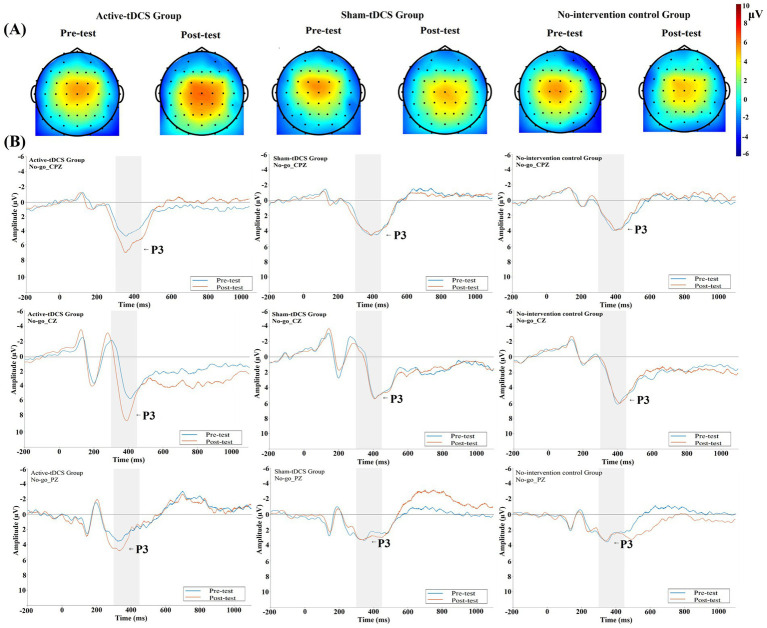 Figure 5
Peer Reviews
No public reviews on file for this paper yet. If you reviewed it on a platform where reviews are public (OpenReview, ICLR, NeurIPS, ICML), you can paste yours below so the community can read it here.
Videos
No videos yet. Explain this paper in a talk, walkthrough, or lecture? Add one.
Taxonomy
TopicsTranscranial Magnetic Stimulation Studies · Sport Psychology and Performance · Neural and Behavioral Psychology Studies