A new device and method for detecting the permeability of articular cartilage
Fuyang Cao, Haibin Deng, Guohao Zhang, Ningning Ma, Binghang Zhang, Xianda Che, Gaige Wu, Pengcui Li, Li Guo, Xiaochun Wei

TL;DR
This paper introduces a new device and method to accurately measure the permeability of articular cartilage under realistic conditions, which could improve understanding and treatment of cartilage diseases.
Contribution
The study presents a novel modular device and method for measuring cartilage permeability with high accuracy and physiological relevance.
Findings
The device showed high repeatability and reproducibility with low coefficient of variation (CV ≤ 7.4%).
Osteoarthritic cartilage had higher permeability to sodium hyaluronate and interleukin-1β compared to normal cartilage.
The device successfully simulated the synovial fluid-cartilage-subchondral bone unit without leakage.
Abstract
Articular cartilage relies on synovial fluid for substance exchange, with permeability being a key parameter linked to its physiological functions and degenerative disease mechanisms. Existing detection techniques are limited by detachment from physiological mechanical environments, insufficient quantification accuracy, and poor sealing. This study aimed to develop an accurate, reliable, and physiologically relevant device and method for cartilage permeability detection. Based on intra-articular convective transport and Darcy’s Law, a modular testing device (permeation, pressure supply, central control modules) was fabricated to simulate the synovial fluid–cartilage–subchondral bone unit under pressure. Porcine femoral condylar cartilage samples were tested with 4 N, 8 N, 16 N (n = 6, per group) constant pressure (1800 s) using an ElectroForce 3,200 system. Permeability coefficients…
Genes, proteins, chemicals, diseases, species, mutations and cell lines named across the full text — each resolved to its canonical identifier and authoritative record.
Click any figure to enlarge with its caption.
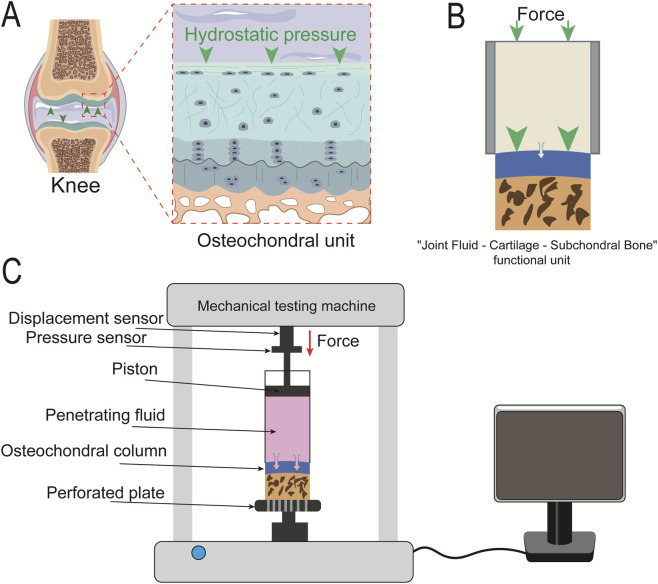 Figure 1
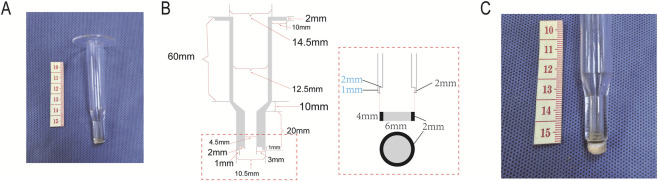 Figure 2
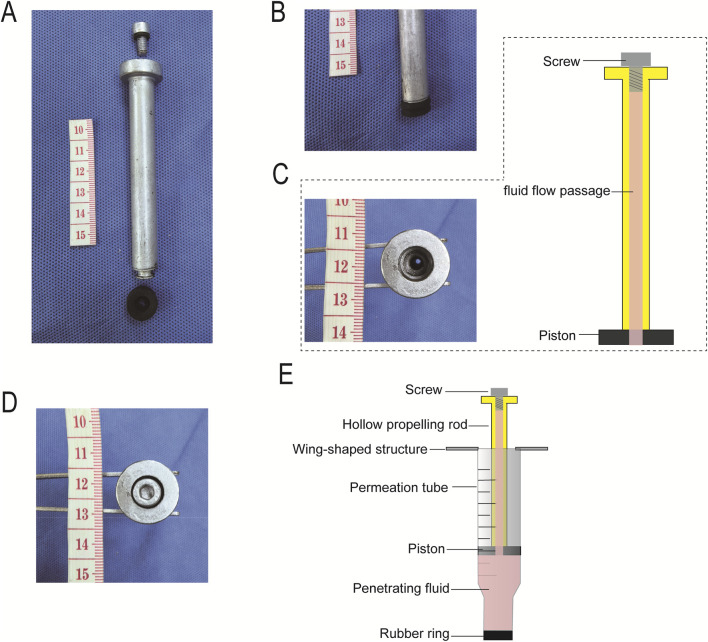 Figure 3
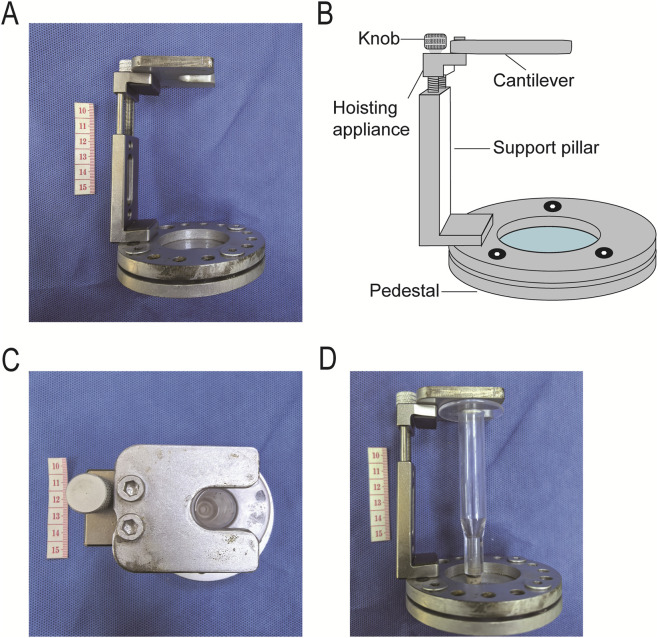 Figure 4
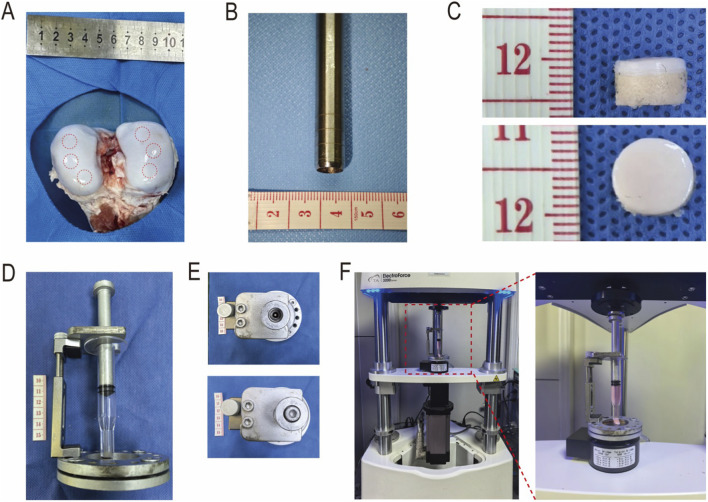 Figure 5
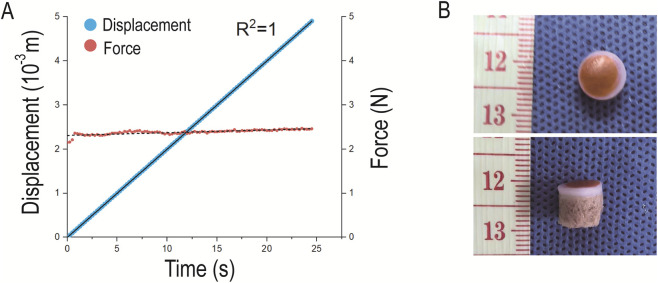 Figure 6
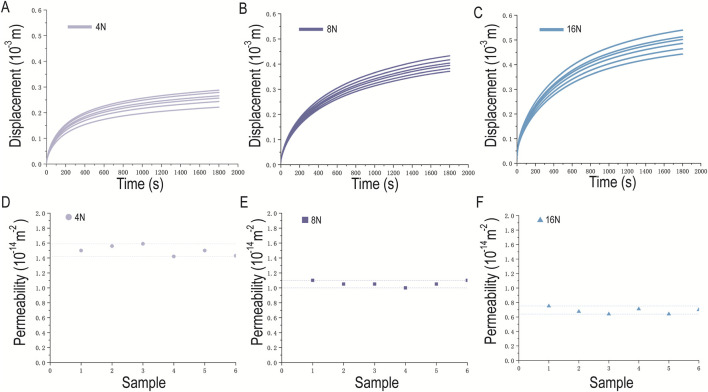 Figure 7
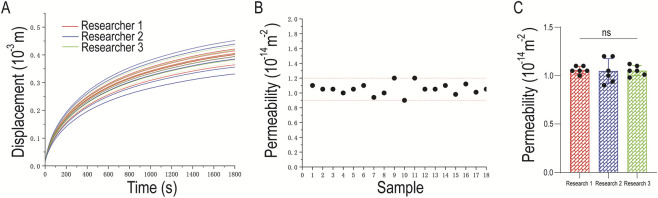 Figure 8
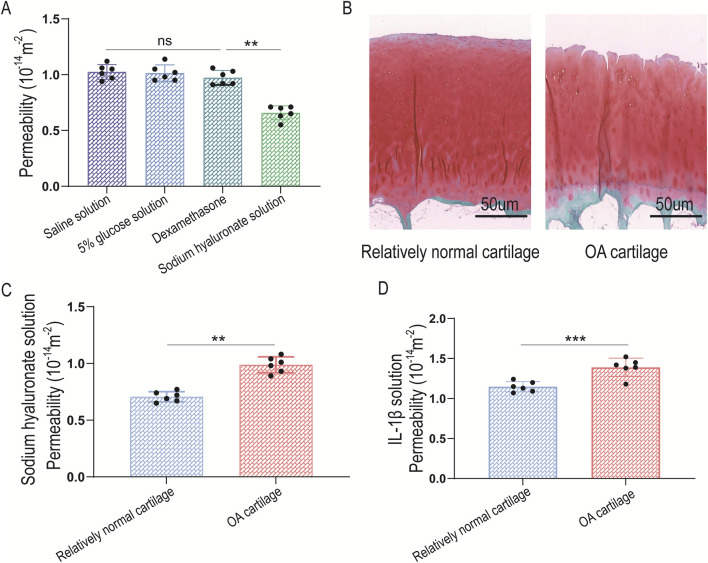 Figure 9
Peer Reviews
No public reviews on file for this paper yet. If you reviewed it on a platform where reviews are public (OpenReview, ICLR, NeurIPS, ICML), you can paste yours below so the community can read it here.
Videos
No videos yet. Explain this paper in a talk, walkthrough, or lecture? Add one.
Taxonomy
TopicsOsteoarthritis Treatment and Mechanisms · Muscle activation and electromyography studies · Total Knee Arthroplasty Outcomes