Prognostic factors in Sézary syndrome - a retrospective propensity score-matched study on 1277 patients
Nadia Ninosu, Max Kappenstein, Niklas Gebauer, Dagmar von Bubnoff, Nikolas von Bubnoff, Jan P. Nicolay

TL;DR
This study identifies key risk factors for survival and infections in Sézary syndrome patients using a large dataset.
Contribution
The study introduces anemia as a novel risk factor and validates a simplified prognostic index model for Sézary syndrome.
Findings
Age > 60 years, elevated LDH, anemia, and elevated WBC were risk factors for 5-year survival.
Anemia and elevated WBC were linked to higher risk of pneumonia.
A simplified prognostic index model was devised and validated for stage IV SS patients.
Abstract
Sézary syndrome (SS) is a rare neoplasm associated with poor prognosis. Due to the rarity of the disease, large-scale investigations are scarce, while identifying prognostic factors is essential for improving treatment outcomes. The primary objective was to investigate prognostic factors in a large population of SS patients on survival and infections. The secondary objective was to validate a previously suggested prognostic index model. We conducted a propensity score-matched retrospective cohort study using real-world data from 1277 patients in the TriNetX database. Risk factors examined included age, elevated lactate dehydrogenase (LDH), anemia, elevated white blood cell count (WBC), sex, and race. Examined outcomes were: 5-year survival, Systemic Inflammatory Response Syndrome (SIRS), sepsis and pneumonia. The prognostic index model was simplified into factors assessable through…
Genes, proteins, chemicals, diseases, species, mutations and cell lines named across the full text — each resolved to its canonical identifier and authoritative record.
Click any figure to enlarge with its caption.
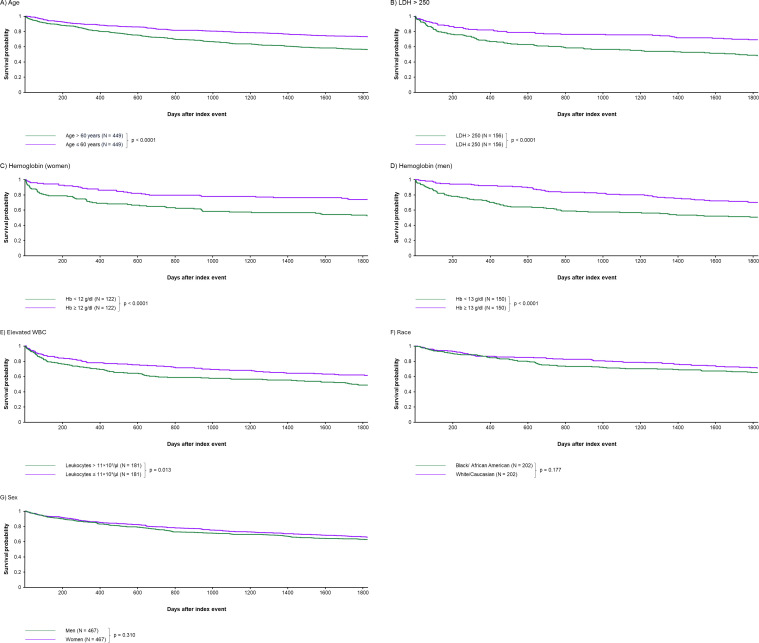 Figure 1
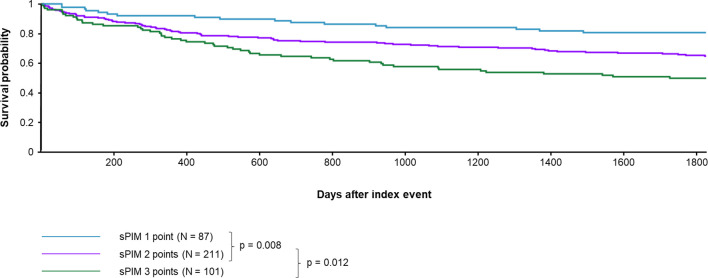 Figure 2
Peer Reviews
No public reviews on file for this paper yet. If you reviewed it on a platform where reviews are public (OpenReview, ICLR, NeurIPS, ICML), you can paste yours below so the community can read it here.
Videos
No videos yet. Explain this paper in a talk, walkthrough, or lecture? Add one.
Taxonomy
TopicsCutaneous lymphoproliferative disorders research · Histiocytic Disorders and Treatments · Sarcoidosis and Beryllium Toxicity Research