The Kids FACE FEARS Pragmatic Randomized Trial of Therapist-Led vs Guided Internet Cognitive Behavioral Therapy for Pediatric Anxiety: Rationale and Methods
Jonathan S. Comer, Donna B. Pincus, Molly C. Adrian, Gary McCreary, Leslie Miller, Tomas Munarriz, Kathleen Myers, Karen Xiomara Pierre-Louis, Rheanna Platt, Melissa K. Ripley, Andrea E. Spencer, Haniya Saleem Syeda, Margarita Alegría, Amelia Brandt, Carolina Costa

TL;DR
This study compares two forms of cognitive behavioral therapy for treating anxiety in children and teens to improve access and effectiveness in real-world pediatric settings.
Contribution
The first large-scale, multisite trial comparing therapist-led and guided internet-based CBT for pediatric anxiety in diverse, real-world settings.
Findings
The trial compared therapist-led and guided internet-based CBT for youth anxiety in urban pediatric care.
It aimed to assess how different levels of therapist involvement and technology affect treatment outcomes and accessibility.
The study included English- and Spanish-speaking families, enhancing diversity and representativeness.
Abstract
Pediatric anxiety constitutes a serious public health concern. Cognitive behavioral therapy (CBT) is a gold standard treatment, preferred by families over pharmacological options, but barriers limit CBT accessibility. Modern CBT formats include varying levels of therapist involvement and differential technologies to overcome barriers, but little is known about their effectiveness in typical care settings, as well as in pediatric care. The Kids Formats of Anxiety Care Effectiveness study For Extending the Acceptability and Reach of Services (Kids FACE FEARS) trial addresses these gaps. The Kids FACE FEARS trial was a multisite, pragmatic randomized trial comparing therapist-led CBT (telehealth, office-based, or hybrid) with guided internet-based CBT (self-administered/self-paced, with minimal therapist support) for treating anxiety in youth (7-18 years old) identified in pediatric care.…
Genes, proteins, chemicals, diseases, species, mutations and cell lines named across the full text — each resolved to its canonical identifier and authoritative record.
Click any figure to enlarge with its caption.
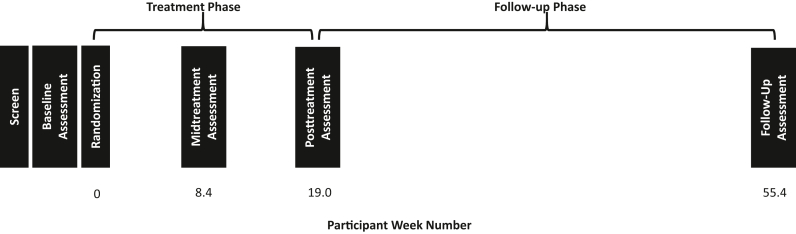 Figure 1
Peer Reviews
No public reviews on file for this paper yet. If you reviewed it on a platform where reviews are public (OpenReview, ICLR, NeurIPS, ICML), you can paste yours below so the community can read it here.
Videos
No videos yet. Explain this paper in a talk, walkthrough, or lecture? Add one.
Taxonomy
TopicsDigital Mental Health Interventions · Child and Adolescent Psychosocial and Emotional Development · Anxiety, Depression, Psychometrics, Treatment, Cognitive Processes